AI chatbots for fleet customer service tutorial
Implement AI chatbots for 24/7 fleet support. Our 2026 guide shows how to reduce costs by 25-40%, improve driver satisfaction, and automate logistics workflows.
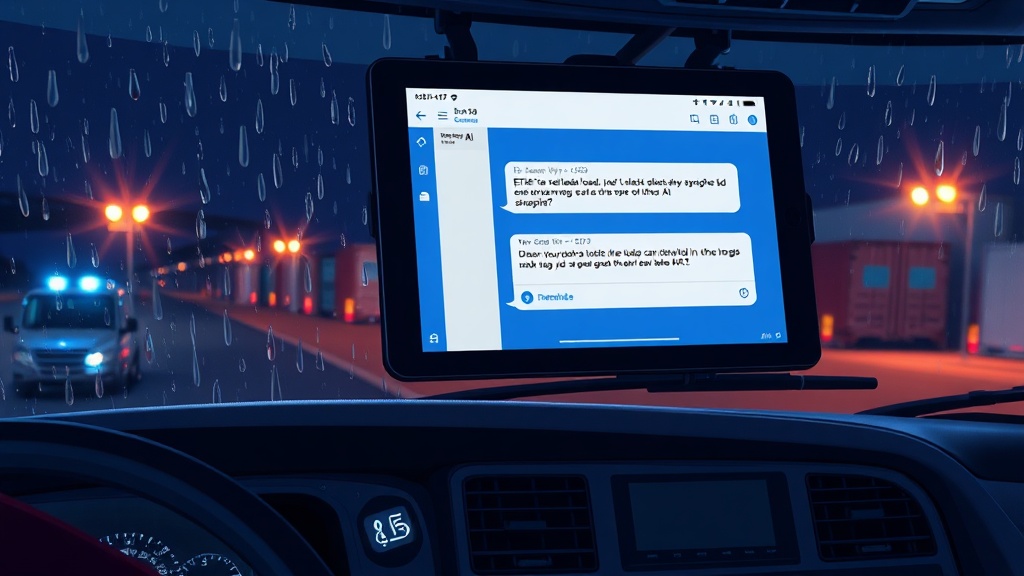
In logistics, a delay is more than a log entry. It’s a chain reaction of missed deadlines, frustrated drivers, and mounting financial penalties. For fleet managers, marketing leads, and procurement teams, the traditional customer service model—relying on a call center that closes at five—isn’t just inefficient; it’s a direct threat to operations.
The solution isn’t hiring more staff. It’s deploying a different kind of workforce: an advanced AI chatbot. This isn’t a basic FAQ widget. The next generation of chatbots serves as an intelligent nerve center for your entire fleet, capable of pulling real-time data, automating complex workflows, and delivering support that improves with scale.
This guide cuts through the hype. We’ll walk through how to implement a solution that turns your support function from a reactive cost into a proactive, always-on strategic asset. The goal is measurable: significant time and cost savings, paired with a better experience for every driver and customer.
The Unignorable Case for AI in Fleet Support
Logistics runs on predictability, yet its biggest pain points are deeply unpredictable. A driver stuck on hold at 2 AM for a simple document update represents a dual loss: plummeting productivity and rising frustration. An AI chatbot tackles this head-on by becoming the universal first responder.
The non-negotiable advantage is 24/7 fleet support. Drivers operate on the world’s schedule, not a corporate one. A chatbot delivers instant, consistent answers to questions that arise at all hours: Where’s my next load? How do I submit this proof of delivery? Is my appointment still confirmed? This autonomy empowers drivers and lifts a massive burden from your human team.
The efficiency math is straightforward. By resolving a high volume of routine inquiries instantly, chatbots slash inbound call and email volume. The operational cost savings from staffing fewer support agents for basic queries are immediate. More importantly, it refocuses your human talent. Agents are freed from repetitive questions to handle complex, high-stakes issues that demand empathy and creative problem-solving. Early adopters report a 30–50% reduction in the cost of handling routine inquiries. The secondary benefits—higher driver satisfaction, better retention, and a goldmine of interaction data that reveals operational bottlenecks—are just as valuable.
For fleet managers seeking to cut costs and improve efficiency, implementing an AI chatbot for customer service is a proven strategy. Industry data shows these systems can handle 60–80% of routine inquiries autonomously, leading to a 25–40% reduction in support operation costs. This frees human agents to focus on complex issues, improving both operational efficiency and driver satisfaction.
Finding the Balance: Where AI Ends and the Human Agent Begins
The most successful implementations understand this isn’t a replacement strategy. It’s a force multiplier. The goal is a seamless blend where AI handles structured, data-heavy tasks, and human agents step in for nuanced, relationship-driven work. Drawing that line clearly is what makes the system hum.
AI excels in scenarios governed by rules and real-time data:
* Pulling live shipment status or vehicle location.
* Navigating internal policy databases and standard FAQs.
* Retrieving specific documents like bills of lading or rate sheets.
* Scheduling dock appointments or routine maintenance.
* Conducting initial triage for complex issues, gathering all necessary details before a handoff.
Human agents are indispensable for scenarios requiring judgment and empathy:
* Untangling a multi-party dispute between a shipper, carrier, and receiver.
* Navigating sensitive contract or rate negotiations.
* Providing personalized support and escalation for a distressed driver.
* Handling truly exceptional cases that fall outside any programmed protocol.
The magic is in the handoff. A well-designed chatbot knows its limits. When a query exceeds its capabilities, it should execute a context-aware transfer, passing the complete conversation history to a live agent. The driver never has to repeat themselves. In this model, the chatbot isn’t a wall; it’s a smart filter that prepares the work, allowing your human team to operate at their highest level.
The optimal fleet support model uses AI for high-volume, data-driven tasks and human agents for complex, empathetic problem-solving. AI chatbots excel at providing 24/7 access to real-time data like shipment status or documents, while humans are essential for managing disputes, negotiations, and exceptional cases. A seamless handoff between the two ensures efficiency without sacrificing quality of service.
Blueprint for Implementation: Building Your Fleet's AI Assistant
Turning this concept into a live tool requires a disciplined, phased approach. Here’s how to implement an AI chatbot for fleet customer service without getting lost in the technology.
Phase 1: Pinpoint the Problems You Need to Solve
Start with the pain points. Bring your support leads, operations managers, and a group of drivers together. List the top 10–15 most frequent, time-consuming inquiries. In logistics, this list is often remarkably consistent: Where’s my load? How do I submit a POD? What’s my schedule? I need a fuel advance. How do I report a breakdown? Prioritizing these use cases ensures your bot delivers concrete value from day one.
Phase 2: The Build vs. Buy Crossroads
This is a critical architectural decision. Off-the-shelf chatbot platforms offer speed for generic needs. For the complex, integrated reality of fleet operations, they often hit a wall. If your solution requires deep fleet management software integration and must mirror your unique business logic, a custom-built approach—while a larger initial investment—delivers the flexibility, security, and tailored experience that becomes a real competitive edge.
Phase 3: Connect to Your Operational Core
This integration phase separates a smart FAQ page from an intelligent operations assistant. For the chatbot to give accurate, real-time answers, it must connect directly to your core systems: your Transportation Management System (TMS), ELD platform, live GPS tracking, and maintenance databases. Only then can it tell a driver their exact ETA based on current traffic or confirm their available hours of service.
Phase 4: Train It Like a New Hire
What’s the best way to train a chatbot for logistics? Use your own world as the textbook. A generic language model won’t understand “deadhead,” “lumper,” or “detention.” Effective chatbot training data logistics means feeding the system:
* Thousands of historical support tickets and chat logs.
* Driver manuals, safety protocols, and compliance guides.
* A full glossary of industry jargon and acronyms.
* Sample dialogues for every common scenario you identified.
This training ensures the chatbot doesn’t just answer questions—it communicates like a seasoned member of your logistics team.
Phase 5: Pilot, Refine, and Scale
Never launch fleet-wide immediately. Start with a controlled pilot group—perhaps a dedicated team of drivers or internal staff. Monitor everything: the containment rate, user feedback, and points of confusion. Establish a continuous feedback loop where misunderstandings are corrected and new use cases are added weekly. An AI chatbot is a learning system; its performance is directly tied to the quality of your ongoing management.
Implementing a fleet AI chatbot requires a five-phase approach: identifying top pain points, choosing between build or buy, integrating with core systems like TMS and GPS, training with industry-specific data, and starting with a controlled pilot. Success depends on deep integration with operational software and continuous refinement based on user feedback and performance data.
Proving the Value: How to Measure Your Chatbot's Real ROI
Deployment is just the beginning. To secure ongoing investment and justify scaling, you need hard evidence of value. Measuring AI chatbot ROI for fleet management customer service means tracking both the direct financial impact and the softer, strategic gains.
How much can an AI chatbot save a fleet company? Scale and starting efficiency matter, but industry data points to a typical 25–40% cost reduction in support operations. This comes from the combined effect of lower call volume, reduced average handle time, and the increased capacity of each human agent.
To capture this, focus on these Key Performance Indicators (KPIs):
* Containment Rate: The percentage of conversations the bot resolves without human help. A rate of 60–80% directly translates to cost savings.
* Reduced Average Handle Time (AHT): Even on escalated calls, the chatbot’s initial triage should shorten the time an agent needs to find a solution.
* First Contact Resolution (FCR): The bot’s ability to solve problems instantly on the first try is a major driver satisfaction lever.
* Driver Satisfaction (DSAT): Survey scores reveal whether the tool is improving the experience or just deflecting frustration.
* Agent Productivity: Look for an increase in complex tickets handled per agent, a clear sign they are focused on higher-value work.
Beyond these core metrics, track the operational insights the system generates. The chatbot’s interaction logs are a treasure trove of data. Analyze them to spot recurring issues—like a specific shipper consistently causing appointment confusion or a particular document type that drivers struggle with. This allows you to move from reactive support to proactive process improvement, addressing root causes rather than just symptoms.
The Future Roadmap: From Support Agent to Predictive Partner
The 2026 chatbot is not the end state. It’s the foundation for an increasingly intelligent and autonomous logistics operation. As the technology matures, your AI assistant will evolve from a reactive support tool into a predictive partner.
The next frontier is predictive intervention. By analyzing patterns in shipment data, weather, traffic, and historical delays, the chatbot will soon be able to alert a driver before a problem occurs: “Based on current traffic, you’re at risk of missing your 3 PM appointment. I’ve already requested a reschedule for 4 PM. Confirm?” It will proactively suggest reroutes, manage detention time claims automatically, and even predict maintenance needs based on integration with vehicle telematics.
This shift transforms the chatbot from a cost-saving tool into a direct revenue protector and generator. It minimizes costly disruptions, maximizes asset utilization, and elevates the customer experience from reliable to exceptional.
Your Next Step: From Concept to Concrete Plan
The strategic advantage of a 24/7 AI fleet support agent is no longer speculative. It’s a documented, scalable reality for logistics companies seeking resilience and efficiency. The journey begins with a clear-eyed assessment of your highest-volume friction points and a commitment to a solution built for the unique complexity of your operations.
Start the conversation today. Bring your operations, IT, and support leads together with the blueprint in this guide. Map your top five pain points, audit your core system integrations, and define what success looks like with clear KPIs. The future of fleet support is autonomous, intelligent, and always on. The decision to build it is now a matter of competitive necessity.