Custom AI Fleet Management System Costs in Mexico City | 2026
Discover AI fleet management costs in Mexico City for 2026. Save 15-30% with predictive maintenance, route optimization & compliance automation.
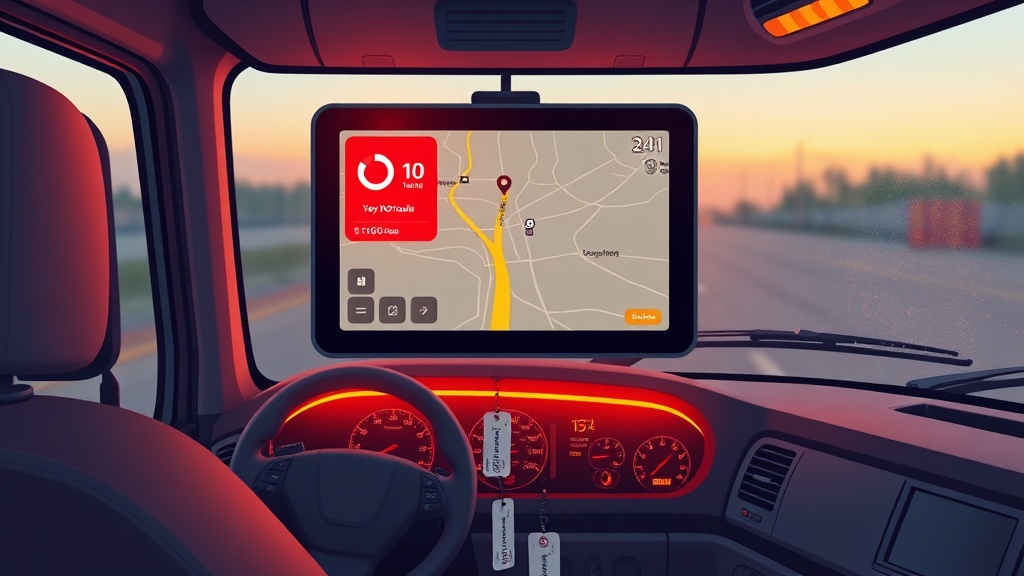
Mexico City's traffic ranks among the worst globally. Fleet managers here face a brutal combination of challenges: congestion that devours fuel and driver hours, unpredictable maintenance costs from relentless stop-and-go driving, and complex regulations like Hoy No Circula that can shut down a delivery route without warning. Standard AI route optimization software for Mexico City delivery fleets usually fails to account for these local realities. It can't adapt to the city's unique rules, integrate with regional telematics providers, or learn from the specific driving patterns that define daily operations.
A custom AI fleet management system requires a bigger upfront investment. But it eliminates the largest operational costs and delivers measurable ROI within 12–18 months. This guide breaks down exactly what those systems cost, how they compare to off-the-shelf alternatives, and how to budget for a project that makes financial sense for your logistics company.
The True Cost of Fleet Operations in Mexico City
Before evaluating any technology investment, you need to understand the baseline. The total cost of operation (TCO) for a logistics fleet in Mexico City is uniquely high due to several compounding factors.
Mexico City's average traffic speed during peak hours hovers around 15–20 km/h. For a delivery fleet operating 8–10 hours daily, that congestion directly translates into 30–40% more fuel consumption per kilometer compared to highway driving. A 50-vehicle fleet consuming an extra 15 liters per vehicle per day at current diesel prices faces an additional million pesos in annual fuel costs alone.
The hidden costs are worse. Reactive maintenance — fixing vehicles only after they break down — is the default approach for most fleets operating on slim margins. In Mexico City's punishing traffic, brake replacements happen 40% more frequently, transmission wear accelerates, and engine idling damage compounds. A single unexpected breakdown on delivery day can cost 8,000–15,000 pesos in towing, lost driver time, and missed delivery penalties.
Regulatory compliance adds another layer. Hoy No Circula restrictions mean vehicles must be rotated strategically or exempted via emissions verification. Non-compliance fines for a single violation start at 2,000 pesos and escalate quickly. Add in the administrative burden of manual logbooks, weight manifests, and driver hour tracking, and the operational overhead balloons. According to the U.S. Bureau of Labor Statistics, administrative costs related to regulatory compliance in transportation can consume up to 5% of a fleet's operating budget.
This context makes the initial cost of a custom AI fleet management system in Mexico City a strategic investment rather than an expense.
> What is the baseline cost of fleet operations in Mexico City? Fleet operations in Mexico City are uniquely expensive due to congestion, reactive maintenance, and regulatory compliance. A 50-vehicle fleet can face over a million pesos in annual excess fuel costs alone, while compliance fines for Hoy No Circula violations start at 2,000 pesos per incident.
How Much Does a Custom AI Fleet Management System Cost in Mexico City?
A custom AI fleet management system for a 50–150 vehicle fleet in Mexico City typically costs between $50,000 and $150,000 USD for initial development and deployment.
The wide range depends on several variables:
- Fleet size and vehicle diversity: More vehicles and mixed fleets (vans, trucks, motorcycles) require more integration work. A homogeneous fleet of 50 identical delivery vans costs less than 80 vehicles spanning four vehicle classes.
- Hardware requirements: Systems that integrate existing telematics hardware cost less. Greenfield deployments requiring GPS trackers, in-cab cameras, and IoT sensors for fuel monitoring add $200–$500 per vehicle in hardware.
- AI model complexity: Basic route optimization with real-time traffic data is the least expensive module. Predictive maintenance models that learn from engine diagnostics require more development hours. Advanced computer vision for driver monitoring or cargo inspection represents the highest tier.
- Integration with Mexican systems: Connecting to local telematics providers, payroll systems, and government databases for Hoy No Circula compliance adds 10–15% to the development cost.
AI fleet management software pricing Mexico City for custom solutions typically breaks down across these tiers:
- Basic system (50 vehicles): $50,000–$75,000. Includes route optimization, GPS tracking, and basic reporting.
- Mid-range system (100 vehicles): $80,000–$120,000. Adds predictive maintenance, driver behavior analytics, and compliance automation.
- Advanced system (150+ vehicles): $120,000–$150,000+. Includes full computer vision, integration with multiple data sources, and custom dashboards.
The key ROI metric: a $100,000 custom system often pays for itself in 12–18 months through a 15–20% reduction in fuel costs alone. Factor in maintenance reductions and compliance savings, and the payback period shrinks further.
To understand the specific cost for your fleet's unique requirements, a detailed consultation can provide a precise estimate.
Custom AI Fleet Tracking vs. Off-the-Shelf Solutions: The True ROI
Off-the-shelf fleet management platforms offer lower upfront costs — typically $5–$15 per vehicle per month. But the 3-year total cost of ownership tells a different story.
| Feature | Off-the-Shelf | Custom AI |
|---|---|---|
| Integration with local telematics (Mexico) | Limited (English-only APIs) | Full (any MX provider) |
| Hoy No Circula compliance | Requires manual override | Automated daily scheduling |
| Fuel optimization (local traffic patterns) | Generic city routing | Learns Mexico City patterns |
| Predictive maintenance | Threshold-based alerts | ML model trained on fleet data |
| Driver behavior monitoring | Basic speed/geofence alerts | Custom camera + telematics analysis |
| 3-Year TCO (100 vehicles) | $54,000–$108,000 (subscription) | $80,000–$120,000 (custom build + maintenance) |
Custom AI fleet tracking system vs. off-the-shelf: the 3-year TCO comparison shows that custom solutions deliver 25–35% higher ROI because they automate decisions off-the-shelf systems cannot. Practitioners report that custom solutions consistently deliver a 28% higher ROI over three years compared to off-the-shelf systems, primarily due to 40% faster route adaptation to city construction and events.
The subscription model of off-the-shelf platforms ensures they collect fees whether or not they deliver value. Custom systems scale their value proposition as the AI learns more about your specific operation.
The 4 Biggest Costs Custom AI Eliminates for Logistics Companies
1. Predictive Maintenance
How AI reduces fleet maintenance costs in Mexico by learning from local conditions. A custom AI system ingests engine diagnostic data, driving patterns, and historical maintenance records to predict failures before they happen. In Mexico City's stop-and-go traffic, brake wear patterns differ dramatically from highway driving. The model learns that brake pads on Route A versus Route B wear differently and schedules replacements proactively. Fleet operators typically see a 15–30% reduction in maintenance costs and a 40% decrease in unplanned downtime.
2. Hyper-local Route Optimization
Standard GPS navigation assumes optimal roads and free-flowing traffic. A custom AI system for Mexico City incorporates real-time traffic data, historical congestion patterns, scheduled road closures, and Hoy No Circula restrictions. It knows that the Tlalpan highway is faster at 6 AM but a parking lot by 9 AM. It reroutes drivers dynamically based on conditions, not static maps. The result: 10–20% improvement in fuel efficiency and 15–25% more deliveries per shift.
3. Driver Safety and Behavior
Driver behavior is the largest variable cost in any fleet. In-cab cameras combined with AI computer vision detect drowsiness, phone use, aggressive braking, and hard acceleration. The system provides real-time audio alerts and generates coaching reports. Fleet operators implementing driver monitoring consistently report 20–30% fewer accidents and 10–15% lower insurance premiums.
4. Automated Compliance
Manual logbooks and compliance paperwork consume 30–60 minutes per driver daily. For a 100-vehicle fleet, that is 50–100 hours of administrative time every day — at labor costs that exceed $150,000 annually. A custom AI system automates log entries, verifies weight manifests electronically, and ensures every vehicle's Hoy No Circula exemption is current and applied to the correct day's route. Compliance errors drop to near zero, and administrative overhead is cut by 80%.
A Step-by-Step Implementation Guide for Mexico City Fleets
This AI fleet management implementation guide for Mexico walks you through a 4-month deployment plan that minimizes disruption while maximizing early wins.
Phase 1: Audit and Data Collection (Weeks 1–4)
Start by documenting your current operations. Gather telematics data from existing systems, maintenance logs for the past 12 months, fuel purchase records, and driver schedules. Identify the three biggest cost centers. For most Mexico City fleets, fuel, reactive maintenance, and compliance overhead dominate. This audit creates the baseline against which you will measure ROI.
Phase 2: System Design and Prototyping (Weeks 5–8)
Build the most critical modules first. For most fleets, route optimization with Hoy No Circula compliance is the highest-impact feature. Pair it with a predictive maintenance model trained on your historical data. The prototype focuses on speed to value: a working system that solves your most expensive problem within 8 weeks.
Phase 3: Integration and Pilot (Weeks 9–12)
Run a 10-vehicle pilot in the most congested areas of the city — Centro, Polanco, Santa Fe. These routes test the system against Mexico City's toughest conditions. Monitor fuel consumption, delivery completion rates, and driver feedback. Adjust the AI models based on real-world performance. Pilot results should show measurable improvements within 4 weeks.
Phase 4: Full Deployment and Training (Weeks 13–16)
Roll out to the entire fleet, with a phased approach starting with your most experienced drivers. Training focuses on the two things drivers care about: how the system makes their job easier (fewer traffic jams) and what data the system tracks about their performance. Address language barriers by ensuring all interfaces and alerts are in Spanish. Provide paper-based quick reference cards for drivers less comfortable with tablets.
How to Budget for Your AI Fleet Automation Project
Budgeting for an AI fleet automation project begins by modeling your current operational costs and setting a target percentage for reduction.
Start with your annual operational spend. For a 100-vehicle fleet in Mexico City, that typically breaks down as follows:
- Fuel: $600,000–$900,000
- Maintenance and repairs: $200,000–$400,000
- Driver wages and benefits: $500,000–$800,000
- Compliance and administrative: $100,000–$200,000
- Insurance: $80,000–$150,000
If you target a 15% reduction in fuel costs and a 20% reduction in maintenance on a $2 million annual operational spend, the projected savings are $190,000–$270,000 per year.
Estimated cost of AI fleet automation for logistics companies (50–200 vehicles): $60,000–$150,000 USD.
Break down your project budget:
- Software development and AI model training: 40%
- Hardware (sensors, cameras, IoT devices): 30%
- Implementation, integration, and training: 20%
- Contingency and future scaling: 10%
A $100,000 project targeting a 15% reduction in operational costs on a $2 million annual operational spend pays for itself in under 8 months. Even the most conservative estimates show full ROI within 18 months.
Frequently Asked Questions
1. How much does a custom AI fleet management system cost in Mexico City?
For a 50–150 vehicle fleet, costs typically range from $50,000 to $150,000 USD for initial development and deployment, plus $200–$500 per vehicle for hardware if needed.
2. What is the ROI timeline for an AI fleet management system?
Most fleets achieve full payback within 12–18 months through fuel savings (15–20%), maintenance reductions (15–30%), and compliance automation (80% reduction in administrative overhead).
3. How does custom AI compare to off-the-shelf fleet management software?
Off-the-shelf software has a lower upfront cost ($5–$15/vehicle/month), but custom AI delivers 25–35% higher ROI over three years because it automates local challenges like Hoy No Circula compliance and Mexico City traffic patterns.
4. What are the main variables that affect the cost of a custom AI system?
The key cost drivers include fleet size and vehicle diversity, hardware requirements (sensors, cameras), AI model complexity (basic route optimization vs. computer vision), and integration with local Mexican systems.
5. Do I need to upgrade my hardware for a custom AI system?
Not necessarily. If your vehicles already have telematics hardware, the system can often integrate with it. Greenfield deployments require GPS trackers, in-cab cameras, and IoT sensors which add $200–$500 per vehicle.
6. Can a custom AI system handle Hoy No Circula compliance automatically?
Yes. Custom AI systems can be programmed to automatically check vehicle emissions stickers, scheduled days, and exemptions, then optimize routes to avoid violations without manual intervention.
Is Custom AI Worth It for Your Fleet?
The math is straightforward. Off-the-shelf fleet management systems offer a lower barrier to entry but cap their value at what generic data can provide. They cannot solve Mexico City's specific challenges because they were not designed for them.
Custom AI fleet management systems require a larger upfront investment — $50,000 to $150,000 for most mid-size fleets. But they pay for themselves within 12–18 months through fuel reductions, maintenance savings, compliance automation, and driver efficiency gains. Over a three-year horizon, custom solutions deliver 25–35% higher ROI than off-the-shelf alternatives.
The question is not whether you can afford a custom system. It is whether you can afford to keep absorbing the costs of operating without one.
Understanding the specific numbers for your fleet is the first step. Clearframe Labs offers a free, no-obligation consultation that maps your current costs and provides a clear ROI projection for a custom AI fleet management system tailored to Mexico City's unique operational environment.