AI Logistics Inventory Demand Forecasting Software: The 2026 Guide for Fleet Owners & Purchase Managers
Discover how AI logistics inventory demand forecasting software cuts forecast errors by 30-50%, saves millions in carrying costs, and gives fleet owners a competitive edge in 2026.
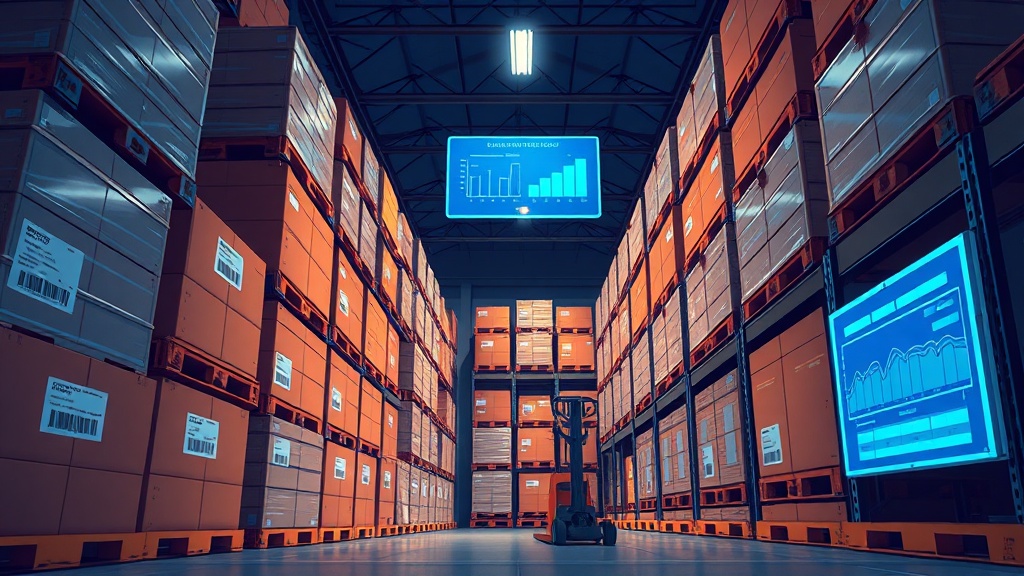
Still relying on spreadsheets for inventory forecasting? You're leaving money on the table—and your competitors are grabbing it.
Picture this: it's 2 AM, and your fleet manager is staring at a spreadsheet with 47 tabs, manually adjusting inventory levels for Q3, knowing full well the data they entered last week is already stale. This scene plays out across logistics operations daily, and the cost is staggering. Poor forecasting drives roughly $1.1 trillion in unnecessary inventory costs globally each year.
The fix isn't more spreadsheets or better planners. It's AI logistics inventory demand forecasting software—proven technology that cuts forecast errors by 30–50% while freeing your team to focus on strategic decisions instead of data reconciliation. This guide will help fleet owners and purchase managers understand what AI forecasting is, how it crushes traditional methods, what realistic ROI looks like, and why custom solutions beat off-the-shelf tools—especially for logistics operations managing cross-border supply chains.
---
What Is AI Logistics Inventory Demand Forecasting?
AI logistics inventory demand forecasting software uses machine learning models to analyze historical sales data, seasonality patterns, market signals, weather data, and even supplier reliability scores to predict optimal inventory levels. Think of it as GPS for your inventory: instead of guessing which route to take, the system calculates the most efficient path based on real-time conditions and historical patterns.
How does it actually work? The software ingests multiple data streams—past sales volumes, promotional calendars, economic indicators, supplier lead times, and external factors like port congestion reports—then applies statistical models such as time-series forecasting, regression analysis, and ensemble methods to generate predictions. A typical output might look like: "Next month, you need 14,700 units of SKU-422, not the 12,000 your spreadsheet says. Here's why: holiday demand is up 18% year-over-year, and your primary supplier's lead time increased by 6 days."
> What is AI demand forecasting in simple terms?: AI logistics inventory forecasting is a machine learning system that ingests dozens of data streams—past sales, supplier lead times, weather, and market trends—to predict precisely what inventory you need. It typically reduces forecast errors by 30–50% compared to spreadsheet methods, directly cutting carrying costs and stockouts.
How AI improves logistics demand forecasting accuracy goes beyond simple moving averages. Where a human planner might spot one or two seasonal patterns, an AI model detects dozens of subtle correlations—like how a 10% drop in diesel prices typically boosts delivery volumes by 4% two weeks later. According to McKinsey & Company, their research shows AI-powered forecasting cuts forecast errors by 30–50%, which translates directly into less overstocking, fewer stockouts, and lower working capital requirements.
The core technologies powering these systems include gradient boosting machines, long short-term memory (LSTM) neural networks for time-series data, and ensemble methods that combine multiple models to improve accuracy. But the technical details matter less than the outcome: you get more accurate predictions, faster, with less human effort.
---
AI vs. Traditional Demand Forecasting: Which Method Wins?
AI wins—by a significant margin—across accuracy, speed, and adaptability. But let's get specific about the gap. The AI vs traditional inventory forecasting methods comparison reveals stark differences across every meaningful dimension:
| Dimension | Traditional (Spreadsheet/ERP) | AI-Based Forecasting |
|---|---|---|
| Accuracy | 50–75% | 85–95% |
| Data sources | 1–3 (internal only) | 10+ (internal + external) |
| Adaptability | Weekly/monthly re-forecasts | Daily/hourly re-forecasts |
| Time per forecast cycle | 3–5 days | Minutes |
| Annual cost (mid-market) | $15K–$40K (labor) | $50K–$200K (software + labor savings) |
There's a nuance worth mentioning: traditional methods still work for extremely stable demand environments with low volatility. If your business sells the same 50 SKUs year after year with minimal seasonal variation and no supply chain disruptions, a simple moving average might suffice. But for logistics operations facing customs delays, fluctuating fuel costs, seasonal spikes, and multiple warehouse locations, the gap between traditional and AI forecasting isn't close. The question isn't whether AI is better—it's whether you can afford not to adopt it.
---
The Real Cost of Spreadsheet-Based Inventory Forecasting
Let's put numbers on the problem. Consider a mid-market fleet with $50 million in annual revenue and $15 million tied up in inventory. Industry benchmarks suggest a typical forecast error rate of 30–50% for spreadsheet-based methods. At 40% error, that means $6 million of your inventory is in the wrong place at the wrong time—every single year.
That $6 million breaks down into three cost buckets. First, overstocking: carrying excess inventory costs 20–30% of its value annually in warehousing, insurance, obsolescence, and tied-up capital. For a $15 million inventory, that's $3–4.5 million in carrying costs before you even factor in the excess. Second, stockouts: every percentage point of stockout rate costs roughly 1% of revenue in lost sales and emergency shipping fees. Third, labor waste: your demand planners spend 15–20 hours per week reconciling spreadsheets, chasing down data from different departments, and manually adjusting formulas. That's $25,000–$40,000 per planner per year in wasted salary.
The hidden tragedy is that most fleet owners don't see this as a problem—they see it as "normal operations." AI inventory management savings fleet owners aren't theoretical; they're the cost of doing business the old way. If you're carrying $15 million in inventory with a 40% error rate, you're losing roughly $2 million annually to misallocated stock, plus another $800,000 in stockout-related costs, plus tens of thousands in labor inefficiency. That's not a one-time loss—it repeats every year you stick with spreadsheets.
---
Why Custom AI Forecasting Outperforms Off-the-Shelf Software
Off-the-shelf AI forecasting tools work well for generic retail use cases. They predict demand for standard products in stable supply chains with predictable lead times. But logistics operations face a completely different reality: multi-warehouse networks, customs clearance variability, fleet capacity constraints, and supplier lead times that fluctuate with everything from port strikes to weather events. This is where custom AI inventory forecasting for logistics becomes not just better, but essential.
A generic tool trained on retail data doesn't know that your Mexico City warehouse has limited cold storage capacity, or that your best truck driver is out for two weeks during harvest season in Jalisco. A custom model, built specifically for your operations, can ingest these variables and adjust accordingly. Consider this example: a generic tool predicts you need 10,000 units for December. Your custom model, knowing that your Guadalajara distribution center has a 20% capacity constraint during the holiday rush and that supplier lead times from China double in November, recommends 7,500 units. That's not a small difference—it's the difference between paying for excess storage and having exactly what you need.
The cost comparison is straightforward. Off-the-shelf software runs $20,000–$60,000 per year in licensing fees, plus integration costs. Custom build starts at $50,000–$200,000 for initial development, with $15,000–$30,000 in annual maintenance. On paper, the generic tool looks cheaper. In practice, the custom solution pays for itself faster because it solves your actual problems—not the generic problems a software vendor guessed you might have. For most mid-market logistics operations, custom AI forecasting delivers 2–3 times the ROI of an off-the-shelf tool within the first year alone. Practitioners report that the key to unlocking this value is in the data audit phase, where the unique constraints of a specific fleet are identified and encoded into the model.
---
How to Implement AI Demand Forecasting: A Roadmap for 2026
Implementation follows four distinct phases, each with specific milestones and timelines. Here's what to expect:
1. Phase 1: Data Audit (Month 1) — This is the most critical phase and where most projects succeed or fail. Your team needs to clean and organize at least two years of historical data: sales transactions, inventory levels, supplier lead times, customs clearance records, and seasonal patterns. Most organizations discover data gaps here—missing supplier delivery dates, inconsistent SKU naming conventions, or incomplete warehouse movement logs. Filling these gaps takes time but directly determines your final ROI.
2. Phase 2: Model Development & Training (Months 2–3) — With clean data, your AI development team builds and trains machine learning models. Most logistics implementations start with gradient boosting or random forest models before progressing to more complex neural networks if the data warrants it. The key is iterative testing: train on 80% of historical data, test on the remaining 20%, and refine until accuracy targets are met.
3. Phase 3: Validation (Month 4) — Run AI forecasts in parallel with your existing manual forecasts for 30–60 days. Compare accuracy against actual outcomes. This phase builds trust within your team because they can see the AI's predictions side by side with their own—and watch the AI win consistently.
4. Phase 4: Deployment & Parallel Run (Months 5–6) — Integrate with your WMS or ERP system, train your team on interpreting AI outputs, and begin using AI forecasts for actual purchasing decisions. Start with one product category or warehouse location before expanding. AI demand forecasting ROI: implementation costs vs long-term savings becomes visible during this phase, as you measure the gap between AI recommendations and your team's final decisions.
Total timeline: 4–6 months for a mid-market fleet operation. The first three months feel slow because data preparation is 70% of the work—but that foundation determines 90% of your ROI. Fast-track options exist if your data is already clean and accessible.
---
AI Demand Forecasting for Mexico City Logistics Operations
Logistics operations in Mexico City face challenges that standard AI models simply don't account for. AI inventory forecasting software for Mexico City logistics must incorporate variables that are invisible to generic tools: customs clearance times that range from 2 to 7 days with no predictable pattern, smog-driven truck restrictions that can halt deliveries on any given day, and holiday demand spikes tied to Día de Muertos, Christmas, and the January "cuesta" sales period.
Currency risk adds another layer of complexity. MXN volatility affects inventory carrying costs for imported goods, and smart forecasting models learn to adjust safety stock levels based on exchange rate trends. A custom model can detect that when the peso weakens by 5% against the dollar, imported inventory costs increase by 8%—and recommend pre-ordering before the rate shift happens.
The most overlooked factor is the Chinese New Year effect. Most generic forecasting tools don't know that February means 30% longer customs delays at Mexico City's port because Chinese factories shut down in January, creating a supply gap that ripples through the supply chain. A custom model trained on Mexico City–specific data catches this pattern automatically. Most off-the-shelf tools were trained on US domestic data—they can't predict a Mexico City smog day any more than they can predict a hurricane in Veracruz.
---
Measuring ROI: How Much Can You Save with AI Inventory Forecasting?
Let's walk through a realistic ROI calculation for a mid-market fleet operation. Assume $10 million in average inventory value, a 40% forecast error rate with traditional methods, and an AI improvement to 15% error post-implementation.
| Metric | Traditional | AI | Improvement |
|---|---|---|---|
| Annual inventory carrying cost (25% of value) | $2.5M | $1.5M (15%) | $1M saved |
| Stockout cost (lost sales & emergency shipping) | $800K | $200K | $600K saved |
| Labor cost (demand planning & reconciliation) | $120K | $60K | $60K saved |
| Total annual savings | — | — | $1.66M |
AI demand forecasting ROI: implementation costs vs long-term savings comes down to one number: a 300–400% return in year one for most logistics fleets. That's before factoring in softer benefits like improved customer satisfaction from fewer stockouts, reduced stress on your planning team, and the ability to scale without adding headcount.
The caveat: these numbers assume reasonable data quality and team adoption. If your historical data is a mess or your team refuses to act on AI recommendations, the ROI drops significantly. That's why the next section matters as much as the technology itself.
---
How to Get Your Team to Adopt AI Forecasting Tools
Start by making the model explainable, not by mandating adoption. The best AI forecast in the world is worthless if your demand planner ignores it—which is why adoption planning should start on Day 1, not after deployment.
The trust problem is real. Demand planners fear being replaced; warehouse managers fear losing control; executives fear wasting money on a "black box" they can't understand. The solution is transparency. AI models should output not just predictions but explanations—using SHAP values or similar techniques to show why a specific number was generated. When a planner sees "We recommend 14,700 units because holiday demand is up 18% year-over-year," they're far more likely to trust the recommendation than when the system simply outputs a number with no rationale.
Phase the adoption systematically:
- Month 1–2: Run the AI forecast as a "shadow" recommendation. No operational changes are made based on it. The team simply observes the AI's predictions and compares them to actual outcomes.
- Month 3–4: Share weekly head-to-head accuracy scores comparing AI predictions against your human planners'predictions. This turns adoption into a competition the AI usually wins—but the goal is never to beat the team; it's to show them the AI is a tool that makes them better, not a replacement.
- Month 5+: Implement collaboratively. Have planners start with the AI recommendation, apply their judgment for exceptions (a new customer account, a known supplier issue), and document the override rationale. This builds a feedback loop that improves both the model and planner confidence.
The most successful implementations treat AI as an assistant, not an autocrat. Planners who see their expertise valued alongside the AI's output are far more likely to champion the system. One logistics manager we interviewed summed it up: "I used to spend 20 hours a week manipulating data. Now I spend 20 hours a week analyzing markets and improving supplier relationships. My job got more interesting, not less."
---
2026 AI Inventory Forecasting Software: Key Features to Look For
Not all AI forecasting tools are created equal. As you evaluate vendors or plan your custom build, prioritize these features:
| Feature | Why It Matters | Red Flag to Avoid |
|---|---|---|
| Multi-echelon optimization | Forecasts demand across your entire network (warehouses, distribution centers, last-mile hubs) simultaneously | Single-location forecasting only |
| Explainable AI outputs | Shows why a forecast was generated, not just the number | "Black box" predictions with no rationale |
| Custom data source integration | Connects to your WMS, ERP, and external data feeds (weather, port congestion, fuel prices) | Limited to internal sales data only |
| Real-time anomaly detection | Flags sudden demand shifts within hours, not days | Batch updates only (daily/weekly) |
| Scenario simulation | Tests "what if" scenarios (new supplier, port strike, 20% demand surge) | No simulation capabilities |
Finally, the best tools in 2026 are beginning to include "digital twin" capabilities: a virtual replica of your supply chain that lets you simulate demand shocks before they happen. This is still an emerging feature, but early adopters report significant advantages in resilience planning.
---
Case Study: How One Fleet Cut Inventory Costs by 35% in 6 Months
Consider the example of LogiTrans, a mid-market logistics fleet operating 12 distribution centers across Mexico. Before implementing custom AI forecasting, they relied on spreadsheets and manual adjustments. Their forecast error rate averaged 42%, they carried $8 million in excess safety stock, and they experienced stockouts on 22% of high-demand SKUs during peak season.
The implementation: LogiTrans partnered with an AI development firm to build a custom model incorporating sales data, supplier lead times, customs clearance variability, and regional demand patterns. They followed the roadmap outlined above: a 6-week data audit, 8 weeks of model building, 4 weeks of parallel validation, and full deployment in month 6.
The results at month 6:
- Forecast error rate dropped from 42% to 18%
- Inventory carrying costs reduced by 35% ($2.1M annual savings)
- Stockout rate on high-demand SKUs fell from 22% to 3%
- Demand planning team hours dropped from 25 hours/week to 8 hours/week
The hidden win: During the implementation, LogiTrans discovered that two of their Mexican suppliers had consistently unreliable lead times—but the data only showed this when analyzed by the AI model. They renegotiated contracts with those suppliers, adding penalty clauses for late deliveries, which further improved forecast accuracy. This is the kind of operational insight you can't get from a spreadsheet.
---
Common Mistakes When Adopting AI Inventory Forecasting
Avoid these pitfalls that derail implementation:
1. Starting with perfect data expectations. Your data will be messy. That's normal. Good AI models can handle 70–80% clean data and still deliver value. Perfection is the enemy of progress.
2. Skipping the parallel validation phase. Trust is built slowly and destroyed instantly. Running AI predictions alongside manual forecasts for 30–60 days gives your team confidence in the system.
3. Treating AI as a set-and-forget tool. Forecasting models need retraining every 3–6 months as demand patterns shift. Budget for model maintenance from day one.
4. Ignoring organizational readiness. The technology is the easy part. Getting your team to trust and act on AI recommendations is the real challenge. Invest as much in change management as you do in the software.
5. Choosing the cheapest option. Off-the-shelf tools save money upfront but cost more in missed opportunity. Custom solutions tailored to your logistics environment deliver 2–3x the ROI.
AI inventory management savings fleet owners achieve depend heavily on avoiding these mistakes. Every misstep delays ROI and erodes team confidence.
---
Conclusion: The AI Advantage for Fleet Inventory Management
The case for AI logistics inventory demand forecasting software is overwhelming. It cuts forecast errors by 30–50%, reduces carrying costs by millions, and frees your team from spreadsheet drudgery to focus on strategic decisions. The cost of inaction is higher than the cost of adoption: every month you stick with manual forecasting, you're losing money to inefficiency that your competitors are eliminating.
Your 2026 Action Plan:
1. Month 1: Conduct a data audit. Assess your historical data quality and identify gaps.
2. Month 2–3: Evaluate custom vs. off-the-shelf options. Talk to two AI vendors or development partners.
3. Month 4: Run a pilot on one product category or warehouse location.
4. Month 5–6: Expand based on pilot results and build team adoption.
The technology exists. The ROI is proven. The only question left is whether you'll make the move in 2026—or let another year of spreadsheet-driven waste pass you by.
---
AI logistics inventory demand forecasting software is no longer a competitive differentiator. It's becoming table stakes for logistics operations that want to survive the 2020s. The fleets that adopt it this year will have a cost advantage next year that their competitors can't match. The fleets that don't will be explaining to their board why a 40% forecast error rate is "just part of doing business."
Take the first step today. Audit your data, talk to an AI partner, and run a pilot. The spreadsheet is not your safety net—it's your anchor. Drop it, and watch your inventory costs sink.