AI vendor selection criteria for procurement
Use our AI vendor selection checklist to evaluate strategic alignment, technical due diligence, and partnership viability. Secure ROI and avoid costly pitfalls.
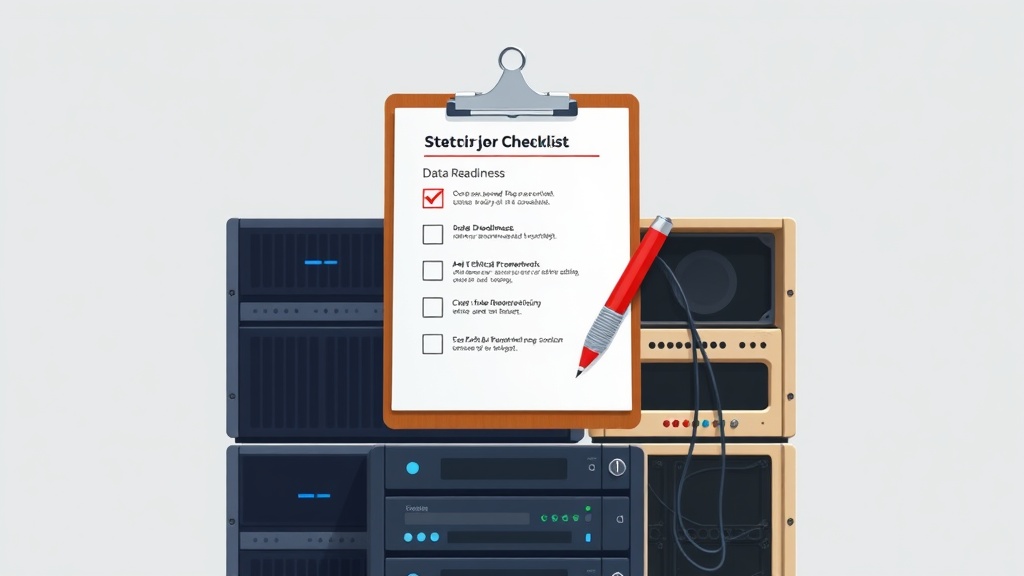
AI Vendor Selection Criteria Checklist for Procurement Teams
Choosing a vendor for a new accounting platform is complex. But selecting a partner to build and deploy custom Artificial Intelligence (AI) for your procurement or supply chain operations? That’s a different game entirely—one with far higher stakes. For purchase directors, fleet managers, and marketing leaders overseeing large budgets, a poor AI partnership risks more than clunky software. It can mean millions in wasted investment, a stalled digital transformation, and a lost competitive edge.
AI isn’t another piece of off-the-shelf software. It’s a capability that needs to be nurtured. Its success depends on your data, continuous learning, and a deep, strategic partnership. This guide cuts through the hype with a practical framework. We move past traditional IT checklists to focus on what actually determines whether an AI vendor will deliver real ROI, seamless integration, and long-term innovation.
Why Traditional IT Vendor Checklists Fall Short for AI
Buying standard enterprise software means evaluating features, uptime guarantees, and support costs. The product is essentially static after deployment. AI is different—it’s dynamic. You’re not just buying a tool; you’re investing in an ongoing process of learning and adaptation. That fundamental shift makes traditional checklists not just inadequate, but risky.
The failure points come down to three core issues. First, AI’s performance is tied directly to your data. Any checklist that doesn’t rigorously assess data readiness, quality, and integration pathways sets the project up to fail from the start. Second, model transparency is non-negotiable. In procurement—a function built on audit trails, compliance, and spend justification—a “black box” algorithm that can’t explain its decisions poses a serious operational and regulatory threat. Finally, AI needs continuous feedback loops. A vendor must show how their solution will learn from your team’s corrections and shifting market conditions, not just perform a one-time installation.
Apply the wrong framework, and the costs stack up quickly: sunk development costs, eroded stakeholder trust, and the missed opportunity of watching competitors successfully automate their source-to-pay cycles or fleet logistics. The pillars outlined here are designed to help you avoid those pitfalls and find a true strategic partner.
Core Pillars of Strategic Alignment
The most sophisticated AI model is useless if it doesn’t solve a real business problem. That’s why the first and most critical pillar of your evaluation must be strategic alignment. This means shifting the conversation from technical specs to tangible business outcomes and a clear vision for creating value.
Defining Success Metrics and ROI
Start by defining what success looks like—with numbers. Move past vague promises of “efficiency gains” to specific, vendor-validated KPIs. For procurement and fleet management, these often include:
* A 10-20% reduction in maverick (off-contract) spending through intelligent catalog enforcement and guided buying.
* 30-50% faster invoice processing cycles via automated data extraction and three-way matching.
* 15-25% lower processing costs per invoice or purchase order.
* Optimized fleet utilization and routing, leading to a 10-15% reduction in fuel costs and idle time.
A qualified vendor should work with you to model these ROI projections based on your current operations, not just industry averages. They need to articulate a clear path from a focused pilot to full production and scaled value.
To evaluate AI vendor ROI effectively, procurement teams must define precise, quantifiable metrics upfront, such as targeting a 20% reduction in maverick spend or 40% faster invoice cycles. A strategic vendor will co-develop a financial model based on your specific data and processes, moving beyond generic industry benchmarks to project a clear, achievable return on investment.
The Case Study Litmus Test
Case studies are your most powerful tool for gauging strategic fit. Look beyond flashy brand names and search for relevant domain experience. A vendor with proven success in automotive supply chain logistics will have more applicable insights for a fleet manager than one specializing in retail marketing. Scrutinize these case studies for specifics: the business problem solved, the exact metrics improved, and the timeline to value. This evidence shows whether the vendor can handle the unique complexities of your industry.
Conducting Technical Due Diligence Beyond the Buzzwords
Once strategic alignment is clear, it’s time to peel back the marketing layer and assess technical substance. This is where you answer the crucial, practical question: how to evaluate AI vendors for business automation at an architectural level.
Architecture & Avoiding Vendor Lock-In
Proprietary, monolithic platforms can trap your data and processes. Prioritize vendors who advocate for modular, API-first architectures built on microservices. This ensures the AI components can integrate seamlessly into your existing ERP (like SAP or Oracle), P2P, and telematics systems. A cloud-agnostic or hybrid-cloud design further future-proofs your investment, preventing expensive migrations later on.
Data Readiness and Integration
The vendor’s approach to your data can make or break the project. They must provide a clear methodology for data assessment, cleansing, and pipeline creation. Ask pointed questions: How will they connect to your on-premise databases or cloud data warehouses? What’s their process for handling unstructured data like PDF invoices or paper bills? Their ability to navigate your specific data landscape is a stronger indicator of success than the raw power of their algorithms. Remember, a model is only as good as the data it learns from.
Successful AI implementation hinges on data readiness, requiring vendors to demonstrate robust methodologies for integrating and cleansing diverse data sources, from structured ERP databases to unstructured PDF invoices. A vendor's ability to build secure, scalable data pipelines that feed high-quality information into their models is a more critical success factor than the theoretical sophistication of their algorithms.
Model Transparency and Explainability
For functions like procurement and fleet management, you cannotaccept blind recommendations. You need to understand why the AI suggested a particular supplier, flagged an invoice for review, or rerouted a delivery. Demand explainable AI (XAI) features. The vendor should be able to provide clear, auditable reasons for every significant decision or prediction. This is essential for internal stakeholder buy-in, regulatory compliance, and continuous process improvement.
Security, Compliance, and Ethical AI
AI systems in the supply chain handle sensitive data—from supplier financials to real-time vehicle locations. The vendor’s security posture must be enterprise-grade. Certifications like SOC 2 Type II, ISO 27001, and adherence to data privacy regulations (GDPR, CCPA) are table stakes. Furthermore, you must assess their commitment to ethical AI. This includes proactive bias testing in models (e.g., ensuring supplier recommendation algorithms are fair) and clear policies on data sovereignty and usage. Their framework should align with your corporate governance and ESG goals.
Evaluating the Partnership and Operational Model
The final pillar moves beyond the technology to assess the people and processes behind it. AI is not a "set it and forget it" solution; it requires an ongoing, collaborative relationship.
Implementation and Change Management Support
A vendor's project plan should dedicate significant resources to change management and user adoption. Do they offer comprehensive training tailored to different user roles (e.g., buyers, AP clerks, fleet dispatchers)? Will they help you develop new policies and workflows? Their team should act as an extension of yours, ensuring a smooth transition and maximizing user proficiency from day one.
The Team Behind the Technology
Evaluate the vendor’s core team. You want access to experienced data scientists, ML engineers, and domain experts—not just sales and support staff. Understand their retention rates and how they structure client engagements. Will you have a dedicated success manager? What is the escalation path for technical issues? The quality and stability of their team are direct indicators of the partnership's long-term health.
Roadmap and Co-Innovation
A strategic partner invests in the future with you. Review their product roadmap and assess how much of it is driven by client feedback. Do they have a formal process for capturing your input and prioritizing features? The ideal vendor views the relationship as a co-innovation journey, where your evolving needs directly shape the platform's development, ensuring it continues to deliver value for years to come.
The AI Vendor Selection Checklist
Use this actionable checklist to systematically score potential vendors during your RFP and demo processes.
Strategic & Business Alignment
- [ ] Vendor has co-developed specific, quantifiable ROI metrics (e.g., % cost reduction, cycle time improvement) based on our data.
- [ ] They provide detailed case studies with verifiable results from our industry or a closely analogous domain.
- [ ] Their stated vision for the partnership extends beyond implementation to continuous value creation and optimization.
Technical & Architectural Due Diligence
- [ ] Platform is built on a modular, API-first, microservices architecture.
- [ ] Solution is cloud-agnostic or supports our preferred hybrid/cloud environment.
- [ ] Vendor provides a clear, documented methodology for data assessment, pipeline integration, and ongoing data quality management.
- [ ] AI models offer built-in explainability (XAI) for key decisions, with audit-ready logs.
- [ ] Security certifications (SOC 2, ISO 27001) and data privacy compliance are verified.
- [ ] A formal ethical AI framework, including bias testing, is documented and shared.
Partnership & Operational Viability
- [ ] Implementation plan includes a robust change management and training program for end-users.
- [ ] We have met the key technical team members (data scientists, solution architects) and reviewed their credentials.
- [ ] Contract includes clear SLAs for performance, uptime, and support response times.
- [ ] A dedicated customer success manager is assigned for the lifecycle of the partnership.
- [ ] There is a transparent, client-influenced product roadmap and a process for submitting enhancement requests.
Conclusion: Selecting a Partner, Not a Product
Selecting an AI vendor for procurement, supply chain, or fleet automation is a foundational decision. By applying this framework—rooted in strategic alignment, technical depth, and partnership quality—you move beyond a features comparison to a true capability assessment. The right partner will not only deploy a powerful tool but will embed a learning system within your operations, one that drives efficiency, insight, and resilience for the long term. Use this guide to ask the hard questions, demand evidence over promises, and forge a partnership that turns AI ambition into tangible, sustainable advantage.