A Practical Guide to Custom AI Healthcare Analytics Platform Development in 2026
Build a custom AI healthcare analytics platform in 2026 with our 7-step playbook. Learn how to reduce readmissions, integrate with EHRs, and achieve 5x ROI. Start your project today.
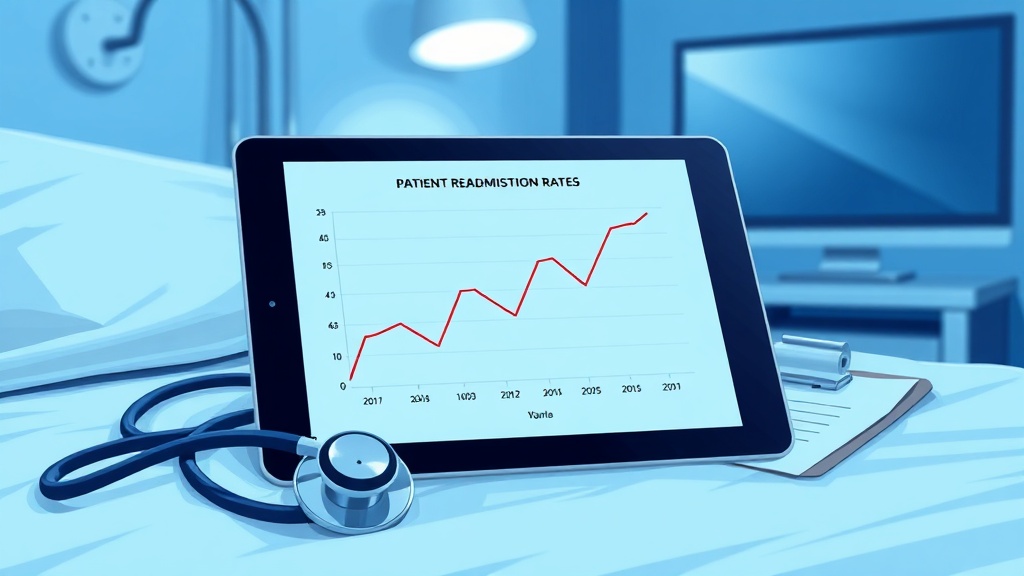
Healthcare generates a firehose of data every day—electronic health records, lab results, imaging studies, and claim submissions. Most organizations still struggle to turn that firehose into a drinkable glass of actionable insight. The benefits of AI in healthcare data analytics in 2026 are real and fully measurable, but they're usually locked behind off-the-shelf business intelligence tools that ask the wrong questions.
This guide offers a practical, seven-step playbook for building a custom AI healthcare analytics platform that plugs directly into your existing workflows and delivers hard ROI.
What you'll learn: How to move from vague wishes for "better analytics" to a production-ready AI system, following seven concrete steps from use case definition to scaling with AI agents.
What you'll need: Access to clean clinical or operational data, an executive stakeholder with a budget, a realistic development budget, and a technical partner who knows HIPAA-compliant AI engineering inside out.
> What is the first step in building a custom AI healthcare analytics platform?: The first step is defining a single, high-impact, measurable use case—such as reducing 30-day readmission rates for heart failure patients. Avoid trying to boil the ocean by building a dashboard for every possible metric; focus on one specific outcome that saves at least $500,000 per year with a 10% improvement.
---
Step 1: Define a High-Impact, Measurable Use Case
The first step in building a custom AI analytics solution is selecting a single, high-value use case that directly addresses a measurable operational or clinical bottleneck, such as reducing readmission rates or optimizing OR scheduling. Most AI pilots fail because organizations try to boil the ocean. They build a dashboard showing every possible metric, which means no one makes a specific, better decision.
Apply a simple sanity check: would a 10% improvement in this metric save more than $500,000 per year? If the answer is no, move on. For implementing predictive analytics in clinical workflows, a great starting point is predicting 30-day readmissions for heart failure patients. That's a single outcome with a clear stakeholder (the care coordination team), a measurable baseline (your current readmission rate), and direct financial impact (fewer penalty payments from CMS).
According to industry research, readmission penalties under the Hospital Readmissions Reduction Program (HRRP) can cost hospitals hundreds of thousands of dollars annually per condition—making this a high-leverage use case for AI investment.
How to Validate the Use Case with Stakeholders
Before you write a single line of code, sit down with the clinicians and operations managers who will actually use the tool. Ask one question: "What decision do you make every single day that currently relies on guesswork?" If they can describe a clear pain point, you have a viable use case. If they say "we need better reporting," keep digging. AI Operations Managers need a crystal-clear KPI to measure success against—otherwise, the project never escapes the pilot black hole.
---
Step 2: Audit and Prepare Your Data Pipeline
Before any model training can begin, you must complete a comprehensive audit of your data sources to identify gaps, duplications, and missing fields that would corrupt the model. Data is scattered across EHRs (Electronic Health Records), claims databases, lab information systems, and patient portals—each using its own schema and formatting.
The core challenge is ETL (Extract, Transform, Load). You cannot feed raw EHR data into a model. It contains missing values, inconsistent date formats, duplicate patient records, and free-text notes that need proper NLP processing. A clean data pipeline is the difference between predictive analytics that works and a model that hallucinates.
For implementing predictive analytics in clinical workflows, you will almost certainly need to map your data to FHIR (Fast Healthcare Interoperability Resources) standards. This is where a healthcare data analytics consulting partner becomes worth their weight in gold. Mapping schemas across legacy systems is not a weekend hackathon—it is specialized engineering. Expect this phase to take four to eight weeks, depending on the number of source systems and their data quality.
> How do you prepare healthcare data for AI analytics?: Start by auditing all data sources—EHRs, claims databases, lab systems—and mapping them to FHIR standards. Then, run an ETL process to clean and normalize the data, handling missing values and inconsistent formats. This phase typically takes four to eight weeks and is the most critical step for ensuring model accuracy.
Key Data Sources and Their Challenges
| Data Source | Common Challenges | Recommended Solution |
|---|---|---|
| Electronic Health Records (EHR) | Missing values, inconsistent date formats, free-text notes | Map to FHIR standards; use NLP for text extraction |
| Claims Databases | Duplicate patient records, delayed data availability | Implement deterministic and probabilistic matching |
| Lab Information Systems | Variable naming conventions for tests | Create standardized lookup tables with LOINC codes |
| Patient Portals | Self-reported data with varying reliability | Validate against clinical records; flag anomalies |
| Imaging Studies | Large file sizes, unstructured metadata | Use DICOM metadata extraction with automated tagging |
Step 3: Choose the Right AI Model Architecture: AI Healthcare Data Analytics vs Traditional BI
The core difference between traditional BI and modern AI healthcare data analytics is that BI asks 'what happened?' while AI models ask 'what will happen next?' A BI dashboard shows last month's readmission rate broken down by department. An AI model predicts which specific patients are likely to be readmitted within 30 days and surfaces that prediction before discharge. This fundamental distinction drives the entire architecture decision—choose the wrong framework and you'll end up with an expensive dashboard instead of a predictive system that actually changes clinical decisions.
Predictive vs. Generative: Pick Your Fighter
For most clinical analytics use cases, you need predictive (supervised) models, not generative AI. Random Forest classifiers work well for risk stratification and patient segmentation. LSTM (Long Short-Term Memory) networks handle time-series predictions like vitals deterioration or length-of-stay estimation. Transformer models are the right choice for extracting structured information from messy clinical notes. The AI healthcare data analytics vs traditional BI debate is really about whether you need descriptive reports or prescriptive predictions—and in a clinical setting, predictions drive action.
The "Black Box" Problem in Clinical Decision Support
Clinicians will not trust a model they cannot explain. Period. That is a major constraint when choosing your architecture. HIPAA compliant AI data analysis software often incorporates techniques like SHAP (SHapley Additive exPlanations) values or LIME (Local Interpretable Model-agnostic Explanations) to show which features drove a specific prediction. Use the architecture phase to also consider privacy-preserving techniques like federated learning or differential privacy, which allow models to train across multiple hospital sites without centralizing protected health information.
Practitioners report that explainability is the single most underestimated requirement in healthcare AI—skip it at your own risk.
---
Step 4: Develop the MVP for Your Custom AI Healthcare Analytics Platform
The MVP for your custom AI healthcare analytics platform development should focus on delivering a single, validated prediction to a limited set of clinicians within 8–12 weeks. Keep the scope deliberately narrow: one model, one user interface, one integration point. Resist the urge to build a Swiss Army knife.
The tech stack usually includes API endpoints for serving predictions, cloud infrastructure with HIPAA-eligible services, and containerized model deployment. During the development phase, a partner like Clearframe Labs handles the end-to-end engineering—building the model, the secure API layer, and the front-end dashboard that sits on top of your existing EHR. (Reference: `/services/ai-machine-learning` and `/services`). The MVP should also include a basic workflow automation component, like an alert that notifies a care coordinator when a patient's readmission risk hits a threshold.
The goal here is validation, not perfection. Prove the prediction is accurate and that clinicians actually find it useful. Optimize for speed to validation, not scale.
> How long does it take to build an MVP for a healthcare AI platform?: An MVP typically takes eight to twelve weeks to deliver. It should focus on one validated prediction (e.g., readmission risk) served to a small group of clinicians via a simple dashboard or alert. The key is to prove accuracy and clinical usefulness before scaling.
---
Step 5: Integrate with Clinical Workflows (The Hard Part)
The key to successful integration is making the AI output actionable within the existing clinical workflow, which requires building a HIPAA compliant AI data analysis software that connects directly to the EHR. If the model makes predictions but no one sees them, you've just spent hundreds of thousands of dollars on a science experiment. Integration is where most healthcare AI projects fail because teams underestimate the complexity of embedding predictions into real-time clinical decision-making.
API Integration with the EHR (HL7/FHIR)
The AI system must pull data from the EHR via FHIR APIs and push predictions back into the clinician's existing interface. That could be as simple as a risk score appearing as a new column on the patient list, or as complex as an automated alert triggered by a specific threshold. Either way, the connection must be secure, auditable, and compliant with the hospital's existing data governance policies.
User Interface Design for Clinical Staff (Avoiding Alert Fatigue)
Clinicians are already drowning in alerts. If your system adds one more pop-up, they will mute it within a week. The UI needs to be either passive (a dashboard they check when they have time) or smart (a prioritized alert that fires only for the highest-risk patients). Implementing predictive analytics in clinical workflows requires a real understanding of how care teams actually make decisions—not how you wish they made them.
HIPAA compliance is not a feature you can bolt on later. It is an engineering foundation governing how data is encrypted at rest and in transit, how access is logged and audited, and how Business Associate Agreements (BAAs) are managed with cloud providers. This means every data pipeline, every API call, and every model output must be built with compliance as a prerequisite, not an afterthought.
---
Step 6: Pilot, Validate, and Iterate
A clinical pilot involves running the AI solution alongside standard-of-care decision-making to compare outcomes and measure model accuracy against ground truth. Do not replace the existing process yet. Run both systems in parallel for at least three months, then measure how often the AI prediction matches the actual patient outcome.
Model drift is a real concern. Patient populations change, clinical protocols evolve, and data quality fluctuates. Use the pilot phase to establish a retraining cadence—quarterly for readmission models works well, though higher-frequency models need monthly updates.
Now, estimate the ROI. A well-targeted use case typically delivers a 15-20% reduction in the targeted metric—translating to significant cost savings. For example, a platform that reduces 30-day readmissions by 20% in a mid-size hospital can save over $2 million annually. Catching errors during the pilot phase significantly lowers the average cost of custom AI analytics for healthcare, because you fix problems before they hit production.
> How do you validate a healthcare AI analytics platform?: Run a three-month pilot alongside standard-of-care decision-making—don't replace the existing process yet. Measure how often the AI prediction matches the actual patient outcome, and establish a retraining cadence to combat model drift. A validated platform typically delivers a 15-20% reduction in the targeted metric.
Pilot Validation Checklist
1. Define success metrics before launch (e.g., 80% precision, 70% recall on readmission predictions)
2. Run parallel systems for minimum 90 days
3. Collect weekly user feedback from 5-10 clinicians
4. Measure model drift at 30-day intervals
5. Document all false positives/negatives for retraining
6. Calculate pilot-phase ROI before approving full production
---
Step 7: Scale with an AI Agent Strategy
Once your MVP proves value, you can scale your solution by introducing AI agents—autonomous systems that trigger workflows based on model predictions, such as automatically scheduling a follow-up appointment. An AI agent is just a bot that executes a specific task based on a model's output. For example, "If readmission risk exceeds 20%, send a reminder to the social worker and schedule a follow-up call within 48 hours."
This is where the benefits of AI in healthcare data analytics really compound. The prediction saves time by flagging high-risk patients. The agent saves even more time by executing the response automatically, cutting down manual admin work for care coordinators. Workflow automation becomes a force multiplier—one model prediction can trigger a cascade of actions across scheduling, social work, and pharmacy teams.
Scaling with AI agents often requires revisiting your data pipeline and model architecture. What worked for a single model and a handful of users will need re-engineering to support multiple models across departments. Budget for this when you plan the scaling phase.
---
How Much Does a Custom AI Analytics Platform Cost?
The typical starting range for a custom AI healthcare analytics platform development project is $200,000 to $500,000, though the final cost varies significantly based on data complexity and integration scope. Here is a realistic breakdown of the average cost of custom AI analytics for healthcare:
| Phase | Cost Range | Key Deliverables |
|---|---|---|
| Discovery and Data Audit | $50,000–$100,000 | Stakeholder interviews, data source mapping, schema analysis, feasibility report |
| MVP Development | $150,000–$300,000 | Predictive model, secure API layer, EHR integration, basic dashboard |
| Pilot and Validation | $50,000–$100,000 | 3-month parallel run, model tuning, user feedback collection |
| Scaling with AI Agents | $100,000–$200,000 | Multi-model infrastructure, automated workflow triggers, expanded integration |
> What is the average cost of building a custom AI healthcare analytics platform?: A typical project ranges from $200,000 to $500,000, with discovery and data audit costing $50,000–$100,000, MVP development $150,000–$300,000, and pilot validation $50,000–$100,000. At a $400,000 investment, a 20% reduction in 30-day readmissions saving $2 million annually delivers a 5x ROI in year one.
---
Choosing the Right Partner: Healthcare Data Analytics Consulting for Hospitals
When choosing a partner for healthcare data analytics consulting for hospitals, look for deep technical expertise in both ML engineering and healthcare compliance (HIPAA), not just general software development. A general consultancy can build a dashboard. A healthcare-focused AI consultancy builds a platform that integrates with your EHR, respects your data governance policies, and generates predictions clinicians will actually use.
Custom Development vs. Off-the-Shelf Vendor
Off-the-shelf vendors promise quick deployment but usually require the hospital to change its workflows to fit the software. A custom development approach does the opposite: the software adapts to your existing clinical workflows. That means higher adoption rates and faster time to value.
A consultancy like Clearframe Labs (see their `/services/ai-machine-learning` page) excels in this model because they build the entire stack—from data pipeline to HIPAA-compliant API—custom-tailored to the hospital's specific EHR and workflows. That is a different ballgame from general consultancies that lack healthcare-specific regulatory experience, or vendor solutions that lock you into proprietary data formats. The value of a custom AI healthcare analytics platform development partner is that they don't just write code—they embed their engineering into your clinical reality.
---
Frequently Asked Questions
How long does it take to build a custom AI healthcare analytics platform?
The full timeline from discovery to production-ready platform typically ranges from 6 to 9 months. The MVP takes 8-12 weeks, the pilot runs for 3 months, and scaling with AI agents adds another 2-3 months.
What are the key compliance requirements for healthcare AI analytics?
HIPAA compliance is mandatory, covering data encryption at rest and in transit, access logging, and Business Associate Agreements (BAAs) with cloud providers. Additionally, models must include explainability features (like SHAP values) for clinical decision support.
Can small hospitals benefit from custom AI analytics, or is it only for large health systems?
Small hospitals can benefit significantly if they focus on a single high-impact use case, such as reducing readmissions or optimizing OR scheduling. Starting with a $200,000–$300,000 investment targets the highest-ROI opportunity without overwhelming the organization.
What kind of ROI should I expect from healthcare AI analytics?
A well-targeted use case typically delivers a 15-20% reduction in the targeted metric. For a mid-size hospital reducing 30-day readmissions by 20%, that translates to over $2 million in annual savings—a 5x return in year one.
How do I get clinicians to actually use the AI predictions?
Minimize alert fatigue by designing a passive dashboard or smart prioritized alerts that fire only for the highest-risk patients. Involve clinicians in the design process and run a parallel pilot to build trust before replacing existing workflows.
---
Next Steps
Building a custom AI healthcare analytics platform is not a one-size-fits-all project. It takes a focused use case, a robust data pipeline, an architecture designed for explainability and compliance, an iterative build-and-validate approach, and a partner who understands both machine learning and healthcare regulations. The seven steps in this guide provide a tested roadmap for moving from the boardroom to the bedside.
If you are ready to go beyond the pilot phase and build a production-ready system, reach out to the team at Clearframe Labs to discuss your specific use case and custom AI healthcare analytics platform development needs. Their end-to-end AI development and strategy consulting services are built for organizations that want real results—not just another dashboard.