healthcare AI app development timeline Mexico
Learn the realistic 6-12 month timeline for custom healthcare AI app development in Mexico, including compliance, data strategy, and clinical validation steps.
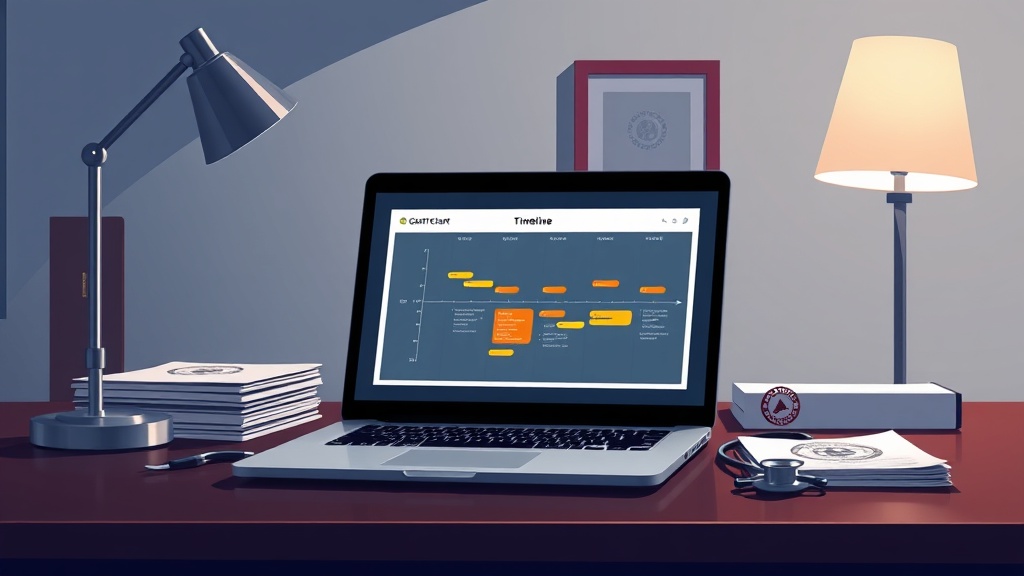
The Realistic Timeline for Custom Healthcare AI App Development in Mexico
Artificial intelligence in healthcare has moved from promise to reality. Predictive algorithms sharpen diagnostics, automated systems transform patient monitoring, and administrative workflows are being rebuilt from the ground up. For healthcare leaders in Mexico, the potential is clear. The pressing question isn't about possibility, but about process: how long does it actually take to go from concept to a compliant, functioning application?
A custom healthcare AI application in Mexico typically requires a disciplined development timeline of 6 to 12 months from initial discovery to launch. This timeframe accounts for the essential phases of strategic planning, data curation, agile development, and rigorous clinical validation within Mexico's specific regulatory environment. Rushing this process risks compliance failures and system rejection, whereas a structured approach ensures the deployment of a secure, effective tool that delivers measurable ROI.
The short answer? It’s not a quick project. Bringing a responsible AI tool to life within Mexico's healthcare ecosystem demands a disciplined approach, typically spanning 6 to 12 months. This isn't a delay—it's the necessary runway for a safe and successful launch. Below, we break down that realistic timeline phase by phase, navigating Mexico's specific compliance landscape and linking each step to the ultimate goal: achieving measurable ROI through improved efficiency and patient outcomes.
Why a Strategic Timeline Isn't Optional for Mexican Healthcare AI
In healthcare, software carries a unique weight. A custom AI app manages protected health information, influences clinical decisions, and slots into workflows where errors have real consequences. A rushed development schedule isn't just a project risk; it's a clinical and legal one. The stakes include compliance failures, data security breaches, and outright rejection by clinicians—any of which can doom an otherwise brilliant solution.
Mexico's regulatory framework adds distinct layers. Developers must align with standards like NOM-004-SSA3 for clinical records, alongside evolving ethical guidelines for data use. Trying to bypass these requirements guarantees costly rework, legal challenges, and ultimately, longer delays. A strategic, phased timeline is the solution. It provides the structure to methodically address compliance, bake in robust security, and design for user adoption from the very beginning.
The payoff for this diligence is tangible. A well-executed healthcare AI project can drive an estimated 20-40% efficiency gain in administrative tasks—think billing or scheduling—and contribute to 15-30% improvements in early diagnosis rates for targeted conditions. That translates directly into better patient care and significant operational savings.
Laying the Groundwork: Discovery & Strategy
Every successful project starts long before the first line of code. This initial discovery and strategy phase, usually taking 4 to 8 weeks, transforms a broad vision into an actionable, compliant blueprint. Skipping it is the fastest way to derail everything that follows.
Pinpointing the Problem & Defining Success
Start by flipping the script: move from a technology-first to a problem-first mindset. What specific clinical or operational pain point is this AI meant to solve? Is it reducing radiologist burnout by pre-screening scans, or improving medication adherence for chronic patients? Engaging all stakeholders—clinicians, administrators, IT staff—is non-negotiable to get alignment.
From this consensus, establish clear, quantifiable Key Performance Indicators. Success might be defined as "cutting patient intake time by 15 minutes" or "reducing medication reconciliation errors by 25%." These KPIs become the project's north star, directly connecting development efforts to tangible ROI.
Navigating Compliance & Data Ethics in Mexico
Running parallel to problem definition is the critical work of healthcare data compliance Mexico AI development. This isn't a box-ticking exercise. It requires a deep dive into the legal and ethical framework, including:
* NOM-004-SSA3-2012: The standard for clinical record management.
* Ley Federal de Protección de Datos Personales en Posesión de los Particulares (LFPDPPP): Mexico's core data protection law.
* Instituto Federal de Acceso a la Información y Protección de Datos (INAI): The governing body for data protection oversight.
A feasibility study must outline a compliant data strategy: How will patient data be sourced and anonymized? How is consent managed? Setting these protocols upfront prevents catastrophic roadblocks later and builds the essential trust for any medical tool. This phase culminates in a project charter and technical architecture document, setting realistic expectations for the custom healthcare AI app development timeline Mexico.
Building the Engine: Data and Design
With a strategy locked in, the project enters its most resource-intensive stage: creating the AI's "fuel" (data) and its user interface (design). This phase often spans 2 to 4 months and is a primary driver of both timeline and budget.
The Rigorous Lifecycle of Healthcare Data
An AI model's performance is dictated by the data it learns from. For a healthcare app, this demands a meticulous, multi-step process:
1. Acquisition & Sourcing: Securing access to relevant, high-quality, and compliant datasets from hospital partners or diagnostic labs.
2. Anonymization & Cleaning: Strictly applying protocols to strip out personally identifiable information and correct errors or inconsistencies in the data.
3. Expert Labeling: Having medical specialists—radiologists, cardiologists—annotate the data. For a diagnostic tool, this means marking anomalies on thousands of medical images.
Data curation is a foundational pillar, often consuming 25-40% of the total project budget and timeline. This intensive process of sourcing, anonymizing, and expert labeling is a primary reason for the extended development schedule and the significant cost of developing a patient monitoring AI app. The investment secures a robust, unbiased, and legally sound dataset, which is non-negotiable for clinical efficacy and regulatory approval.
Designing for the Real World: Clinicians and Patients
While data scientists build the engine, designers craft the cockpit. Healthcare UX/UI has unique demands. Clinician interfaces must be intuitive, minimize clicks, and integrate seamlessly into high-stress workflows to avoid alert fatigue. For patient-facing apps, design focuses on accessibility, education, and engagement to drive consistent use. This is an iterative process, relying on prototypes and feedback from real end-users—doctors, nurses, patients—to ensure the tool is adopted, not just deployed.
From Blueprint to Reality: Agile Development & MVP
This is where plans become a living application. Following an agile methodology, the core development phase breaks work into 2-3 week "sprints," typically spanning 3 to 5 months. The goal is to build a functional Minimum Viable Product—an app with just enough core features to validate the concept with real users.
Building a Secure Foundation
Developers construct the application's backbone: secure cloud architecture, databases configured for protected health information, APIs for future integrations, and robust user authentication. This backend work ensures the app is scalable, secure, and performant from day one.
Training, Testing, and Refining the AI
Concurrently, the prepared dataset fuels the machine learning model's training. This is an iterative cycle of training, testing against validation data, analyzing errors, and refining the approach. Engineers balance model accuracy with the computational resources available in a clinical setting. This agile, sprint-based approach lets the team demonstrate progress regularly, incorporate feedback, and adjust course without derailing the entire custom healthcare AI app development timeline Mexico.
The Final Bridge: Validation and Launch Preparation
An app that works in a dev environment isn't ready for a hospital. This validation and launch phase, taking 6 to 10 weeks, is the critical bridge between a technical build and a trusted medical tool.
Proving It Works: Validation, Security, and Compliance
The MVP faces rigorous, real-world scrutiny:
* Clinical Validation Trials: A controlled pilot with a small group of clinicians tests the model's accuracy, usability, and workflow impact in a live, contained environment. This generates the evidence needed for internal buy-in.
* Penetration Testing & Security Audits: Independent experts attempt to breach the application to identify and fix vulnerabilities, ensuring PHI is protected against modern threats.
* Final Compliance Review: All documentation and protocols are audited against NOM-004 and LFPDPPP requirements, creating a formal compliance dossierfor submission to authorities.
Deployment, Training, and the Path to Scale
With validation complete, the focus shifts to a controlled, phased launch. This begins with deploying the application in a single department or clinic. Comprehensive training sessions for all end-users—from physicians to administrative staff—are critical to drive adoption and ensure the tool is used as intended. Support teams monitor performance closely, ready to address any immediate issues. This successful pilot lays the groundwork for a broader organizational rollout, scaling the solution across the entire institution with confidence.
Conclusion: A Realistic Path to Transformation
Developing a custom healthcare AI application in Mexico is a significant undertaking, but its transformative potential for patient care and operational efficiency makes it a compelling strategic investment. The disciplined 6 to 12-month timeline is not a barrier; it is the structured pathway that ensures the final product is clinically effective, legally compliant, and genuinely adopted by its users. By respecting the essential phases of discovery, data curation, agile development, and rigorous validation, healthcare leaders can navigate this complex journey. The result is not just a new piece of software, but a reliable, high-impact tool that delivers on the true promise of AI: better outcomes for patients and a stronger, more resilient healthcare system.