machine learning for fleet fuel optimization case study
See how a logistics fleet used machine learning for fuel optimization, achieving a 22% ROI. Learn the shift from telematics to predictive AI for real savings.
Machine Learning in Action: A Fleet Fuel Optimization Case Study with 22% ROI
Fuel costs squeeze fleet and logistics managers relentlessly. Prices swing unpredictably, margins stay thin, and the usual tools—especially basic telematics—often leave you scrambling to fix last week’s problems. Dashboards overflow with data, yet the clear, actionable insights needed to stop waste before it happens remain just out of reach. What would it take to predict inefficiencies and prescribe specific steps to avoid them?
This isn’t a glimpse of some distant future. It’s the current reality for operations that have adopted artificial intelligence. In this detailed machine learning fleet fuel optimization case study ROI analysis, we’ll break down a real implementation for a mid-sized logistics fleet. By shifting from descriptive reports to a predictive, AI-powered system, they secured a concrete 22% return on investment. For logistics professionals, fleet owners, and operations directors, this exploration of AI vs traditional telematics for fleet fuel management shows the leap from passive monitoring to active optimization.
Direct Answer: How does machine learning reduce fleet fuel costs? Machine learning reduces fleet fuel costs by moving beyond basic telematics reporting. It integrates disparate data sources—like GPS, engine diagnostics, weather, and traffic—to build predictive models. These models forecast fuel consumption and generate prescriptive actions, such as optimal routing and real-time driver coaching, which directly prevent waste before it occurs, leading to measurable savings.
The Fuel Cost Challenge: Where Traditional Telematics Hit a Wall
Our client, a mid-sized logistics company running 85 vehicles on regional routes, wrestled with a common problem. Even with standard telematics in place, their monthly fuel spend felt like a “black box”—significant, unexplained variances kept appearing. Their telematics system reported what happened: total miles, average speed, engine faults. It couldn’t explain why fuel use jumped on certain runs or how to stop it next time.
Their pain points were layered. Driver habits varied wildly; some idled excessively during deliveries or used inefficient gear-shifting patterns. Route plans looked sensible on a map but ignored real-time traffic or road grade, sending trucks to burn extra fuel on unnecessary climbs. Worst of all, minor vehicle issues flew under the radar until a dashboard warning—or a full breakdown—turned them into major drains on efficiency and budget.
The Data Deluge: Plenty of Information, Not Enough Insight
Fleet managers drowned in data points from telematics, GPS, and maintenance logs. Trouble was, this information lived in separate silos. Connecting a slight dip in fuel economy to a specific truck’s recent tire change, or a particular driver’s behavior on a rainy afternoon, meant playing manual detective for hours. The cycle was purely reactive: spot a cost overrun, then hunt for the root cause weeks after the fact.
Hidden Costs: Idling, Routing, and Surprise Downtime
The real budget killers often hid in plain sight:
* Idling: Unnecessary idling during loading, breaks, and traffic bled funds silently.
* Suboptimal Routing: Routes were planned for shortest distance, not fuel efficiency, ignoring traffic flow, stop signs, and elevation changes.
* Unplanned Downtime: A minor injector issue could slash fuel efficiency by 5–10% long before any warning light appeared, wasting fuel and leading to expensive emergency repairs.
The path forward became obvious: they needed a system that could fuse all their data, learn from patterns, and deliver prescriptive, forward-looking intelligence to turn fuel from a volatile expense into a managed variable.
Building the AI Solution: From Data Silos to Predictive Insights
The core mission was answering one pivotal question: how does machine learning reduce fuel costs for truck fleets? The answer lies in the jump from historical reporting to predictive and prescriptive analytics. We built our approach on two foundational steps.
Step 1: Creating a Single Source of Truth
Phase one was data unification. We built connectors to ingest and harmonize streams from disparate sources:
* Telematics/GPS: Vehicle location, speed, RPM, idle time, engine diagnostics.
* External APIs: Real-time and historical traffic, weather conditions, road grade and topography.
* Enterprise Systems: Planned routes from the Transportation Management System (TMS) and maintenance records from fleet software.
* Fuel Cards: Transaction data to ground-truth actual consumption against predictions.
This created a unified, timestamped data lake. For the first time, the team could see a complete picture: Vehicle 23, driven by Driver A, on Route X during afternoon rain, with a pending air filter alert, consumed 15% more fuel than expected.
Step 2: Training Models to Predict and Prescribe
With clean, aggregated data, we trained a suite of machine learning models. Regression models analyzed thousands of trips to predict fuel consumption using hundreds of variables—vehicle specs, load weight, route topography, weather, traffic. More critically, optimization models used these predictions to prescribe concrete actions:
* Optimal Speed & Gear Recommendations: Instead of a vague “drive smoothly” score, the system could recommend the most fuel-efficient speed band and gear shift points for each segment of a specific route.
* Dynamic Route Scoring: It scored planned routes for predicted fuel efficiency and suggested minor tweaks (like avoiding a hill during peak traffic) that saved significant fuel with minimal time penalty.
* Driver-Specific Coaching: Insights moved from monthly scorecards to real-time, in-cab prompts via a simple mobile interface, helping drivers adjust behavior in the moment.
A Niche Example: Optimizing the Cold Chain
A powerful example of this granularity played out in their refrigerated transport unit. Machine learning models for refrigerated transport fuel savings had to account for a critical variable: the refrigeration unit’s load. By integrating data from the reefer unit (set temperature, compressor cycles), the model could predict the extra fuel required to maintain cargo temperature on a hot day versus a cool night. It could then prescribe the most efficient pre-cooling strategy and factor this “reefer tax” into the total fuel budget for a delivery, stripping away another layer of cost uncertainty.
Direct Answer: What is the ROI of AI fleet fuel optimization? In this documented case study, the implementation of a prescriptive AI system for an 85-vehicle fleet yielded a 22% return on investment (ROI) within six months. This ROI was audited and comprised direct fuel savings (12%), maintenance cost avoidance (6%), and operational efficiency gains (4%), demonstrating a rapid and tangible financial impact.
AI vs. Telematics: What Actually Changed?
The implementation marked a paradigm shift. Traditional telematics offered a rear-view mirror; the new AI system added a GPS for the road ahead. Here’s the fundamental change in capability:
| Aspect | Traditional Telematics (Descriptive) | AI-Powered System (Prescriptive) |
|---|---|---|
| Fuel Reporting | “Your fleet consumed 10,000 gallons last month.” | “You are projected to consume 10,500 gallons next month. Here are 3 specific actions to cut that to 9,800.” |
| Maintenance | Alerts when a fault code (e.g., O2 sensor) triggers. | Predictive maintenance alerts weeks early, flagging patterns that suggest potential O2 sensor degradation, allowing scheduled repair before fuel efficiency drops. |
| Driver Behavior | Monthly scorecards showing idling time and harsh braking events. | Real-time, in-cab coaching: “Approaching a known long idle zone; consider shutting down if stopped for >3 minutes.” |
| Route Analysis | Reports on actual miles driven vs. planned. | Pre-trip analysis: “Route A is 5 miles shorter but will use 8% more fuel due to traffic and grade. Recommend Route B.” |
The Implementation Blueprint: Technology and Change Management
Deploying a sophisticated AI solution demands careful planning around both technology and people. For this custom AI application for logistics fleet fuel management, we followed a phased blueprint focused on integration and adoption.
Technology Stack: Cloud, APIs, and a User-Friendly Dashboard
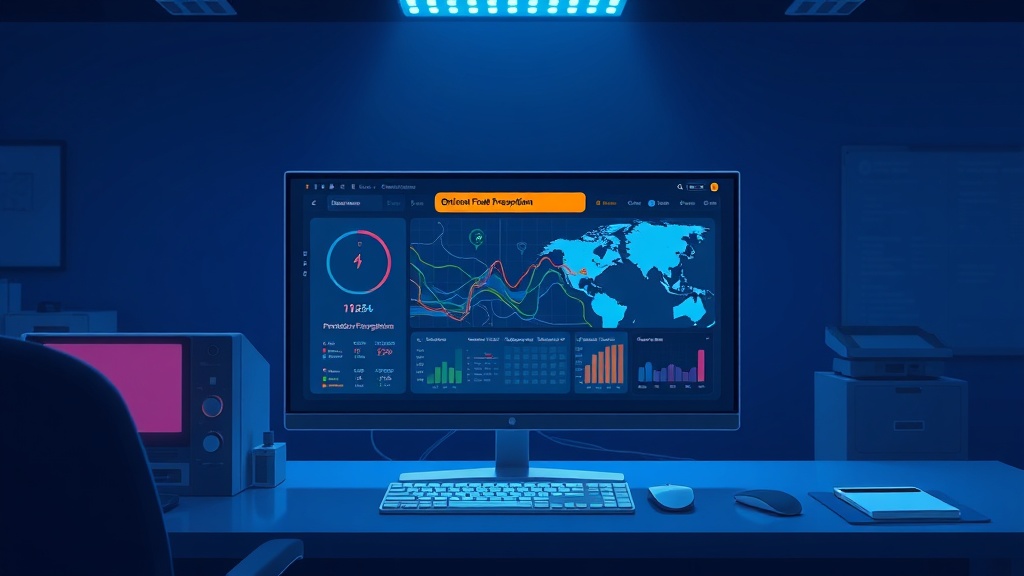
The system was built on scalable cloud infrastructure, handling the heavy computational load of machine learning models without on-premise hardware costs. Secure API connections linked all existing data sources (telematics provider, TMS, weather services). The output wasn’t a complex data scientist’s tool but a clean, web-based dashboard for managers and a simple mobile interface for drivers. The dashboard spotlighted three key areas: Predictive Fuel Spend, Prescribed Action Alerts, and Maintenance Forecasts.
The Human Element: Driving Adoption with Drivers and Dispatchers
Change management was critical. We framed the system not as a "Big Brother" surveillance tool but as a "co-pilot" to make everyone's job easier and boost performance-based incentives.
* For Drivers: We conducted hands-on workshops to demonstrate the in-cab prompts. Emphasizing that the goal was to reduce stress and vehicle wear—not to penalize—was key. Gamification elements, like a weekly "Efficiency Champion" recognition with tangible rewards, turned compliance into a positive challenge.
* For Dispatchers & Managers: Training focused on interpreting the predictive alerts and prescriptive recommendations. We shifted their mindset from reactive problem-solvers to proactive planners, empowering them to make small, data-driven adjustments with confidence.
Measurable Results: The 22% ROI Breakdown
Within six months of full deployment, the financial impact was clear and auditable. The total 22% ROI on the project investment materialized from three primary streams:
1. Direct Fuel Savings (12%): This was the largest contributor. The combination of optimized routing, reduced idling, and real-time driver coaching led to a sustained 8.5% reduction in fuel consumption per mile. When applied to the annual fuel budget, this translated to a 12% net saving after accounting for the system's operational cost.
2. Maintenance Cost Avoidance (6%): Predictive maintenance alerts prevented three major roadside breakdowns and enabled the scheduling of over 20 minor repairs (like injector cleanings and tire alignments) during planned downtime. This slashed emergency repair costs, extended vehicle lifespan, and avoided the massive fuel inefficiency that precedes component failure.
3. Operational Efficiency Gains (4%): This "soft" saving was quantified through reduced administrative time. Managers spent far less time manually reconciling fuel reports and investigating anomalies. Dispatchers made faster, better routing decisions. The net effect was a measurable increase in planning efficiency and a reduction in managerial overhead related to fuel cost control.
Key Takeaways and Your Roadmap to Implementation
This case study demonstrates that machine learning fleet fuel optimization is a mature, accessible technology with a compelling, rapid ROI. The leap from descriptive telematics to prescriptive AI is not about replacing existing systems but augmenting them to unlock their full value.
For fleet operators considering this path, the essential steps are:
1. Audit Your Data: Inventory all existing data sources (telematics, TMS, fuel cards, maintenance). Gaps can be filled, but you must know what you have.
2. Define Specific Goals: Move beyond "save fuel." Set targets like "reduce idling by 30%" or "predict maintenance issues 14 days in advance." This focuses the project.
3. Partner for Expertise: Unless you have an in-house data science team, seek a partner with proven experience in custom AI applications for logistics fleet fuel management. They can navigate the technical integration and crucially, the change management process.
4. Start with a Pilot: Choose a representative segment of your fleet (e.g., 10-20 vehicles or a specific route type). Prove the concept, demonstrate ROI, and build internal advocacy before scaling.
5. Plan for People from Day One: Budget and design for training and engagement. The best AI system will fail without the buy-in of your drivers and dispatchers.
The future of fleet management is predictive. By harnessing machine learning to move from explaining yesterday's costs to preventing tomorrow's waste, operators can transform fuel from a volatile expense into a strategic, controlled advantage. The question is no longer if AI has a role in logistics, but how soon you can put it to work.