AI-powered fleet maintenance scheduling
Discover how AI-powered fleet maintenance scheduling software reduces unplanned downtime by up to 50% and cuts costs. Learn implementation steps and ROI for logistics companies.
AI-Powered Fleet Maintenance Scheduling: A Logistics Manager's Guide to Predictive Uptime
For logistics and fleet managers, unplanned vehicle downtime is more than an operational headache—it’s a direct hit to the bottom line. Every hour a truck sits idle means lost revenue, missed deliveries, and emergency repair bills that spiral out of control. Relying on old calendar-based schedules isn’t just outdated; in today’s market, it’s a serious business risk.
This guide moves past the buzzwords to show how AI-powered fleet maintenance scheduling software for logistics companies turns reactive guesswork into a predictable, cost-saving operation. We’ll cover how predictive models use real-time data to forecast failures, walk through implementation, and outline the actual return on investment you can expect. In demanding environments like Mexico City, where traffic, road conditions, and delivery pressures never let up, this isn’t a luxury upgrade. It’s a necessary shift to protect margins and guarantee reliability.
AI-powered fleet maintenance scheduling is a data-driven approach that uses machine learning and real-time vehicle sensor data to predict component failures before they occur, enabling logistics companies to schedule repairs proactively, reduce unplanned downtime by up to 50%, and lower overall maintenance costs by transitioning from fixed calendar-based intervals to condition-based servicing.
What’s the Real Price of Unplanned Downtime?
You can’t appreciate the solution until you measure the problem. Unplanned fleet downtime quietly eats into profits, with costs that go far beyond the mechanic’s invoice. It triggers a chain reaction of direct and indirect expenses that can undermine an entire logistics operation.
Direct costs are the obvious ones. Think premium rates for emergency repairs, overtime for mechanics, and expedited shipping for parts—often at two or three times the normal price. Then there’s the revenue hit from missed deliveries, potential penalties for late shipments, and the expense of rerouting other vehicles to fill the gap.
Indirect costs are sneakier but just as damaging. Frequent breakdowns shorten your assets’ lifespan through undue stress and major component failures. They frustrate drivers, raise safety concerns, and hurt retention. Constantly operating in “fire-fighting” mode burns out your management team and throws long-term planning out the window.
Industry data backs this up. While numbers vary by vehicle and operation, unplanned downtime for a single commercial truck can easily run into hundreds of dollars per hour once everything’s factored in. For an entire fleet, that’s a six- or seven-figure drain every year. So the real metric for any AI-powered fleet maintenance scheduling software for logistics companies isn’t just cost reduction—it’s cost avoidance. Preventing these losses before they happen.
The total cost of unplanned downtime extends beyond immediate repair bills. According to industry analyses, a single commercial truck breakdown can incur costs exceeding $500 per hour when factoring in emergency repairs, lost revenue, driver wages, and missed delivery penalties, making proactive maintenance a critical financial strategy for fleet operators.
From Calendar to Condition: How AI-Powered Scheduling Really Works
AI represents a fundamental shift: moving from schedule-based maintenance to condition-based and predictive maintenance. The old model runs on fixed intervals—“change the oil every 15,000 km” or “inspect brakes every six months.” Simple, but flawed. It wastes resources on healthy components and, worse, misses parts that are degrading faster than the calendar predicts.
AI vs. traditional schedule-based fleet maintenance is the difference between intelligence and inertia. Predictive maintenance powered by AI doesn’t guess; it knows. The system operates on a continuous analytical loop:
1. Data Ingestion: It constantly pulls data from multiple streams—vehicle sensors, telematics, engine control units (ECUs), and past maintenance records.
2. Pattern Recognition & Machine Learning: Advanced algorithms sift through historical and real-time data to spot patterns that lead to specific failures. For instance, the AI might learn that a certain vibration pattern in a drivetrain sensor, paired with a gradual rise in engine temperature, usually signals a bearing failure about 120 operating hours out.
3. Failure Probability Forecasting: The model then applies these patterns to live data from each vehicle. Instead of a generic “service this truck on June 1st,” you get alerts like: “Vehicle #452: 87% chance of alternator failure within 7–10 days. Recommended action: schedule replacement at the next available window.”
Maintenance becomes a dynamic, prioritized workflow instead of a rigid calendar event. Repairs are scheduled at the optimal moment—early enough to prevent a breakdown, but not so early that you waste component life. That’s the core of moving from preventive to truly predictive care.
Predictive maintenance powered by AI utilizes a three-stage process: data ingestion from vehicle sensors and telematics, machine learning pattern recognition to identify failure precursors, and probability forecasting that provides actionable alerts, enabling maintenance to be performed precisely when needed rather than at arbitrary intervals.
The Foundation: Data, IoT, and Integration for Predictive Insights
An AI’s accuracy depends entirely on the quality and breadth of its data. An AI-powered fleet maintenance scheduling platform is only as sharp as its sensory network. This ecosystem relies on a few key data sources:
* Vehicle ECUs and Telematics: Modern trucks are data hubs. The onboard diagnostics (OBD-II) system and telematics units deliver a constant stream of information—engine load, fuel consumption, fault codes, speed, and idling time. This is your foundational data layer.
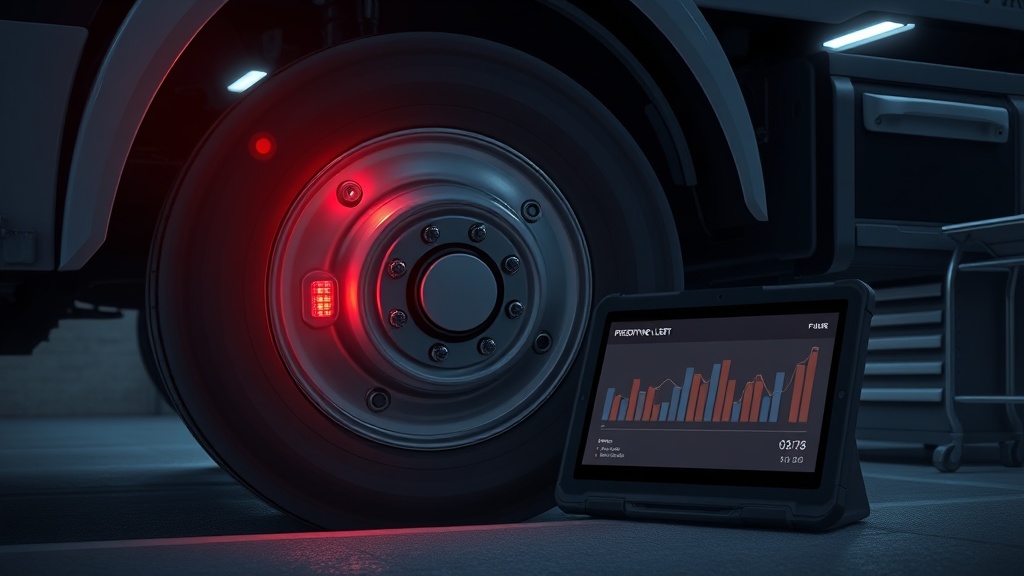
* IoT Sensors: Here’s where condition-based monitoring gets real. Specialized Internet of Things (IoT) sensors can be added to track specific components: vibration sensors for bearings and gearboxes, temperature sensors for brakes and cooling systems, and ultrasonic sensors for tire pressure and tread depth. These provide the granular, component-level data AI needs to spot subtle anomalies.
* Operational & Historical Data:Integrating work orders, fuel logs, and past repair histories gives the AI context. It learns not just from the machine, but from your unique operational patterns and maintenance outcomes.
The magic happens when this data is unified on a single platform. A robust AI-powered fleet maintenance scheduling software for logistics companies doesn't just collect data—it correlates it. It can cross-reference a slight drop in fuel efficiency with a specific axle's vibration data and a past repair note to pinpoint a developing driveline issue long before a warning light appears.
Effective predictive maintenance relies on integrating diverse data streams: core vehicle telematics, targeted IoT sensor data for critical components, and historical operational records. The AI's predictive power is derived from correlating these data points to identify subtle, failure-precursing patterns invisible in any single stream.
Implementing AI-Powered Scheduling: A Step-by-Step Guide for Logistics Managers
Adopting this technology is a strategic project, not just a software install. Success requires careful planning across people, processes, and technology.
1. Assess Your Fleet's Data Readiness: Start by auditing your vehicles. What percentage have modern telematics? Can your current system export historical maintenance data? Identify gaps in your data infrastructure that may need to be addressed first, such as retrofitting older assets with basic IoT sensors.
2. Define Clear KPIs and Pilot Scope: Don't try to boil the ocean. Identify your most critical pain point—is it unexpected engine failures, brake system issues, or tire blowouts? Select a pilot group of vehicles (e.g., 10-20% of your long-haul fleet) and define success metrics: target reduction in unplanned downtime, decrease in roadside calls, or reduction in parts spend.
3. Choose a Platform with Logistics-Specific Intelligence: Not all AI is created equal. Seek a solution with proven algorithms trained on commercial vehicle data. It should offer seamless integration with your existing fleet management system (FMS), enterprise resource planning (ERP), and parts inventory software. Vendor support for implementation and change management is crucial.
4. Phase the Rollout and Train Your Team: Begin with the pilot group. Use this phase to configure alerts, fine-tune probability thresholds, and integrate the maintenance workflow with your shop. Comprehensive training for maintenance managers, supervisors, and technicians is essential—they need to trust and act on the AI's recommendations.
5. Analyze, Optimize, and Scale: After the pilot period (typically 3-6 months), rigorously analyze the results against your KPIs. Use these insights to optimize the system's parameters. Once the value is proven and processes are smoothed, develop a phased plan to scale the solution across the remainder of your eligible fleet.
A successful implementation follows a disciplined process: starting with a data readiness audit, running a focused pilot with defined KPIs, selecting a domain-specific platform, managing organizational change through training, and scaling only after verifying results and optimizing workflows.
The Tangible ROI: What to Expect from AI-Powered Fleet Maintenance
The investment in an AI-powered system is justified by a compelling and multi-faceted return. The benefits extend across financial, operational, and strategic dimensions.
* Dramatic Reduction in Unplanned Downtime: This is the primary payoff. By addressing failures proactively, companies routinely achieve 30-50% reductions in unscheduled downtime. This directly translates to higher asset utilization, more deliveries per vehicle, and avoided emergency costs.
* Lower Overall Maintenance Costs: Transitioning from fixed intervals to condition-based servicing eliminates unnecessary maintenance. You replace parts based on actual need, extending useful life and reducing labor and parts consumption. Furthermore, scheduling repairs in advance allows for bulk parts purchasing and optimal labor planning, cutting costs by 15-25%.
* Extended Vehicle Lifespan: Preventing catastrophic failures reduces stress on interconnected systems. A vehicle maintained based on its actual condition experiences less severe wear, which can add years to its operational life and improve its residual value.
* Enhanced Safety and Compliance: Predictive insights allow you to address safety-critical components—like brakes or steering systems—before they become hazardous. This proactively manages risk, protects drivers, and ensures compliance with safety regulations. Detailed, data-backed maintenance records also simplify regulatory audits.
* Strategic Operational Advantage: The shift from reactive to predictive frees management from daily crises. It enables reliable capacity planning, improves on-time delivery rates, and boosts customer satisfaction. The data intelligence gathered also informs better future capital expenditure decisions, such as which vehicle models are most reliable for your specific duty cycles.
The ROI of AI-powered scheduling is quantified across key metrics: a 30-50% reduction in unplanned downtime, a 15-25% decrease in total maintenance costs through optimized part and labor use, extended asset lifespan, and improved safety and regulatory compliance—collectively contributing to stronger profit margins and service reliability.
Navigating Challenges and Key Considerations
While the potential is vast, a clear-eyed view of the challenges ensures a smoother journey.
* Data Quality and Integration: The systemrequires clean, consistent data. Siloed information in legacy systems or incomplete vehicle sensor coverage can limit initial accuracy. A phased integration plan is essential.
* Organizational Change Management: The greatest hurdle is often human, not technical. Maintenance teams accustomed to reactive workflows or fixed schedules may distrust algorithmic recommendations. Overcoming this requires transparent communication, involving teams in the pilot process, and demonstrating clear early wins.
* Initial Investment and Justification: Upfront costs include software licensing, potential sensor retrofits, and training. Building the business case requires focusing on total cost of ownership (TCO) and the cost avoidance of unplanned downtime, rather than just the immediate software expense.
* Cybersecurity and Data Privacy: Connecting vehicles to a cloud platform expands the attack surface. Partnering with vendors that prioritize robust encryption, secure data protocols, and compliance with regional data privacy laws is non-negotiable.
Successful adoption hinges on addressing data integration hurdles, managing cultural shift within maintenance teams, building a TCO-based business case, and ensuring the chosen platform meets stringent cybersecurity standards to protect sensitive operational data.
The Future is Predictive: Taking the Next Step
For logistics operators in competitive, high-pressure corridors, maintaining a technological edge is no longer optional. AI-powered fleet maintenance scheduling represents a fundamental evolution from preventative to predictive operations, transforming maintenance from a cost center into a strategic lever for reliability and profitability.
The journey begins with a clear assessment of your current downtime costs and data maturity. By starting with a focused pilot, you can de-risk the investment and build internal consensus with tangible results. The goal is not just to fix trucks, but to achieve predictable uptime—ensuring every asset in your fleet is ready to deliver, every day.
The transition to AI-driven predictive maintenance is a strategic imperative for modern logistics fleets. Beginning with an evaluation of current operational pain points and data readiness allows managers to implement a phased, evidence-based approach that delivers measurable improvements in cost, reliability, and competitive advantage.