AI tools for logistics inventory management
Discover how a custom AI inventory management system for logistics cuts costs, prevents stockouts, and boosts ROI. Get the 2026 implementation guide now.
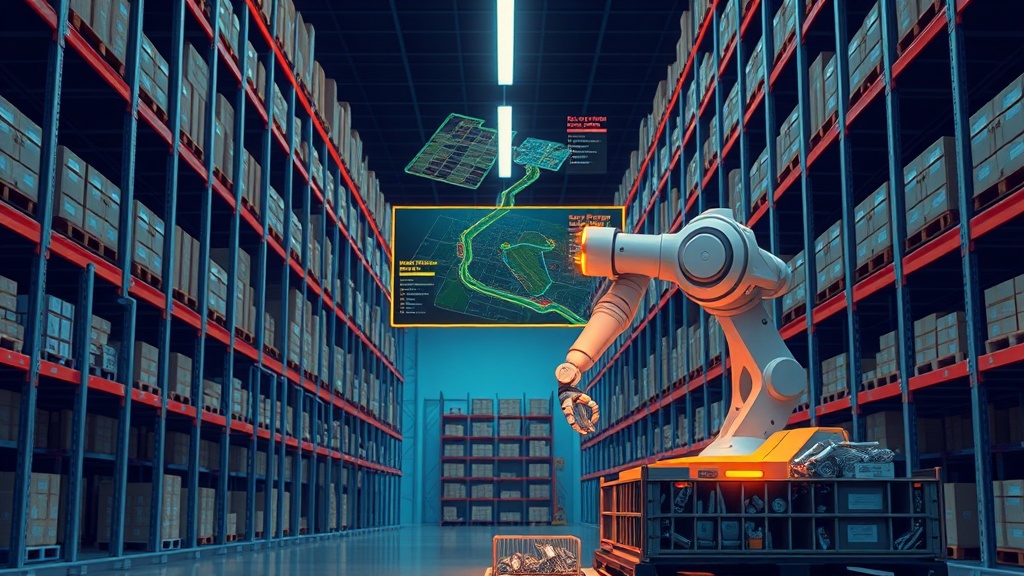
Custom AI Inventory Management System for Logistics: The 2026 Guide
In logistics, inventory isn't just products on a shelf—it's capital in motion, promises waiting to be kept, and a constant source of risk and reward. Yet for many operations, it remains a hidden cost center. Manual spreadsheets, gut-feel forecasting, and reactive replenishment create a cascade of inefficiencies: capital gets tied up, stockouts frustrate customers, and labor is wasted on preventable tasks. In a volatile market, these inefficiencies don't just create headaches—they directly erode your bottom line and competitive edge.
The solution? Move from intuition to intelligence. A custom AI inventory management system for logistics is no longer a futuristic concept but a strategic imperative for leaders who want to cut costs, prevent disruptions, and build a resilient, data-driven operation. Think of this technology as a central nervous system for your supply chain, using machine learning to predict, optimize, and automate in ways traditional software cannot. This guide breaks down the journey ahead. We'll explore the true cost of inaction, show how AI revolutionizes core functions, compare implementation paths, and provide a clear framework for calculating your return on investment. By the end, you'll have a practical roadmap for turning your inventory from a liability into a formidable asset.
Direct Answer: What is a Custom AI Inventory Management System?
A custom AI inventory management system is a bespoke software solution that uses artificial intelligence and machine learning algorithms to automate and optimize logistics operations. It integrates with a company's unique data sources and workflows to provide precise demand forecasting, dynamic replenishment, and real-time tracking. Unlike off-the-shelf tools, a custom system is tailored to specific business rules, legacy systems, and market demands, transforming inventory from a cost center into a competitive asset.
What Is the True Cost of Inefficient Inventory?
Poor inventory management drains more than just the purchase price of goods. It's a multi-faceted burden that hits cash flow, revenue, and operational agility. To understand the value of an AI solution, you first need to quantify the "cost of inaction."
Start with carrying costs. This isn't just warehouse rent. It includes the capital cost of money tied up in stock, storage fees, insurance, taxes, and the often-overlooked cost of obsolescence for perishable or trend-based goods. Industry analyses consistently show that annual carrying costs can consume 20% to 30% of your total inventory value. For a company holding $5 million in inventory, that’s up to $1.5 million every year spent just on holding stock, not moving it.
Then there's the impact of stockouts. A single stockout event does more than lose an immediate sale—it damages customer trust and can push buyers to competitors permanently. The global financial impact of stockouts runs into the hundreds of billions annually, representing a direct hit to your top-line revenue and long-term brand loyalty.
Finally, manual processes create massive labor inefficiencies. Teams spend countless hours on physical cycle counts, reconciling data across disparate systems, and manually generating purchase orders. This inflates payroll costs and introduces human error, leading to data inaccuracies that compound every other problem.
This is where the promise of machine learning models for reducing logistics carrying costs comes into sharp focus. At a high level, these models analyze vast datasets—sales history, seasonality, supplier lead times, market trends—to predict optimal inventory levels with surgical precision. By dynamically calculating ideal reorder points and quantities, AI can significantly reduce the average capital tied up in stock without increasing shortage risks, directly attacking the largest component of your carrying costs.
Direct Answer: How Much Can Inefficient Inventory Cost?
Inefficient inventory management typically incurs carrying costs of 20-30% of total inventory value annually, alongside significant revenue loss from stockouts and high labor expenses. For example, a business with $5 million in inventory can waste up to $1.5 million per year just on holding costs. These figures, supported by industry analyses, highlight why AI-driven optimization is critical for cost reduction and operational resilience.
How Is AI Revolutionizing Core Logistics Inventory Functions?
Artificial intelligence isn't a single tool but a suite of technologies that transforms every facet of inventory management. By automating complex decisions and uncovering hidden patterns in data, AI delivers concrete improvements in accuracy, speed, and cost. Here are the four key areas where it makes a definitive impact.
AI-Powered Demand Forecasting for Warehouse Inventory
Traditional forecasting methods often rely on simple historical averages or managerial intuition, struggling to account for promotions, market shifts, or emerging trends. AI-powered forecasting uses machine learning (ML) models to synthesize a much broader set of signals. These models ingest historical sales data, promotional calendars, seasonality, economic indicators, and even weather patterns to generate probabilistic demand forecasts.
The result is a significant leap in accuracy. Where traditional methods might be off by 20–30%, ML models can often reduce forecast error to single-digit percentages. That precision translates directly to the bottom line: reduced overstock (and its associated carrying costs) and minimized understock (preventing lost sales). For a warehouse manager, this means having the right products, in the right quantities, at the right time—transforming inventory from a guess into a science.
Dynamic Safety Stock & Automated Replenishment
Static safety stock levels, based on historical highs, are a relic of the past. They either tie up too much capital or fail to protect against real-world volatility. AI revolutionizes this through dynamic safety stock calculation. The system continuously analyzes real-time variables: fluctuations in supplier lead times, spikes in demand volatility for specific SKUs, and changes in transportation reliability.
With this dynamic baseline, AI can then trigger fully automated replenishment. When inventory for an item approaches its AI-calculated reorder point, the system can generate and even send purchase orders to pre-approved suppliers, adjusting order quantities based on the latest forecasts and cost constraints. This automation doesn't just save countless hours of manual work—it ensures your supply chain stays responsive and resilient.
AI for Real-Time Inventory Tracking and Fleet Management
Knowing what you have in the central warehouse is one thing; knowing where every item is across your entire network is another. AI integrates data from Internet of Things (IoT) sensors, RFID tags, and GPS trackers on fleet vehicles to provide a real-time, single-pane-of-glass view of inventory location.
This end-to-end visibility changes everything. It dramatically reduces shrinkage by pinpointing discrepancies as they occur. It improves delivery ETAs by giving customers accurate, real-time updates on in-transit goods. For fleet managers, AI can analyze this location data alongside traffic and weather patterns to optimize delivery routes in real time, cutting fuel costs and improving asset utilization. The gap between warehouse stock and in-transit inventory effectively disappears.
Warehouse Process Optimization (Picking, Packing, Put-away)
Inside the four walls of the warehouse, AI and computer vision drive direct operational efficiencies. AI algorithms can optimize warehouse layouts and dynamic slotting by analyzing picking frequency and item relationships, ensuring fast-moving goods are always within easy reach.
For picking, AI generates intelligent pick lists that group orders and optimize pick paths, reducing worker travel time by up to 50% in some implementations. Computer vision systems verify items during picking and packing, virtually eliminating shipping errors. For put-away, AI directs incoming stock to the optimal location based on its forecasted demand and physical characteristics. The direct outcome? Significant labor time savings, increased throughput, and fewer costly fulfillment errors.
Direct Answer: How Does AI Improve Warehouse Efficiency?
AI enhances warehouse efficiency by optimizing picking paths, which can reduce worker travel time by up to 50%, and using computer vision to cut shipping errors. It also automates replenishment and improves inventory accuracy through real-time tracking with IoT sensors. These advancements, documented in industry implementations, lead to higher throughput and lower operational costs.
Best AI Tools for Logistics vs. Custom AI Development: Which Path is Right for You?
Once you're convinced of AI's value, the critical decision is how to acquire it. The choice typically falls between adopting off-the-shelf SaaS tools and investing in a bespoke custom AI inventory management system for logistics. Each path has distinct advantages and ideal use cases.
Off-the-Shelf AI Tools (SaaS Platforms)
* Pros: Faster time-to-market, lower initial capital expenditure (shifting to an operational OpEx model), and the vendor manages updates and security.
* Cons: Limited flexibility; you must adapt your processes to the software's capabilities. Deep integration with unique legacy systems (like a custom ERP) can be challenging. The solution may not address niche or proprietary business rules that give you a competitive edge.
* Best For: Companies with relatively standard processes, those needing a quick solution for a specific function (e.g., demand forecasting), or businesses without extensive in-house technical resources to manage a custom build.
Custom AI Development (BespokeSystems)
* Pros: Complete alignment with your unique workflows, data sources, and strategic goals. Enables deep, seamless integration with any existing legacy software. Creates a defensible competitive advantage through proprietary algorithms tailored to your specific market and challenges.
* Cons: Higher initial investment, longer development timeline, and requires ongoing internal or partner resources for maintenance and evolution.
* Best For: Large-scale or complex operations with unique business rules, companies where supply chain excellence is a core competitive differentiator, and organizations with existing technical teams or trusted development partners.
The decision ultimately hinges on whether your inventory challenges are common or unique. For many logistics leaders, a hybrid approach is emerging as the most pragmatic path: leveraging robust off-the-shelf tools for standardized functions while investing in custom AI development for the proprietary processes that define their market advantage.
How to Build a Custom AI Inventory Management System: A Step-by-Step Framework
Embarking on a custom AI project is a significant undertaking. A structured, phased approach de-risks the investment and ensures the final system delivers tangible business value. Follow this six-step framework.
Step 1: Discovery & Problem Definition
Begin with a ruthless focus on business outcomes, not technology. Conduct workshops with stakeholders from warehouse operations, procurement, finance, and sales to map specific pain points. Quantify the problems: "Our forecast error for Category X is 35%," or "Cycle counting consumes 200 labor-hours weekly." Define clear, measurable success metrics (KPIs) for the project, such as "Reduce carrying costs by 15%" or "Decrease stockouts by 40%." This phase produces a concrete problem statement and a prioritized list of capabilities for the Minimum Viable Product (MVP).
Step 2: Data Audit & Infrastructure Readiness
AI is fueled by data. Catalog all relevant data sources: ERP/WMS transaction histories, supplier lead time logs, IoT sensor feeds, GPS fleet data, and external data like market indices. Assess the quality, completeness, and accessibility of this data. This stage often involves a "data cleanup" effort and may require upgrading data infrastructure to ensure a reliable pipeline for model training and operation. The goal is to establish a single source of truth.
Step 3: Algorithm Selection & MVP Development
With problems and data defined, data scientists can select and tailor the appropriate machine learning models. This might involve time-series models (like ARIMA or Prophet) for forecasting, clustering algorithms for SKU segmentation, or reinforcement learning for dynamic routing. The development team then builds the core engine and a functional, user-friendly interface for the MVP, focusing on automating one or two high-impact processes first.
Step 4: Integration & Testing
The AI system must work within your existing tech stack. This phase involves deep API-level integration with your Warehouse Management System (WMS), Enterprise Resource Planning (ERP) software, and supplier portals. Rigorous testing is critical: back-test models against historical data, conduct user acceptance testing (UAT) with warehouse staff, and run parallel operations where the AI's recommendations are compared against human decisions in a controlled environment.
Step 5: Deployment & Change Management
A successful rollout depends on people as much as technology. Develop comprehensive training programs and clear documentation for all user roles. Start with a pilot in a single warehouse or for a specific product category. Use feedback from this pilot to refine the system. Effective change management—communicating the "why" and providing ample support—is essential to overcome resistance and ensure adoption.
Step 6: Monitoring, Optimization & Scaling
Go-live is not the finish line. Continuously monitor the system's performance against your KPIs. Track model accuracy over time and retrain models with fresh data to prevent "drift." Gather user feedback for incremental improvements. Once the MVP is stable and delivering value, begin scaling the system's capabilities to other warehouses, product lines, or more complex processes like predictive maintenance for material handling equipment.
Calculating the ROI of a Custom AI Inventory System
Justifying the investment requires moving beyond qualitative benefits to hard numbers. A comprehensive ROI analysis should account for both cost savings and revenue generation across three key areas.
1. Direct Cost Reduction
* Carrying Cost Savings: Calculate the reduction in average inventory value enabled by more precise forecasting and dynamic safety stock. Apply your carrying cost rate (e.g., 25%) to this reduction.
Example: Reducing average inventory by $1M with a 25% carrying cost = $250,000 annual savings.*
* Labor Productivity Gains: Quantify hours saved from automating manual tasks like cycle counting, PO generation, and discrepancy resolution. Multiply by fully burdened labor rates.
Example: Saving 100 hours/month at $50/hour = $60,000 annual savings.*
* Shrinkage & Error Reduction: Estimate the value of inventory lost to errors or theft that real-time tracking and computer vision can prevent.
2. Revenue Protection & Growth
* Eliminating Stockout Losses: Estimate the annual revenue lost from stockouts. Forecast the percentage reduction in stockouts the AI system will achieve and apply it to this figure.
* Improved Customer Retention: While harder to quantify, increased fulfillment accuracy and reliability directly impact customer lifetime value (CLV) and can reduce churn.
3. Strategic & Agility Benefits
* Improved Capital Efficiency: Freed-up working capital from reduced inventory can be deployed for strategic initiatives.
* Enhanced Resilience: The ability to dynamically respond to supply chain shocks (like a port delay) minimizes disruption costs, protecting both revenue and reputation.
ROI Calculation Formula:
(Annual Cost Savings + Annual Revenue Uplift) / Total Project Cost (Development + 3-Year Maintenance)
A well-scoped custom AI inventory system typically achieves a full payback within 12–24 months, with compounding returns as the system scales and evolves.
The Future of AI in Logistics Inventory Management
The technology is not standing still. Forward-looking logistics operators are already planning for the next wave of innovation, which will make systems even more autonomous and predictive.
* Generative AI for Strategic Planning: Beyond analytical AI, Generative AI (GenAI) will act as a strategic co-pilot. Logistics managers could use natural language to ask, "Simulate the inventory impact of a 20% demand surge in the Southwest region if a key supplier's lead time doubles," and receive a detailed scenario analysis and recommended action plan.
* Hyper-Automation & Autonomous Decision-Making: The integration of AI with Robotic Process Automation (RPA) and physical robotics will close the loop from decision to action. The system won't just recommend a reorder—it will negotiate terms with a supplier bot, place the order, schedule the receiving dock, and task an autonomous mobile robot (AMR) with the put-away.
* Self-Optimizing Supply Networks: AI will evolve from managing a single company's inventory to orchestrating multi-tier, collaborative networks. By securely sharing selective data, AI systems across suppliers, manufacturers, and distributors could synchronize to create a truly resilient, demand-aware supply chain that minimizes waste and maximizes flow for all participants.
Conclusion: From Cost Center to Competitive Edge
Inventory is the lifeblood of logistics, and managing it with intuition and legacy tools is a growing liability in an unpredictable world. A custom AI inventory management system for logistics represents a fundamental shift—from reactive record-keeping to proactive, predictive optimization.
The journey begins with a clear-eyed assessment of the true cost of inefficiency and a strategic choice between off-the-shelf tools and bespoke development. For those with the ambition to lead, a custom system built on a structured framework offers the deepest alignment with unique business goals, enabling not just incremental improvement but a transformative leap in performance.
The ROI extends beyond direct savings to encompass revenue protection, capital efficiency, and unparalleled agility. By turning your inventorydata into a strategic asset, you build a moat of operational excellence that competitors cannot easily replicate. The future belongs to logistics leaders who stop merely moving boxes and start intelligently orchestrating their most critical capital—transforming inventory from a hidden cost into their most visible competitive edge.