AI vendor selection scorecard template
Use our AI vendor selection scorecard template to evaluate partners on ROI, expertise, and fit. Avoid common pitfalls and choose the right AI partner.
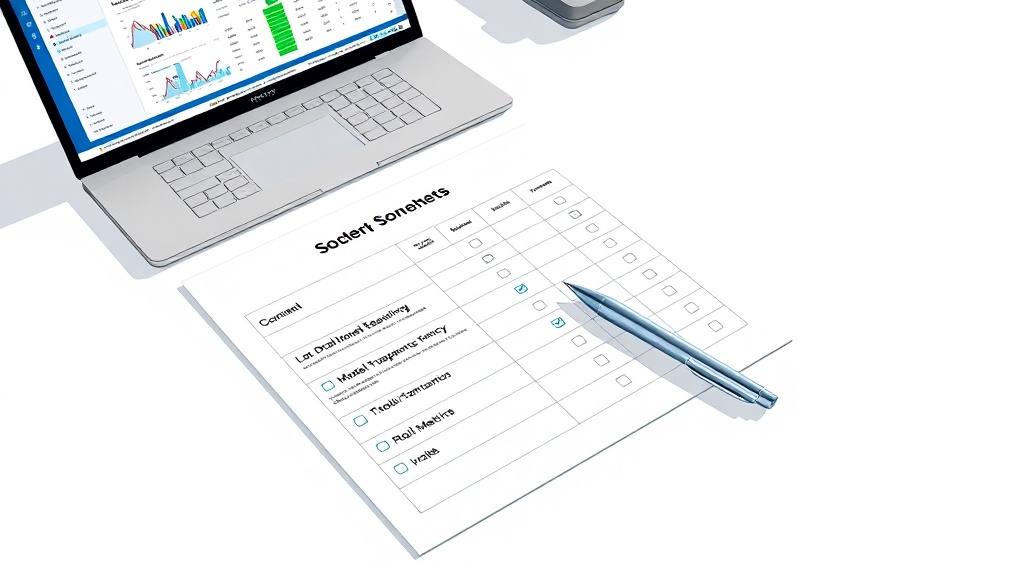
The Definitive AI Vendor Selection Scorecard Template for Logistics & Marketing Leaders
Choosing the wrong AI partner doesn't just waste budget—it can derail your entire digital transformation. For logistics fleet managers and marketing directors, the consequences are especially severe. A failed automation project means more than lost software; it can disrupt supply chains, cause you to miss critical campaign windows, and erode stakeholder trust overnight. The issue isn't a shortage of vendors. It's that traditional selection processes can't handle the unique, iterative reality of AI development.
This guide delivers the objective framework you've been missing. We provide a downloadable AI vendor selection scorecard template built specifically for logistics and marketing teams to evaluate partners on real ROI, deep expertise, and operational fit. You'll get the core criteria, common pitfalls, and a clear process to look past flashy demos and choose a partner that actually delivers—whether you're automating purchase orders or scaling personalized customer journeys.
Why Standard RFPs Fail for AI Projects
Traditional Requests for Proposal are designed for predictable purchases: office furniture, standard software licenses. AI projects are nothing like that. They're exploratory, data-hungry, and evolve as you go. Using a standard RFP to choose an AI vendor is like using a recipe to build a house—the tool simply doesn't match the task.
AI work is iterative by nature. Success often depends on uncovering insights from your data that weren't visible at the start. A rigid RFP demanding fixed specs and a firm price forces vendors into a corner. They either walk away or submit a proposal based on assumptions that will change, guaranteeing scope creep, budget overruns, and disappointment.
Watch for these classic missteps in a traditional AI vendor selection:
* Chasing the Lowest Bid: Choosing the cheapest option often means selecting shallow expertise, which leads to higher long-term costs from rework or outright failure.
* Falling for the Demo: A polished demo shows what's possible with perfect data in a controlled sandbox. It says nothing about how the vendor will handle your messy, real-world data or integrate with legacy systems.
* Ignoring Integration & Data Readiness: An RFP might ask "Can you do it?" but rarely digs into "How will you connect to our 10-year-old ERP?" or "What's your process for diagnosing our data quality?"
* Setting Vague Goals: Objectives like "improve efficiency" are impossible to measure. Without clear Key Performance Indicators (KPIs) from the start, you'll never know if the project succeeded.
This fundamental mismatch demands a more nuanced framework—one that evaluates a vendor's adaptability, collaborative approach, and long-term partnership potential, not just their initial price tag.
Building an Effective AI Vendor Scorecard: The Core Criteria
A strong AI vendor selection scorecard turns subjective opinions into an objective, consistent comparison. The secret is weighted categories. Not all criteria matter equally. For a complex machine learning project, technical capability might carry a 30% weight, while cultural fit might be 20%. This forces your evaluation team to debate what success truly requires and stops a vendor from winning on a single strength while hiding critical flaws.
Here are the essential, weighted categories to build into your AI vendor selection scorecard for logistics and marketing.
Strategic Fit & Industry Expertise
Ask yourself: Does this vendor actually get it? A vendor with generic AI experience will flounder compared to one who speaks your language. For a fleet manager, that means understanding telematics data, route optimization constraints, and driver compliance reporting. For a marketing director, it requires expertise in customer data platforms (CDPs), multi-touch attribution, and campaign ROI analysis.
Look for case studies or client references in your sector. During evaluations, present a specific, thorny problem (e.g., "How would you predict delivery delays using our current data?") and listen closely. Do they probe for the business impact, or do they jump straight to a technical script? The right partner acts as a strategic advisor, not just a code factory.
Technical Capability & Architecture
This is where you kick the tires. Key questions include:
* AI/ML Stack: Do they use modern, supported frameworks (TensorFlow, PyTorch) and cloud services (AWS, GCP, Azure)? Are they tool-agnostic, choosing the right tech for the problem?
Model Transparency & Explainability: Can they explain how* their model makes a decision? This is non-negotiable for regulated industries and for building internal trust. A "black box" solution is a tough sell.
* Scalability & Security: Is their architecture built to scale? What are their protocols for data encryption, access controls, and compliance with regulations like GDPR or data sovereignty laws in Mexico and the US?
Ask for a technical architecture diagram of their proposed solution. It should clearly map data flow, integration points, and security layers.
Implementation, Support & MLOps
A model that works in a lab is useless if it fails in production. This category assesses the vendor's discipline in deploying and maintaining AI. MLOps—Machine Learning Operations—is essentially DevOps for AI, ensuring models are monitored, retrained, and managed after launch.
Ask about their project management methodology (Agile, Scrum) and communication rhythm. Most importantly, ask: "What does support look like after go-live?" Do they offer retraining services as data drifts? What are their Service Level Agreements (SLAs) for fixing issues? A vendor that disappears post-deployment is a major liability. You need a partner committed to the long-term health of your AI assets.
Projecting ROI & The Business Case
This is the ultimate test. A credible vendor must help you build a solid business case. They should move past vague promises and help you quantify the value. Take AI workflow automation for purchase departments. The ROI can be significant, with typical implementations driving a 10-20% reduction in operational costs by automating invoice processing, purchase order matching, and vendor communication.
On efficiency, teams often save 15-25 hours per week on manual tasks like data entry and approval routing. Translate those hours into financial ROI: what's the fully-loaded cost of that employee time? Then, compare it to the cost of automation. The difference is your return. A strong vendor will work with you to baseline current metrics and project future savings with realistic assumptions, giving you a clear payback period.
Direct Answer: What is the typical ROI for AI workflow automation in procurement?
AI workflow automation for procurement and purchase departments typically delivers a 10-20% reduction in operational costs by automating manual processes like invoice matching and PO processing. Teams also save 15-25 hours per week on repetitive tasks, which directly translates into labor cost savings and faster cycle times when quantified against fully-loaded employee costs.
Cultural Fit & Communication
Will this vendor be a true partner or just another contractor? Cultural misalignment kills projects quietly. Assess their collaboration style. Are they transparent about risks and challenges, or do they only share good news? Do they insist on involving your team (a great sign for knowledge transfer), or do they prefer to work in isolation?
Schedule informal conversations with the proposed project team, not just the salespeople. Gauge their curiosity about your business and their ability to explain complex ideas simply. You're entering a partnership that could last months or years—you need a team that's responsive, proactive, and feels like a natural extension of your own.
How to Use Your AI Vendor Scorecard Template: A Step-by-Step Guide
Having the scorecard is half the battle. Using it effectively is the other. Follow this process to gather comparable, high-quality information and make an objective choice.
Step 1: Internal Alignment & Weighting (Before Contacting Vendors)
Gather your core evaluation team from logistics, marketing, IT, and finance. Using the template, decide on the weight for each category (Strategic Fit, Technical Capability, etc.) based on your project's unique priorities. Is this a high-risk, novel initiative where expertise is everything? Or a well-defined automation where cost and speed rule? This internal debate is critical—and it must happen before you see a single proposal.
Step 2: The Initial RFI & Vendor Long-List
Start with a Request for Information (RFI), not a full RFP. The goal is to filter for basic capability and interest. Share a high-level project overview and use the scorecard's criteria to shape a few open-ended questions. This step helps you build a shortlist of 3-5 qualified vendors without wasting everyone's time.
Step 3: The Deep-Dive Evaluation & Scoring
For your shortlisted vendors, schedulein-depth workshops, not just sales calls. This is where you apply the scorecard.
1. Present a Real Problem: Give them a sanitized version of a real business challenge and a sample dataset (if possible). Ask them to walk through their approach.
2. Score Independently: Have each member of your evaluation team fill out the scorecard for the vendor immediately after the session. Use a consistent scoring scale (e.g., 1-5). Independent scoring prevents groupthink.
3. Demand Specifics: For every claim—"we're great at integration" or "our models are accurate"—ask for proof. Request a detailed statement of work, architecture diagrams, and references you can actually call.
Step 4: Reference Checks & Final Due Diligence
Contact the provided references, but go beyond the standard "Were you happy?" Ask pointed questions that map to your scorecard categories:
* "How did they handle a major scope change or unexpected data issue?"
* "What was the onboarding and knowledge transfer process like?"
* "Is the solution still performing as expected, and how is it supported?"
Step 5: Consensus, Negotiation, and Selection
Compile all scores. Discuss major discrepancies as a team. The weighted score will give you a quantitative frontrunner, but use the qualitative notes to inform final discussions and contract negotiation. The highest-scoring vendor is your best bet for a successful partnership.
Common Pitfalls to Avoid When Scoring AI Vendors
Even with a great scorecard, bias can creep in. Stay vigilant against these traps:
* The Halo Effect: Don't let a vendor's strong performance in one category (e.g., a dazzling demo) inflate their scores across the board. Stick to the criteria.
* Confirmation Bias: You might unconsciously favor a vendor you liked from the start. The discipline of independent, criteria-based scoring is your defense.
* Neglecting Your Own Readiness: The best vendor will fail if your data is a mess or your team isn't prepared. Be honest in your self-assessment. A good vendor will help you with this, but you must own the readiness gap.
Your Next Step: Download the Template and Begin
The complexity of AI demands a disciplined selection process. This scorecard framework provides the structure to move from hype to a grounded, strategic partnership.
Ready to start evaluating? Download our free, editable AI Vendor Selection Scorecard Template for Logistics & Marketing Teams to implement this process immediately. The template includes pre-built, weighted categories, scoring scales, and vendor comparison matrices—everything you need to make a confident, data-driven decision.
Stop guessing and start scoring. Your ideal AI partner is out there; you just need the right tool to find them.