How to Build Custom AI Route Optimization Software for Your Logistics Fleet
Build custom AI route optimization software for your fleet in 2026. Step-by-step guide from readiness to deployment. Cut fuel costs 15-20%. Easy framework.
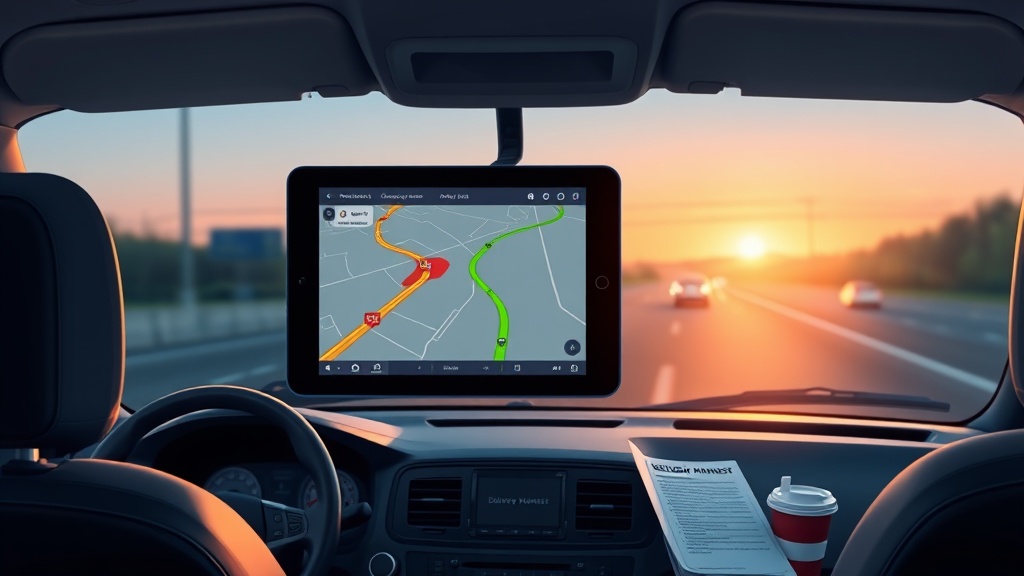
How does AI route optimization work? At its core, machine learning algorithms analyze hundreds of delivery constraints simultaneously—traffic patterns, time windows, vehicle capacity, driver hours, and customer preferences—then generate optimal routes in seconds. And it adapts in real time as conditions change.
For logistics leaders evaluating custom AI route optimization software for logistics, the decision framework matters more than the features list. Rising fuel costs, persistent driver shortages, and customer expectations for same-day delivery have turned route planning from an operational task into a competitive battleground.
This guide shows operations managers how to build AI route optimization software for fleet management that fits their fleet's unique constraints, from readiness assessment through full deployment. The seven-step framework you're about to read covers data readiness, ROI calculation, build-versus-buy analysis, architecture design, prototyping, local deployment, and long-term measurement.
By the end, you'll have a clear, actionable blueprint for a 90-day implementation path.
> What is custom AI route optimization software? Custom AI route optimization software uses machine learning algorithms—specifically Vehicle Routing Problem (VRP) solvers enhanced with reinforcement learning—to plan and continuously adapt delivery routes based on real-time traffic, weather, driver availability, and customer constraints. Unlike traditional TMS modules, custom solutions adapt to your fleet's unique operational rules.
---
Step 1: Assess Your Route Optimization Readiness for Fleet Management
What data do you need for AI route optimization? Historical route data, real-time GPS feeds, customer address databases with accurate geocoding, traffic pattern logs spanning at least six months, and driver availability schedules. Miss any of these five data types, and your AI model will produce suboptimal routes.
Before writing a single line of code, audit your data infrastructure, operational constraints, and technical maturity.
How to build AI route optimization software for fleet management — start here with the five-factor readiness checklist:
1. Data Quality and Completeness: Assess your historical route data for accuracy. Are GPS feeds consistent? Are customer addresses standardized and geocoded correctly? Incomplete or noisy data is the single biggest cause of AI project failure. According to the U.S. Bureau of Labor Statistics, poor data quality contributes to nearly 40% of failed technology implementations in logistics.
2. Fleet Size and Scale: The minimum viable data set varies by fleet. Operations with 50 or more vehicles typically provide enough training signal for meaningful optimization. Fleets with fewer than 20 vehicles may find off-the-shelf solutions sufficient; custom AI delivers strongest ROI for fleets with 50-plus vehicles or complex multi-depot operations.
3. Route Complexity Profile: Count your daily stops, time windows, vehicle types, driver preferences, and multi-depot requirements. Higher complexity favors custom AI.
4. Tech Stack Compatibility: Document your existing TMS, API availability, and data output formats. Custom AI thrives when it can integrate seamlessly with existing systems.
5. Organizational Readiness: Do you have executive sponsorship, change management capacity, and at least one analytics-savvy team member? Technology alone doesn't transform operations. Culture and leadership drive adoption.
If your fleet checks four or five of these boxes, you're ready for the next step. If you score two or three, invest three to six months in data cleansing and organizational alignment before proceeding. This readiness assessment determines whether AI route planning software will meet its potential or fall short.
---
Step 2: Calculate Your AI Route Optimization ROI for Logistics Companies
What's the ROI of AI route optimization? Fleet operators using AI route optimization achieve median savings of 15–20% on fuel and 10–15% on labor costs. Most custom implementations break even within 12–24 months.
The ROI formula is straightforward:
(Fuel Savings + Labor Efficiency + Maintenance Reduction + Late-Penalty Avoidance) ÷ (Development and Integration Cost + Annual Licensing)
Here are two worked examples based on documented industry findings from a 2023 MIT study of 300 commercial fleets that reported 18% fuel savings and 22% fewer miles driven:
50-Truck Regional Fleet Example:
- Fuel savings: $18,000 per year (18% of $100,000 annual fuel spend)
- Labor efficiency: $45,000 per year (two fewer dispatcher FTEs)
- Maintenance reduction: $7,200 per year (15% fewer miles)
- Total annual savings: approximately $70,200
- Custom implementation cost: $150,000 to $250,000
- Break-even timeline: 2 to 3.5 years
500-Truck National Fleet Example:
- Fuel savings: $180,000 per year
- Labor efficiency: $180,000 per year (four fewer dispatcher FTEs)
- Maintenance reduction: $72,000 per year
- Total annual savings: approximately $432,000
- Custom implementation cost: $400,000 to $800,000
- Break-even timeline: 1 to 2 years
The AI logistics route optimization software cost in 2026 ranges from $50,000 to $150,000 per year for off-the-shelf SaaS to $200,000 to $1 million for custom builds. The custom route typically delivers two to three times the long-term savings.
Here's a sobering stat: Industry analysts project that by 2027, 60% of large logistics companies will use AI-powered route optimization, up from 25% in 2024. The window for competitive advantage is narrowing.
AI route optimization ROI for logistics companies becomes most compelling when you factor in intangible benefits: improved customer satisfaction from tighter delivery windows, reduced driver turnover from more efficient routes, and the ability to scale without proportionally increasing dispatcher headcount.
---
Step 3: AI Route Optimization vs Traditional TMS — Which Approach Wins?
What's the difference between AI route optimization and traditional TMS? Traditional TMS focuses on operational planning and execution tracking. AI route optimization adds a real-time decision layer that continuously adapts routes based on traffic, weather, and new orders.
Logistics leaders must choose between upgrading their existing TMS with AI modules or building a custom AI-first solution.
Here's the five-factor decision matrix:
| Factor | Traditional TMS with AI Module | Custom AI Route Optimization |
|---|---|---|
| Initial cost | $50K–$150K/year subscription | $200K–$1M development |
| Route flexibility | Limited to vendor's constraint model | Full custom constraints (time windows, driver preferences, vehicle types) |
| Accuracy (dynamic optimization) | Batch updates (every 15–30 min) | Real-time (~2-second re-optimization) |
| Integration complexity | Pre-built connectors to major ERPs | Custom API development required |
| Scalability | License-based, capped at vendor limits | Infrastructure-based, scales with cloud |
Is custom AI route optimization worth the cost? For fleets with 100-plus vehicles or multi-depot operations, custom AI delivers two to three times the total addressable savings of off-the-shelf modules within 18 months. The AI logistics route optimization software cost in 2026 for custom builds breaks even faster for complex operations because each additional constraint a traditional TMS can't handle represents a cost leak that custom AI plugs.
For most mid-market to enterprise fleets with complex constraints, custom AI delivers superior long-term value.
> How does custom AI route optimization compare to traditional TMS? Custom AI solutions continuously re-optimize routes in real time (within approximately 2 seconds), while traditional TMS modules typically update routes in batch cycles every 15–30 minutes. Custom builds also accommodate unique constraints like driver seniority preferences or specific vehicle loading requirements that off-the-shelf modules often cannot handle.
---
Step 4: Design Your Custom AI Route Optimization Software Architecture
What algorithms power AI route optimization? The core is a Vehicle Routing Problem (VRP) solver, enhanced with reinforcement learning for dynamic re-routing and constraint satisfaction for real-world limits like time windows and driver hours.
Every production-grade route optimization engine follows a three-layer architecture.
Design Your Custom AI Route Optimization Software Architecture with these layers:
1. Data Ingestion Layer: This layer ingests real-time GPS feeds, weather data, traffic data from providers like Mapbox or Google Maps, order management system records, and driver availability schedules. Data quality at this stage determines everything downstream.
2. Optimization Engine (Core): The VRP solver provides the mathematical foundation—calculating the most efficient sequence of stops given distance, time, and capacity constraints. Reinforcement learning sits on top, continuously adapting to driver behavior patterns, optimal break times, and recurring traffic bottlenecks. Constraint satisfaction modules enforce real-world limits: driver hours of service, vehicle weight and dimension restrictions, time windows, and loading dock appointments.
3. Integration Layer: REST APIs and webhooks connect the optimization engine to your existing TMS, driver mobile app, dispatcher dashboard, and customer notification system. The architecture exposes a route optimization API that your TMS can call to get optimized routes on demand.
Machine learning for last-mile delivery optimization deserves special attention. ML models predict delivery time windows with high accuracy using historical traffic patterns, customer availability, and package dimensions—enabling tighter scheduling and higher first-attempt delivery rates.
Dynamic route optimization runs as a continuous loop: real-time event detection triggers re-optimization when traffic incidents, new orders, or driver delays occur. Think of it as Google Maps for your entire fleet, but with custom constraints your business requires.
---
Step 5: Build and Test Your AI Route Optimization Prototype
Your AI route optimization implementation timeline begins with a prototype phase lasting 4 to 8 weeks for a functional minimum viable product. Full production deployment typically requires 3 to 6 months depending on integration complexity.
Prototype build steps:
1. Train initial models on 6 to 12 months of historical route data. Use clean, validated data from your readiness assessment.
2. Run A/B simulations comparing AI-generated routes against actual dispatcher routes from the same period.
3. Validate with three key metrics: miles reduced per route, stops per hour improvement, and on-time delivery rate change.
4. Gather dispatcher and driver feedback on route quality and practicality.
Machine learning for last-mile delivery optimization should be your prototype's primary focus. Last-mile delivery accounts for 53% of total shipping costs, and it's where ML delivers the highest impact. Your prototype should target three specific improvements:
- Miles per stop reduction (target: 15–25%)
- On-time delivery rate improvement (target: +5–10%)
- Dispatcher time per route (target: 60–80% reduction)
Here's a critical quality check: never deploy an AI route model without driver feedback. Routes that are algorithmically optimal but disregard driver break preferences or familiar zones will face adoption resistance. Your logistics AI developer should pair with a fleet operations manager during testing to ensure routes meet real-world constraints.
The 4- to 8-week timeline is aggressive but achievable with dedicated development resources and clean historical data.
> How long does it take to build custom AI route optimization software? A functional prototype takes 4–8 weeks with clean historical data. Full production deployment requires 3–6 months for integration with your existing TMS, driver mobile apps, and dispatcher dashboards. The 90-day implementation path assumes dedicated development resources and leadership commitment.
---
Step 6: Plan Your Integration and Deployment for Austin Logistics Companies
How do you integrate AI route optimization with your existing TMS? You integrate using REST APIs that connect your TMS to the optimization engine—routes import automatically, and optimized routes export back to your TMS for execution.
The integration architecture covers three points:
1. TMS and ERP Connection: REST API connection for automated order import and route export. Your TMS continues to handle order management, invoicing, and reporting; the AI engine handles optimization.
2. Driver Mobile App Integration: Push route updates in real time to each driver's mobile app. Collect real-time status data: arrival times, delays, completion confirmations.
3. Dispatcher Dashboard: Real-time route visualization with exception alerts and manual override capability. Dispatchers retain control while benefiting from AI recommendations.
Custom AI route optimization software for Austin logistics companies must account for the city's unique traffic patterns. Austin's infrastructure presents specific challenges:
- I-35 congestion: The AI model must weight I-35 as two to three times slower during peak hours (7–9 AM and 4–7 PM) compared to non-peak travel.
- MoPac express lanes: The optimization must include toll cost versus time tradeoff calculations for the variable-priced express lanes.
- Downtown Austin delivery constraints: Narrow streets, limited loading zones, and 15-minute parking limits require the constraint satisfaction module to enforce time-window rigor.
- Suburban zone variations: Delivery time windows differ between residential zones (9 AM–5 PM) and commercial zones (8 AM–4 PM) in areas like Round Rock, Buda, and Kyle.
Deploy in phases: start with one delivery zone (e.g., downtown Austin), validate for two weeks, then expand to all zones. This phased approach reduces risk and builds organizational confidence in the AI system.
---
Step 7: Measure, Monitor, and Iterate — Maximizing Your Route Optimization Investment
What does AI route optimization maintenance look like? It involves monitoring model accuracy drift, retraining with new data quarterly, updating API integrations when TMS or driver app versions change, and collecting driver feedback to adjust constraint weights.
Post-deployment, logistics leaders need a structured measurement framework:
Weekly KPIs:
- Miles driven versus baseline
- Fuel consumption per route
- On-time delivery rate
- Dispatcher workload (time spent editing or creating routes)
Monthly KPIs:
- Total cost per mile delivered
- Driver satisfaction scores
- Route exception rate (missed windows, incorrect addresses)
Quarterly KPIs:
- ROI versus projected break-even timeline
- Model accuracy drift measurement
- Feature adoption rate (especially dynamic re-routing usage)
Retrain your custom AI route optimization model quarterly with fresh data to maintain accuracy as traffic patterns, customer bases, and fleet composition evolve.
Edge cases require specific handling:
- Address errors: Implement fuzzy address matching that logs mismatches for manual review.
- Driver non-compliance: Track route adherence rates and investigate patterns—specific drivers avoiding certain routes or areas.
- Unexpected congestion: Compare AI predictions against actual travel times and adjust traffic weight parameters.
The best logistics AI developers establish a feedback loop where dispatchers can flag sub-optimal routes, directly feeding into the reinforcement learning model's reward function.
Revisit your ROI calculations from Step 2 at the six-month and 12-month marks. If savings are below projection, investigate which KPI is underperforming. It's often a data quality or adoption issue, not an algorithm problem.
---
Frequently Asked Questions
What is AI route optimization software?
AI route optimization software uses machine learning algorithms—specifically Vehicle Routing Problem (VRP) solvers with reinforcement learning—to automatically plan and continuously adapt delivery routes based on traffic, weather, driver availability, and customer constraints in real time.
How much does custom AI route optimization software cost?
Custom builds typically range from $200,000 to $1 million depending on fleet size, route complexity, and integration requirements. Off-the-shelf SaaS alternatives cost $50,000 to $150,000 per year but offer less flexibility for unique operational constraints.
How long does it take to build custom AI route optimization software?
A functional prototype takes 4–8 weeks with clean historical data. Full production deployment requires 3–6 months. A 90-day implementation path is achievable with dedicated development resources and leadership commitment.
What data do I need to build AI route optimization software?
You need historical route data, real-time GPS feeds, customer address databases with accurate geocoding, traffic pattern logs spanning at least six months, and driver availability schedules. Missing any of these five data types can cause suboptimal route outputs.
Can custom AI route optimization integrate with my existing TMS?
Yes. REST APIs connect your TMS to the optimization engine for automated order import and route export. The AI engine handles optimization while your TMS continues managing orders, invoicing, and reporting.
Is custom AI route optimization worth the cost for small fleets?
Fleets with fewer than 20 vehicles typically see better ROI from off-the-shelf solutions. Custom AI delivers strongest value for fleets with 50-plus vehicles or complex multi-depot, multi-constraint operations.
---
Conclusion
Custom AI route optimization software delivers the competitive advantage logistics companies need in 2026. From readiness assessment through continuous iteration, building custom AI route optimization software follows a proven seven-step path that transforms fleet operations.
The 90-day implementation timeline is realistic for organizations with clean data and committed leadership. Fleets that invest in custom AI solutions today will hold a competitive advantage in cost, customer satisfaction, and scalability for years to come.
Industry projections show AI-powered route optimization will be standard for 60% of large fleets by 2027—the window for first-mover advantage is closing. Building custom AI route optimization software for logistics isn't just about technology. It's about transforming your fleet's operational DNA.
Ready to evaluate your fleet's readiness? Start with a data audit using the checklist in Step 1, or contact an AI development partner to explore a customized ROI projection for your specific operations. For expert guidance building your custom solution, Clearframe Labs offers the technical depth and logistics domain expertise to turn this blueprint into a live system driving measurable results.