machine learning for fleet safety analytics
Implement machine learning for fleet safety analytics to predict risks, cut accident costs, lower insurance premiums, and boost operational efficiency. Get your definitive 2026 guide.
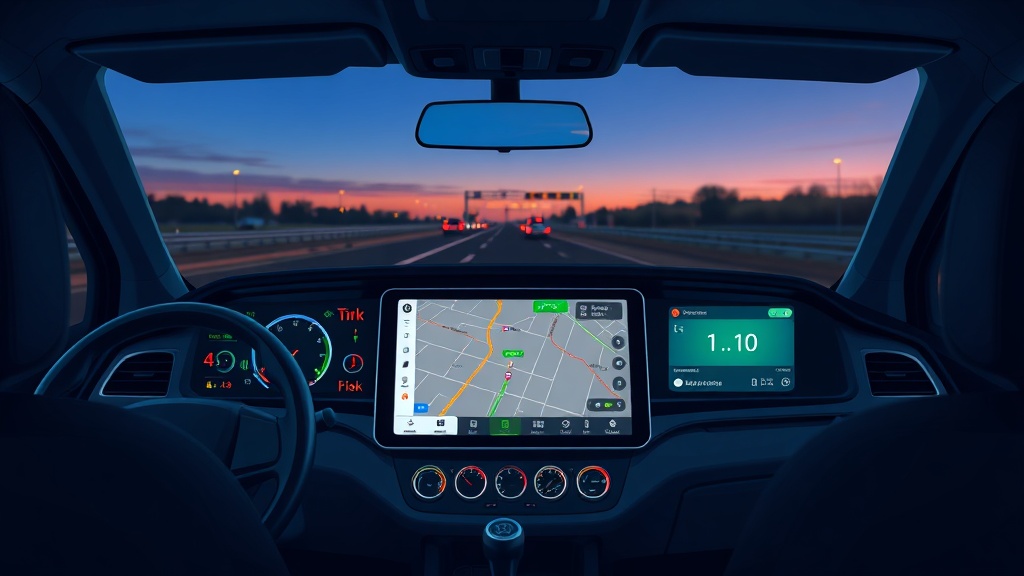
Machine Learning for Fleet Safety: The Definitive Guide to Reducing Costs and Preventing Accidents in 2026
Every vehicle that leaves your lot carries more than cargo or passengers—it carries immense financial risk. An accident’s aftermath isn’t just a damaged truck; it’s soaring insurance premiums, legal battles, operational paralysis, and a bruised reputation. In 2026, the push to boost safety while controlling costs is more intense than ever. Old-school reactive methods no longer suffice.
What if you could see trouble coming and stop it before it happens? Machine learning has moved beyond buzzword status to become a practical, results-driven engine for modern fleet management. It transforms raw data into proactive intelligence, rewriting the entire safety and profitability equation. This guide tackles the critical question: How can you implement machine learning for fleet safety analytics to protect your drivers, shield your assets, unlock major operational savings, and build a serious competitive edge this year?
What Are the Real Costs of Fleet Safety in 2026?
Most see fleet safety as a line item for compliance. In reality, it’s one of the biggest financial levers in your entire operation. The true cost stretches far beyond the crash scene.
The direct hits are staggering. A single commercial fleet accident can cost tens of thousands when you factor in repairs, medical bills, and the inevitable spike in liability insurance. Insurers now heavily scrutinize your safety record and proactive risk management. A poor history doesn’t just mean higher premiums—it can make coverage difficult to find at any price.
But the indirect costs are where profits quietly bleed away. Every accident triggers a chain reaction of inefficiency: vehicle downtime leads to missed deliveries and lost revenue, administrative teams drown in paperwork, and driver turnover climbs as morale tanks. Managing in this reactive mode is a hidden tax on your business.
This financial reality points directly to a solution. For modern fleets, the core question is straightforward: how does machine learning improve fleet safety and reduce costs? The answer lies in converting the mountains of data you already collect—or could collect—into actionable, predictive insight. It’s the shift from a costly, reactive stance to a strategic, proactive one.
Concise Answer: Machine learning improves fleet safety and reduces costs by shifting management from a reactive to a predictive model. By analyzing driving behavior, vehicle health, and contextual data, ML algorithms identify risk patterns before they cause accidents, leading to fewer collisions, lower insurance premiums, reduced maintenance costs, and less operational downtime. This proactive approach directly protects revenue and enhances profitability.
AI vs. Telematics: What You're Missing with Basic Tracking
Telematics has been the backbone of fleet tracking for years. These systems deliver the essentials: GPS location, vehicle speed, basic engine diagnostics, and fuel use. They tell you what happened and where your assets are—a vital step, but still just a historical log.
The problem with traditional telematics is data overload without real insight. Managers get flooded with alerts for harsh braking or speeding, but these are merely reactive notifications. They don’t explain why it happened or, more importantly, what’s likely to happen next. Was that harsh braking an avoidable mistake or a legitimate reaction to a sudden traffic event? Basic tracking can’t provide that context.
This is where AI fleet safety analytics creates a quantum leap. Machine learning algorithms analyze patterns across millions of data points. They don’t just monitor; they understand. By connecting driving behavior with context—time of day, traffic density, weather, specific route traits—AI can distinguish risky behavior from safe reactions. It spots subtle, repeating patterns a human would miss, predicting which drivers or vehicles are heading toward trouble.
The change is fundamental: from simple monitoring and punishment to intelligent coaching and prevention. AI turns telematics data from a rear-view mirror into a predictive windshield, giving you the foresight to act before an incident occurs.
Concise Answer: The key difference between basic telematics and AI-powered analytics is the shift from historical tracking to predictive insight. While telematics reports past events like harsh braking, machine learning analyzes patterns across data—such as driving behavior combined with weather and traffic—to predict and prevent future risks. This transforms safety management from reactive alerting to proactive coaching and accident prevention.
Core ML Models Powering Modern Fleet Safety
The specific machine learning techniques at work aren’t abstract concepts—they’re practical engines delivering measurable safety and efficiency gains.
Predictive Driver Behavior Scoring
This is where machine learning leaves simple event counting in the dust. Predictive models analyze thousands of data points per trip: longitudinal and lateral acceleration, braking force, cornering g-forces, steering patterns, time of day, and route history. By processing this data, the ML system builds a dynamic risk profile for each driver.
Instead of penalizing one-off events, the model identifies risky patterns. Maybe a driver consistently accelerates too hard in their first hour on shift, or grows complacent on familiar routes. The output is a predictive safety score—a data-driven gauge of which drivers are most likely to be involved in a preventable incident.
This enables a transformative management shift: from punitive measures to proactive, targeted coaching. Safety managers can use these insights for personalized feedback, focusing training resources where they’ll have the greatest impact. The ROI of AI-powered driver behavior monitoring is significant. Most implementations see a 25-40% drop in harsh driving events within the first year. That directly leads to fewer accidents, which slashes repair costs, lowers insurance premiums, and reduces fuel consumption—a clear financial return.
Predictive Maintenance for Proactive Safety
Vehicle health is directly tied to operational safety. A brake failure or tire blowout isn’t just a maintenance headache—it’s a serious hazard. Traditional schedule-based maintenance (like oil changes every 10,000 miles) is inefficient. It can cause unnecessary downtime or, worse, miss a critical failure between service checks.
Predictive maintenance models use machine learning to analyze historical and real-time sensor data from the engine, transmission, brakes, tires, and other critical systems. The model learns the normal “health signature” of each part and can detect tiny anomalies that signal wear or impending failure long before a dashboard light comes on.
For instance, the model can predict brake pad wear or flag a bearing likely to fail within the next 1,000 miles. This allows maintenance to be scheduled proactively during planned downtime, preventing accidents caused by mechanical failure and avoiding the much higher costs of a roadside breakdown. The ROI here is dual: it boosts safety by pulling high-risk vehicles from service before they fail, and it improves operational efficiency by maximizing vehicle uptime and extending part lifecycles.
Concise Answer: The two core machine learning models for fleet safety are predictive driver behavior scoring and predictive maintenance. The first analyzes driving patterns to assign risk scores and enable targeted coaching, reducing harsh events by 25-40%. The second uses sensor data to forecast vehicle component failures, allowing repairs before breakdowns occur, which prevents accidents and cuts downtime costs.
How Do You Implement Machine Learning for Fleet Safety Analytics?
Adopting this technology is a strategic project, not just a software install. A structured, phased approach ensures it aligns with your business goals and delivers maximum impact.
Phase 1: Assessment & Data Audit
Start by looking inward. What data do you already collect from your telematics, ELDs, and maintenance records? This phase involves evaluating your existing setup and defining the key safety KPIs that matter most to your operation—like target reductions in accident rates or improvements in driver safety scores.
Phase 2: Solution Design & Partner Selection
Here, you match potential ML capabilities to your specific business goals. This stage involves a key choice: buy an off-the-shelf platform or invest in a custom-built solution? Your decision hinges on operational complexity, need for unique integrations, and long-term strategic vision.
Phase 3: Pilot & Integration
Before a full rollout, run a controlled pilot on a subset of vehicles—maybe a single depot or a specific driver group. This lets you test the ML platform’s accuracy, integrate it with your existing fleet management and ERP systems, and start gathering real-world performance data to validate your ROI projections.
Phase 4: Deployment & Change Management
A full-scale rollout needs careful planning. Beyond the technical deployment, success depends on change management. That means training safety managers to interpret AI insights and, crucially, training drivers to see the technology as a coaching tool for their benefit and safety, not just a surveillance system. Clear feedback loops ensure the system drives continuous improvement and adoption.
Phase 5: Optimization & Scaling
Once the system is live, the work shifts to refinement. Use the insights generated to fine-tune your coaching programs and maintenance schedules. As the machine learning models process more data, their predictions become more accurate. This phase focuseson scaling the solution across your entire fleet and exploring advanced use cases, such as integrating external data sources like real-time weather or traffic congestion patterns for even more precise risk forecasting.
The Tangible ROI: Quantifying Safety and Savings
The ultimate test of any technology investment is its return. With machine learning for fleet safety, the ROI is multi-faceted, impacting both the top and bottom lines. The savings are not hypothetical; they are measurable and significant.
Direct Cost Reduction: The most immediate financial impact is the reduction in accident-related expenses. Fewer collisions mean lower costs for repairs, medical claims, and legal fees. Furthermore, a demonstrably safer fleet is rewarded by insurers. Companies implementing robust predictive analytics often secure premium reductions of 10-25% as they move into a more favorable risk category. Predictive maintenance also delivers hard savings by preventing catastrophic failures, reducing roadside repair costs by up to 30%, and extending the useful life of major components.
Operational Efficiency Gains: Safety directly fuels efficiency. By preventing accidents and unplanned breakdowns, you maximize vehicle uptime and asset utilization. This translates directly into more deliveries completed, more service calls made, and more revenue generated per vehicle. Reduced driver turnover—a common result of a positive, coaching-focused safety culture—saves tens of thousands per driver in recruitment and training costs. Additionally, smoother driving behavior identified and corrected by ML systems typically improves fuel efficiency by 5-10%, a major line-item saving.
Strategic & Intangible Benefits: Beyond the balance sheet, a data-driven safety program builds a formidable competitive advantage. It enhances your company’s reputation with clients who prioritize safe, reliable partners and helps attract and retain top-tier driving talent. It also future-proofs your operation against increasingly stringent regulatory and ESG (Environmental, Social, and Governance) reporting requirements. The shift from a culture of blame to one of continuous, data-supported improvement is a powerful intangible asset.
Overcoming Implementation Challenges
Adoption is not without its hurdles. Acknowledging and planning for these challenges is key to a successful rollout.
Data Quality & Integration: Machine learning is only as good as the data it consumes. Siloed data in legacy systems, inconsistent formatting, or poor sensor coverage can hinder initial model accuracy. A thorough data audit and a clear integration strategy are essential first steps.
Driver Acceptance & Culture Shift: The greatest technical system will fail if drivers perceive it as a "big brother" surveillance tool. Success requires transparent communication that frames AI as a coaching assistant designed to protect them. Involving drivers early, providing constructive feedback based on data, and incentivizing safe behavior are critical for fostering buy-in.
Initial Investment & Resource Allocation: While the long-term ROI is clear, there is an upfront cost for technology, integration, and training. Building a compelling business case that projects specific savings (e.g., reduced accident costs, lower premiums) is necessary to secure executive sponsorship and budget.
The Future is Predictive: Getting Started in 2026
The trajectory is unmistakable. Fleet management is evolving from reactive record-keeping to predictive intelligence. In 2026, leveraging machine learning for safety is no longer a futuristic concept—it’s a core component of a resilient, profitable, and competitive fleet operation.
The journey begins with a single step: moving from curiosity to evaluation. Start by quantifying your current total cost of risk. Then, engage with technology providers for demos and pilot programs. The goal is not to boil the ocean but to identify a focused, high-impact use case—like reducing rear-end collisions on urban routes or predicting brake system failures—and proving the value there first.
The data, the technology, and the proven ROI are now accessible. The question for fleet operators is no longer if machine learning will redefine safety standards, but when they will harness its power to protect their people, their assets, and their profitability. The decision you make today will define your safety record and your balance sheet for years to come.