AI workflow automation benefits logistics
Learn how custom AI workflow automation reduces logistics costs by 20-35%, improves efficiency, and delivers ROI. Get a strategic implementation guide for fleet and warehouse operations.
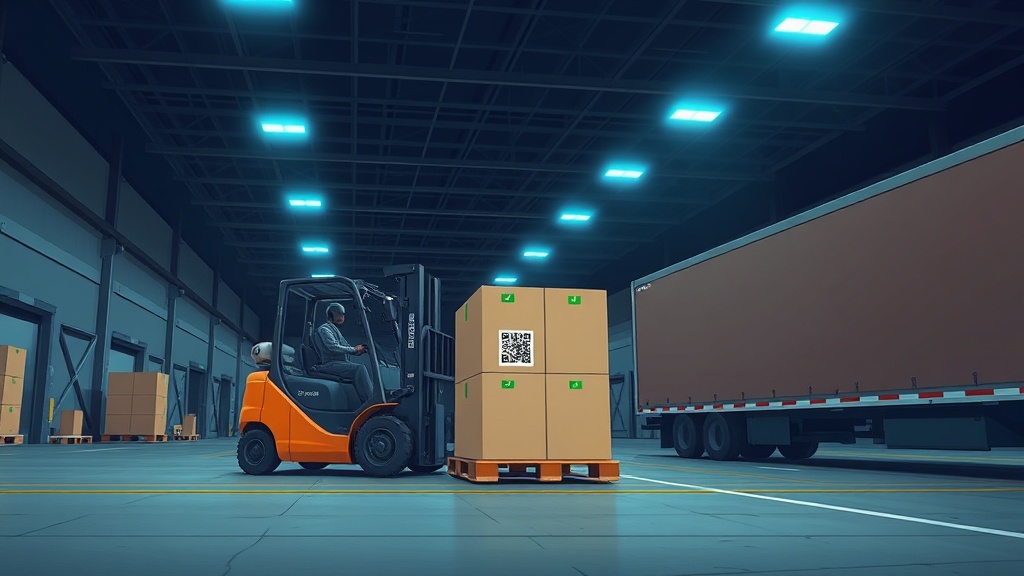
Custom AI Workflow Automation for Logistics: A Strategic Guide
The logistics industry is under immense pressure. Demands for speed, accuracy, and lower costs have stretched manual processes and legacy systems to their breaking point. Today, a single delay is more than an operational hiccup—it can trigger financial penalties and erode customer trust. Sticking with the status quo is a growing risk.
This is where artificial intelligence enters, not as a distant future technology, but as a practical tool delivering measurable results. Custom AI workflow automation is rebuilding logistics operations from the ground up, transforming friction into fluid efficiency. It enables capabilities like predictive analytics and real-time optimization that were previously unattainable.
For logistics companies, fleet owners, and operations managers, the imperative is clear: adapt now or fall behind. Let’s examine the tangible benefits—from slashing operational costs to achieving total visibility—and outline a practical plan for implementing AI solutions that deliver clear ROI and a lasting competitive edge.
The Hidden Tax of Manual Processes
Beneath the daily flow of shipments and dispatches, manual processes impose a hidden tax on your business. These are not minor inefficiencies but systematic drains on profitability.
Human error in data entry and order processing leads to incorrect shipments, inventory gaps, and costly returns. Decisions delayed by outdated spreadsheets or siloed information result in missed load consolidation, poor route planning, and a constant game of catch-up. Then there’s the resource drain: your team spends hours on repetitive administrative tasks that could be automated, pulling them away from value-adding work.
The financial impact is real. Manual work inflates labor costs, adds error-related expenses, and creates bottlenecks that slow everything down. This overhead eats directly into your margins.
Targeting these pain points is where AI reduces logistics operational costs becomes a serious strategy. AI-driven automation eliminates manual data entry, delivers real-time insights for faster decisions, and optimizes resource allocation. By implementing tailored AI, logistics companies can systematically strip out these hidden costs. The potential is significant—businesses often achieve cost reductions of 20–35% in areas like inventory management, order processing, and administrative overhead. The initial ROI isn’t just promising; for many, it’s essential to remain competitive, with efficiency gains alone justifying the investment.
Custom AI or Off-the-Shelf Software?
Facing the decision to automate, logistics leaders confront a fundamental choice: adopt a generic, off-the-shelf platform or invest in a custom AI solution. Pre-packaged software might deploy faster, but it often brings limitations that stall long-term growth. True automation power emerges when technology conforms to your business—not the other way around.
The Problem with One-Size-Fits-All Software
Traditional logistics software is built for a hypothetical “average” company. It handles common needs adequately but stumbles over the unique 20% that defines your operations and competitive advantage. Integration with your existing tools—whether a legacy warehouse system, an older ERP, or custom telematics—can be clunky, expensive, or impossible.
These platforms rarely adapt to specific compliance rules, unique customer protocols, or special cargo handling. As you scale or shift direction, you may find the software boxing you in, forcing costly workarounds or another full system replacement down the line.
Why Tailored AI Automation Works
Custom AI automation is built from scratch to fit your workflow perfectly. This approach to AI automation vs. traditional logistics software prioritizes flexibility, deep integration, and scalability.
A bespoke AI system connects seamlessly to your existing tech stack, pulling data from every source to create a single source of truth. It learns from your historical data, so its predictions for demand or maintenance alerts are uniquely accurate for your operations. Crucially, it automates complex, variable workflows that off-the-shelf software can’t handle—such as dynamic pricing, exception handling for high-value shipments, or custom client reporting.
Yes, the initial development requires a committed partnership. But the long-term payoff is greater. The solution evolves with your business, avoids recurring fees for unused features, and drives continuous efficiency gains precisely where you need them.
Where AI Delivers the Biggest ROI in Logistics
To maximize return from AI, focus on areas that impact both cost and service quality most. Several core logistics functions are ripe for transformation, where AI doesn’t just add efficiency—it creates entirely new capabilities. Automating these areas consistently delivers double-digit reductions in operational costs and major improvements in metrics like on-time delivery and inventory accuracy.
Predictive Analytics for Inventory and Demand
Gut-feel forecasting is obsolete. AI-powered predictive analytics sifts through massive datasets—historical sales, seasonal trends, market shifts, even weather—to forecast demand with high accuracy. This enables optimized stock levels, reducing both excess inventory costs and the risk of stockouts that delay orders and frustrate customers.
The outcome is a leaner, more responsive supply chain. Companies using these models often cut inventory costs by 25–40% and see similar gains in order fulfillment rates. Capital once tied up in stock is freed for strategic reinvestment.
Automating Warehouse Operations
The warehouse is the physical heartbeat of logistics, and AI is making it smarter. Automation here includes AI-guided robotics for picking and packing, plus computer vision systems that monitor inventory and identify damaged goods. AI can optimize warehouse layout dynamically for the most efficient pick paths and automate complex sorting tasks.
These systems drastically reduce human error, accelerate throughput, and improve safety. The gains are substantial: many operations report a 30–50% increase in picking accuracy and a 20–35% reduction in labor costs associated with manual sorting and inventory checks. That’s a direct boost to the bottom line.
Real-Time Tracking and Optimization
One of the most transformative applications is real-time logistics tracking with AI. This goes far beyond simple GPS. AI systems synthesize data from GPS, traffic APIs, weather feeds, and vehicle sensors to provide a dynamic, comprehensive view of your entire fleet.
They don’t just show where a truck is—they predict where it will be and flag potential delays before they happen. Furthermore, these systems enable dynamic rerouting to avoid traffic, optimize fuel consumption, and consolidate loads in real time.
The benefits are twofold: customers receive precise, proactive ETAs, and you achieve significant operational savings. This can cut fuel costs by 10–20% and improve asset utilization by 15–25%, as trucks spend less time idle and more time moving freight profitably.
AI for Fleet Management: Predictive Maintenance and Smarter Routes
For fleet owners and managers, AI marks the shift from preventive to predictive and prescriptive management. Modern fleets generate terabytes of data from telematics, engine sensors, and driver logs. Machine learning models excel at analyzing this data to extract actionable insights, turning reactive operations into a streamlined system.
The benefits of machine learning in fleet management are intensely practical. Consider predictive maintenance. Instead of following a rigid schedule or waiting for a breakdown, AI algorithms analyze historical maintenance data and real-time sensor inputs—engine temperature, vibration, oil pressure—to predict component failures accurately.
This allows managers to schedule maintenance during planned downtime, avoiding costly roadside breakdowns, emergency repairs, and missed deliveries. The impact on uptime and budget is dramatic, with potential reductions in unplanned downtime of up to 50% and overall maintenance costs by 20–30%.
Simultaneously, AI-driven dynamic route optimization is transforming dispatch. Static routes can’t handle real-world chaos—accidents, road closures, weather, last-minute order changes. Machine learning models process this data in real time to constantly calculate the most efficient routes. They balance multiple variables: delivery windows, driver hours-of-service regulations, vehicle type, and fuel efficiency.
The result isn’t just shorter distances but smarter journeys that minimize fuel burn, reduce wear and tear, and ensure compliance. The cumulative effect is a direct profit boost through savings in fuel and labor, often between 15–25%, while also enhancing service reliability.
Making the Business Case: Calculating AI ROI in Your Warehouse
Securing buy-in for an AI automation project requires a solid, numbers-driven case. Shift the conversation from “what if” to a clear financial projection. Calculating the ROI of AI automation in warehouse operations uses a straightforward formula: (Total Gains from Automation – Total Cost of Investment) / Total Cost of Investment.
First, quantify the gains. These come as hard and soft savings.
Hard savings are the most direct:
* Labor Cost Reduction: Estimate hours spent on automatable tasks—manual data entry, cycle counting, report generation—and apply your fully burdened labor rate. A 25% reduction in these hours is a realistic starting point.
* Error Reduction: Calculate the average cost of a shipping error, inventory discrepancy, or mis-pick (including correction labor, shipping costs, and lost business). AI can reduce these errors by 40–60%.
* Throughput Increase: Measure how much more inventory you can process with optimized pick paths and automated sorting. A 20% throughput increase without adding labor translates to greater capacity and revenue potential.
Soft savings are trickier to quantify but equally valuable:
* Improved Inventory Accuracy: Higher accuracy reduces stockouts and overstocking, freeing working capital. Quantify this as a percentage reduction in safety stock requirements.
* Better Employee Morale & Retention: Automating repetitive tasks allows staff to focus on problem-solving and customer service, reducing turnover and associated hiring and training costs.
Next, define the total investment cost. This includes:
* Development/Implementation Costs: The upfront cost to design, build, and integrate the custom AI solution.
* Training & Change Management: Costs for upskilling your team.
* Ongoing Maintenance & Support: Typically a predictable annual fee for updates, hosting, and technical support.
Contrast a clear, multi-year gain projection against the investment to build an undeniable financial story. The payback period for well-targeted AI warehouse automation often falls between 12 to 24 months, with ROI growing steadily as the system continues to learn and optimize.
Key Benefits of AI in Logistics: A Data-Driven Summary
Implementing custom AI workflow automation in logistics delivers measurable improvements across core operational areas. According to industry analyses and implementation case studies, the primary benefits include:
* Cost Reduction: AI automation can lower operational costs by 20–35% in areas like inventory management, order processing, and administrative overhead.
* Efficiency Gains: Warehouse picking accuracy can improve by 30–50%, while fleet fuel costs can be reduced by 10–20% through AI-optimized routing.
* Predictive Capabilities: AI-driven predictive maintenance can decrease unplanned fleet downtime by up to 50% and cut overall maintenance costs by 20–30%.
* Inventory Optimization: Companies using AI for demand forecasting often reduce inventory costs by 25–40% while improving order fulfillment rates.
Frequently Asked Questions (FAQ)
What is custom AI workflow automation in logistics?
Custom AI workflow automation involves building tailored artificial intelligence systems that integrate with a logistics company's existing operations to automate complex processes. Unlike off-the-shelf software, these solutions are designed specifically for a business's unique workflows, enabling automation of tasks like demand forecasting, route optimization, and predictivemaintenance.
How does AI reduce logistics operational costs?
AI reduces costs by automating manual, error-prone tasks like data entry and order processing, optimizing resource allocation (e.g., inventory and fleet utilization), and providing real-time insights for better decision-making. This leads to direct savings in labor, error correction, fuel, and inventory carrying costs.
What's the difference between AI automation and traditional logistics software?
Traditional software is a pre-built platform that handles common processes but often requires you to adapt your workflow to it. Custom AI automation is built to fit your specific operations, integrates deeply with your existing systems, and uses machine learning to continuously improve and handle complex, variable tasks that standard software cannot.
How accurate is real-time logistics tracking with AI?
AI-enhanced tracking is significantly more accurate and insightful than basic GPS. By synthesizing data from telematics, traffic, weather, and sensors, AI provides a dynamic, predictive view of shipments. It can forecast delays, suggest optimal reroutes, and provide highly reliable ETAs, improving both operational control and customer communication.
What are the key benefits of machine learning in fleet management?
The primary benefits are predictive maintenance—using data to forecast vehicle failures before they happen—and dynamic route optimization that accounts for real-time conditions. This leads to major reductions in unplanned downtime (up to 50%), lower maintenance costs (20–30%), and significant savings in fuel and labor (15–25%).
How do you calculate the ROI of AI automation in warehouse operations?
ROI is calculated by quantifying the gains (labor savings, error reduction, throughput increase, inventory accuracy improvements) and subtracting the total investment cost (development, training, maintenance). The result is divided by the investment cost. A well-scoped project typically sees a payback period of 12 to 24 months, with ROI compounding as the system learns.
Is custom AI automation scalable for a growing logistics business?
Yes, a core advantage of a custom solution is its inherent scalability. It is designed to integrate with your core systems and can be architected to handle increasing data volumes, more complex workflows, and new business lines without the constraints of a generic software platform.
Getting Started: Your Roadmap to Implementation
Transitioning to AI-driven operations is a strategic journey, not a one-time purchase. A phased, pragmatic approach ensures alignment with business goals and mitigates risk.
1. Identify High-Impact Pain Points: Begin with a thorough audit. Where are the most costly errors, the longest delays, or the greatest resource drains? Prioritize areas where automation will deliver quick, visible wins, such as invoice processing or load planning.
2. Assess Data Readiness: AI runs on data. Evaluate the quality, accessibility, and structure of your data from sources like your TMS, WMS, ERP, and telematics. Clean, historical data is the fuel for effective machine learning models.
3. Partner with the Right Developer: Choose a technology partner with proven expertise in both AI/machine learning and the logistics domain. They should act as a strategic advisor, capable of translating operational challenges into technical solutions.
4. Start with a Pilot Project: Implement a focused solution for one high-priority process. This could be a predictive model for a specific warehouse's stock levels or an AI module for dynamic routing on a key lane. A pilot delivers tangible results, builds internal confidence, and provides a blueprint for broader rollout.
5. Scale and Iterate: With a successful pilot, you can systematically expand automation to other areas, using lessons learned and the established AI infrastructure to accelerate deployment.
Conclusion: The Future is Automated
In logistics, efficiency is no longer just an advantage—it's the foundation of survival and growth. Custom AI workflow automation provides the tools to build that foundation, transforming latent data into decisive action and manual effort into automated precision. The path forward involves moving beyond generic tools to embrace solutions crafted for your unique operational reality. The result is a resilient, responsive, and relentlessly efficient operation poised to lead in an increasingly demanding market. The question is no longer if you will automate, but how strategically you will begin.