fleet maintenance AI predictive analytics guide
Learn how AI predictive maintenance for fleet vehicles cuts costs, prevents breakdowns, and boosts ROI. Get a step-by-step implementation guide for 2026.
AI Predictive Maintenance for Fleet Vehicles: Turning Downtime into Dollars
For fleet operators, a broken-down truck is more than an inconvenience—it’s a financial hemorrhage. Missed deliveries, overtime pay, rushed parts orders, and unhappy customers add up fast. The traditional playbook has been either waiting for something to break or sticking to a rigid maintenance calendar. Both approaches waste money and keep you on the back foot.
That old model is crumbling. Intelligent systems powered by AI predictive analytics are turning maintenance from a cost center into a strategic advantage. This guide explains how the technology works, where the real savings come from, and how to implement it successfully. We’ll also explore what this means for operations in demanding environments like Mexico City, where urban chaos requires smarter, more resilient solutions.
How AI Predicts Vehicle Breakdowns for Fleets
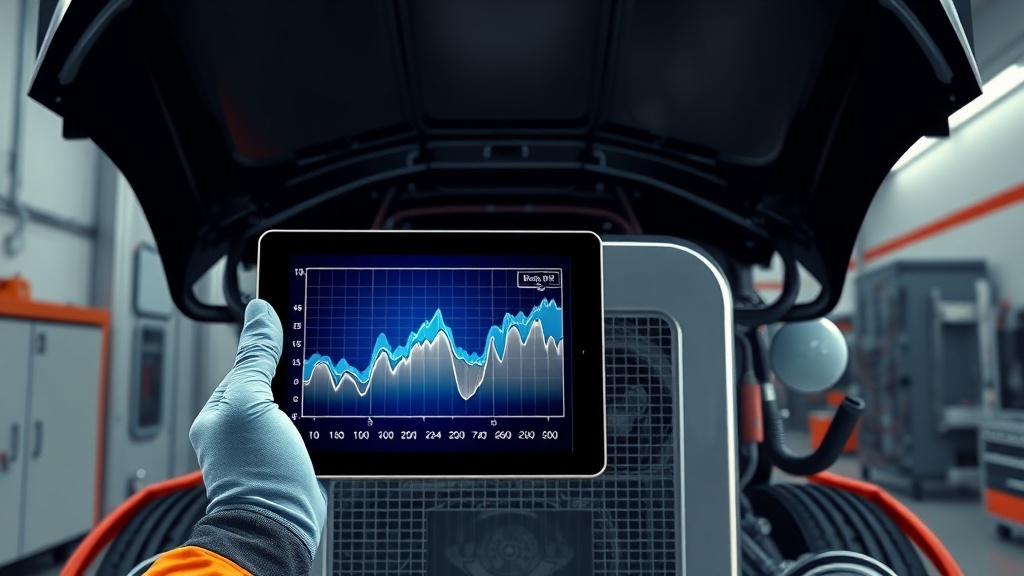
Think of AI predictive maintenance as your fleet’s mechanical fortune teller. It doesn’t just monitor your vehicles; it learns their unique language. By analyzing torrents of data, it spots the subtle whispers of a future breakdown long before it becomes a deafening roadside roar. This flips the script from “fix it when it breaks” to “fix it before it fails.”
It all starts with data. Modern trucks and vans are rolling data centers, constantly streaming information from telematics, onboard sensors (tracking everything from engine temperature to vibration), and past repair logs. AI models analyze this data, finding complex patterns and tiny anomalies a human would never notice.
Here’s a real-world example: the AI might learn that a specific, gradual increase in engine vibration paired with a slight temperature creep over 500 miles has, in your fleet’s history, signaled an impending bearing failure. It then sends a targeted alert: “Vehicle #23: High probability of drivetrain bearing failure within 200-300 miles. Recommend inspection at next scheduled stop.”
The system’s accuracy grows with the quality of its input. Feed it comprehensive, clean data from your specific vehicles operating in your specific conditions, and its predictions become razor-sharp over time.
In essence, AI predictive maintenance for fleets works by applying machine learning algorithms to historical and real-time vehicle sensor data to identify patterns that precede failures. This enables maintenance teams to schedule repairs during planned downtime, avoiding costly roadside breakdowns and extending vehicle lifespan.
The Tangible ROI: Where the Savings Actually Come From
For finance and operations leaders, the appeal of predictive maintenance isn't the technology—it's the return. The ROI attacks costs from every angle, turning maintenance from an expense line into a savings engine.
Let’s map the major cost-saving territories:
* Lower Repair Bills: Swapping a worn alternator is cheap. Replacing that same alternator after it fails and fries the electrical system on a highway is not. Catching issues early almost always costs less.
* Slashing Unplanned Downtime: This is usually the biggest cost sink. Lost revenue from idle assets, emergency towing, premium parts shipping, and overtime labor vanish when repairs are scheduled, not emergency-driven.
* Extending Vehicle Life: Preventing catastrophic failures and keeping components running smoothly reduces overall wear. This pushes out the timeline for major capital expenditures on new vehicles.
* Optimizing Parts Inventory: Instead of stocking a small fortune in “just-in-case” parts, you can move to a lean “just-in-time” model. Better forecasts mean less capital tied up on shelves and less wasted storage space.
Putting a Number on It: A Sample Framework
Take a mid-sized logistics fleet as an example. Plug in your own numbers:
* Fleet Size: 50 vehicles
* Average Cost of an Unplanned Major Repair: $2,500
* Average Downtime Cost per Incident: $800/day
* Historical Unplanned Major Failures/Year: 15
Traditional Annual Cost: 15 incidents x ($2,500 + $800) = $49,500
Now, if a predictive system prevents just 40% of those failures (6 incidents), the direct savings is $19,800. But the savings compound. By turning those 6 emergencies into scheduled shop visits, you might save 30% on each repair ($750), adding $4,500. First-year savings in this scenario approach $24,300. Add in longer vehicle life and inventory savings, and the financial case solidifies quickly. Industry data backs this up, showing efficiency gains of 20-30% and overall maintenance budget cuts of 10-25%.
A study by Deloitte on industrial AI applications found that predictive maintenance can reduce maintenance costs by up to 25%, cut downtime by up to 50%, and lower breakdowns by up to 70%. For fleets, this directly translates to higher asset utilization and a stronger bottom line.
Building Your Foundation: Data Collection Best Practices
Your AI model is powerful, but it needs the right fuel. Success hinges on the quality of the data you provide. This means auditing and systematizing your data collection from day one.
Your Data Checklist:
* Vehicle Diagnostics: OBD-II codes, temperatures, fluid levels, pressure, battery voltage.
* Operational Telematics: GPS, speed, idling time, harsh events (braking/acceleration), fuel use.
* Usage & Environment: Mileage, routes, load weight, ambient temperature.
* Driver Behavior: Patterns linked to specific drivers can reveal wear-inducing habits (handle this data with care and transparency).
* Historical Records: Every past repair, part swap, and inspection—digitized and structured.
How to Gather It:
Integrated telematics platforms and IoT sensors streaming to the cloud are the gold standard. For older vehicles, retrofit sensor kits can close the gap. The critical move is ditching paper trails and siloed digital logs. All maintenance history must be digitized and linked to live vehicle data streams.
Watch out for common traps: data gaps from failed sensors, inconsistencies in how mechanics log the same job, and low granularity from infrequent data sampling. Setting protocols for consistent data entry and ensuring hardware reliability isn’t just IT work—it’s the bedrock of your program’s success.
Predictive Maintenance Software vs. Custom AI Fleet Solution
You’ll face a choice: buy an off-the-shelf software package or build a custom solution with a partner. The right path depends entirely on your fleet’s complexity.
Off-the-Shelf Software:
* The Upside: Faster to start, often lower initial cost, and the vendor handles general updates.
* The Downside: It runs on generic models trained on broad industry data. It might miss the unique failure patterns of your specific mix of vehicles and the particular stresses of your routes. Customization is limited, and integration with your existing dispatch or ERP software can be challenging.
Custom AI Solution (e.g., with a partner like NexusAI):
* The Upside: The AI model is trained exclusively on your fleet’s data, leading to more accurate, relevant predictions. It’s built to integrate seamlessly with your unique software environment and can evolve as you do, adding new data sources or prediction types.
* The Downside: It requires a development partnership and a longer initial phase to build and train the proprietary model.
Which path is for you? A fleet of identical new trucks on standard routes might succeed with off-the-shelf software. But if you’re a large corporation, manage a complex logistics operation, or run a mixed fleet (think last-mile vans alongside long-haul trucks and reefers), a custom solution almost always wins. A bespoke model understands the distinct failure modes of each asset class and the specific grind of your operating environment, delivering a far stronger long-term ROI.
Implementation Roadmap: A Step-by-Step Guide for Fleet Managers
Rolling out AI predictive maintenance is a strategic shift, not a simple software install. A phased approach manages risk and builds the necessary buy-in across your team.
Phase 1: Assessment & Planning (Months 1-2)
* Audit Your Fleet: Catalog every vehicle—type, age, existing tech. Find your data sources and, more importantly, your data gaps.
* Set Clear Goals: Define what success looks like. Target metrics like “% reduction in unplanned downtime” or “maintenance cost per mile.”
* Get Everyone on Board: Present the financial case to finance, operations, and maintenance teams. This isn't just a tech upgrade; it's a new operational philosophy that requires theirparticipation and trust.
Phase 2: Data Foundation & Pilot (Months 3-6)
* Close Data Gaps: Install necessary hardware (telematics, retrofit sensors) and digitize all historical maintenance records into a centralized system.
* Choose Your Pilot Group: Select a small, representative subset of your fleet (e.g., 5-10 vehicles). Include a mix of vehicle types and ages to test the system's adaptability.
* Run the Pilot: Implement the predictive solution on the pilot group. Train your maintenance team on the new alerts and workflows. The goal is to validate the technology, refine processes, and gather early success stories.
Phase 3: Full-Scale Rollout & Integration (Months 7-12)
* Scale Across the Fleet: Based on pilot learnings, deploy the system to the entire fleet in manageable waves.
* Integrate with Operations: Connect the predictive maintenance platform with your dispatch, asset management, and parts inventory systems. This creates a closed-loop workflow where a predicted issue automatically triggers a scheduled maintenance slot and parts requisition.
* Establish New KPIs: Move beyond traditional metrics. Start tracking predictive accuracy, mean time between failures (MTBF), and the percentage of work orders that are proactive versus reactive.
Phase 4: Optimization & Evolution (Ongoing)
* Refine the Model: Continuously feed new repair outcomes back into the AI to improve its predictions. The system gets smarter with every mile driven.
* Expand Predictions: Begin with high-impact, high-cost components (engines, transmissions), then expand to predict failures in auxiliary systems, tires, and brakes.
* Cultivate a Proactive Culture: Recognize teams that act on predictions and prevent failures. Shift the maintenance mindset from "fix it" to "prevent it."
The Mexico City Factor: Why Predictive Maintenance is a Game-Changer in Complex Urban Environments
Implementing this technology in a metropolis like Mexico City isn't just beneficial—it's a strategic imperative. The unique challenges of dense urban operations make the predictive edge even more valuable.
* Traffic & Stop-Start Stress: Constant idling, aggressive braking, and low-speed crawling put immense strain on engines, transmissions, and brakes. AI can detect the specific wear patterns caused by this "urban cycle" far earlier than scheduled maintenance.
* Altitude & Climate: Operating at high altitude affects engine performance and emissions systems. Coupled with pollution and temperature swings, these environmental factors create unique failure modes that a generic model might miss, but a custom, locally-trained AI will learn.
* Logistical Nightmares of a Breakdown: A stranded truck on Periférico or Reforma isn't just costly; it's a massive disruption. The ability to schedule repairs before a vehicle fails in these critical corridors protects service levels and reduces immense logistical headaches.
* Parts & Labor Logistics: Predictive alerts allow managers to source parts and schedule skilled labor in advance, avoiding the delays and premiums of emergency repairs in a sprawling city.
For a fleet based in or serving Mexico City, a predictive maintenance system trained on local data doesn't just save money—it ensures reliability and service continuity in one of the world's most demanding operating environments.
Conclusion: From Reactive Cost to Proactive Advantage
The transition from scheduled or breakdown maintenance to AI-powered prediction is a fundamental leap in how fleets are managed. It moves maintenance from a tactical, reactive cost center to a core, strategic function that drives profitability and reliability.
The journey requires investment—in technology, data, and culture. But the return is measured in more than dollars: it's in customer satisfaction from on-time deliveries, in reduced stress for drivers and managers, and in the competitive resilience that comes from maximizing your most valuable physical assets.
The question for fleet operators is no longer if predictive maintenance is the future, but how quickly they can build their data foundation and begin the transition. The road ahead belongs to those who listen to their vehicles, predict the potholes, and turn potential downtime into a demonstrable financial advantage.