Machine Learning Fleet Driver Behavior Analysis ROI: A 2026 Guide for Fleet Managers
Calculate ML fleet safety ROI: 5:1 to 10:1 returns in 12-18 months. See costs, savings, and how to present the business case to leadership in 2026.
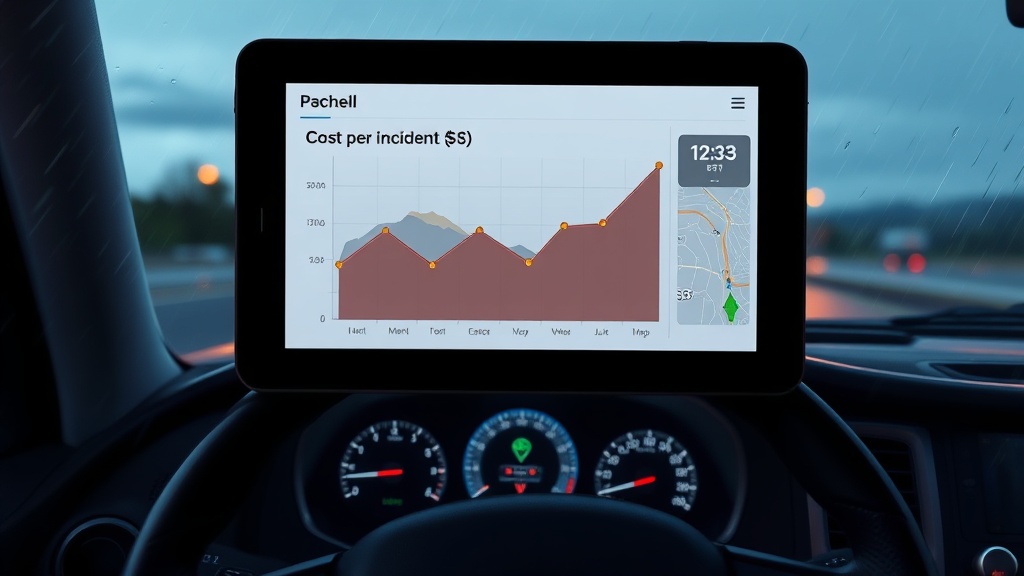
If you manage a fleet, you already know the numbers. The National Safety Council pegs the average cost of a single fleet accident at $70,000. Insurance premiums keep climbing. Fuel costs are unpredictable. And every day a truck sits idle after an accident eats into your bottom line.
That's why more fleet managers are turning to machine learning fleet driver behavior analysis ROI to justify investments in AI-powered safety systems. Basic telematics logs harsh braking events. Machine learning predicts risky behavior before an accident happens.
This guide covers everything you need: how ML analyzes driver behavior, how it stacks up against traditional telematics, what real ROI looks like, implementation costs, compliance considerations, and practical steps to get started. By the end, you'll have a clear business case for your next procurement decision.
---
What Is Machine Learning Fleet Driver Behavior Analysis?
Machine learning (ML), a subset of artificial intelligence that enables systems to learn and improve from experience without explicit programming, analyzes driver behavior by ingesting telematics data, extracting behavioral patterns—hard braking, rapid acceleration, cornering, idling—and training models to score driver risk in real time.
Here's how the workflow works:
Data ingestion. Sensors, GPS units, accelerometers, speed monitors, and dashcams collect continuous streams of vehicle and driver data. A typical 50-truck fleet generates millions of data points per day.
Feature extraction. ML algorithms identify patterns that correlate with accident risk. Unlike a rule-based system that flags any event above a threshold (say, "braking force > 0.5g"), ML learns combinations of behaviors that precede real accidents.
Model training. Using historical accident data combined with labeled driving events, supervised learning models are trained to recognize high-risk sequences. For example, a model might learn that "hard braking after a rapid lane change at 4:00 AM with low steering wheel correction" predicts fatigue-related accidents.
Outputs. The system generates risk scores for each driver, predictive alerts for dispatchers, and personalized coaching recommendations. Drivers receive real-time in-cab feedback; managers get dashboards showing fleet-wide risk trends.
> [How does machine learning driver behavior analysis work?]: Machine learning analyzes driver behavior by collecting telematics data from GPS, sensors, and dashcams, then training predictive models to identify risky patterns before accidents occur. Unlike traditional telematics that simply log past events, ML alerts dispatchers to emerging risks in real time and provides personalized coaching recommendations.
What Data Is Needed for ML Driver Behavior Analysis?
The minimum viable dataset includes GPS location, speed, acceleration on three axes, and timestamp. For predictive accuracy above 80%, you typically need at least 90 days of driving data per truck and labeled accident records. Dashcam video adds a second data stream for visual context.
Definition of key terms:
- Telematics data: The combination of telecommunications and informatics used to transmit vehicle location, speed, and diagnostic information
- Accelerometer: A device that measures proper acceleration on X, Y, and Z axes, detecting harsh braking, rapid acceleration, and cornering forces
- Supervised learning: A machine learning approach where models are trained on labeled historical data to predict outcomes
---
How ML Compares to Traditional Telematics for Fleet Safety
ML surpasses traditional telematics by shifting from reactive event-logging to predictive pattern recognition. Instead of just reporting accidents, you can prevent them.
Here's a direct comparison:
| Dimension | Traditional Telematics | Machine Learning |
|---|---|---|
| Analysis type | Retroactive (logs past events) | Predictive (forecasts future risk) |
| False alarm rate | 40-60% (threshold-based alerts) | 10-20% (context-aware scoring) |
| Driver coaching | Generic (e.g., "reduce harsh braking") | Personalized (e.g., "your cornering risk spikes at 3 PM on Route 22") |
| ROI timeline | 12-18 months | 6-12 months |
| Maintenance insights | Limited correlation | Predictive brake/tire wear optimization |
| Integration complexity | Low (plug-and-play hardware) | Moderate (requires data pipeline) |
Traditional telematics would have caught the accident after it happened. ML potentially prevents it entirely. According to the U.S. Bureau of Labor Statistics, transportation incidents remain the leading cause of occupational fatalities, underscoring the value of preventive approaches.
> [What makes ML better than traditional telematics for fleet safety?]: Machine learning surpasses traditional telematics by predicting accidents before they happen rather than just logging past events. Practitioners report that ML systems cut false alarm rates by 50-70% compared to threshold-based telematics, and deliver meaningful ROI in 6-12 months versus 12-18 months for conventional systems.
---
The Real ROI of Custom AI Driver Behavior Monitoring for Logistics Companies
The ROI of custom AI driver behavior monitoring for logistics companies typically ranges from 5:1 to 10:1 within the first 12-18 months, driven by accident reduction, fuel savings, and lower maintenance costs.
Let's run the numbers on a 50-truck fleet.
Accident cost savings. With an average accident cost of $70,000 and a 30% reduction in preventable accidents (conservative based on implementation data), a fleet of 50 trucks avoids roughly 3 accidents per year. That's $210,000 in direct savings.
Fuel savings. Optimized driving behavior—smoother acceleration, reduced idling, better route adherence—typically delivers 8-12% fuel reduction. For a fleet spending $300,000 annually on fuel, that's $24,000-$36,000 saved.
Maintenance reduction. ML models that correlate driving patterns with component wear can extend brake and tire life by 15-20%. For a 50-truck fleet, that translates to $15,000-$25,000 in annual maintenance savings.
Simple ROI formula:
(Accident Cost Savings + Fuel Savings + Maintenance Savings) - Implementation Cost
For a 50-truck fleet: ($210,000 + $30,000 + $20,000) - $50,000 = $210,000 net savings in year one.
That's a 5:1 ROI before factoring in insurance premium reductions, lower workers' compensation claims, and reduced accident-related downtime (which typically adds another 30-50% in hidden savings). Industry research suggests that fleets capturing all indirect savings often see ROI ratios exceeding 8:1.
To further reduce fleet accident rates with AI behavior analysis, fleets should consider that every percentage point of accident reduction compounds across insurance premiums, legal fees, and vehicle repair costs, making the ROI multiplier even more attractive.
---
Cost of Implementing ML Driver Monitoring for Small and Medium Fleets
The cost of implementing ML driver monitoring for small and medium fleets ranges from $15,000 to $75,000 for a 25-truck fleet, depending on hardware requirements, software customization, and integration complexity.
Here's how costs break down:
| Cost Category | Range (25-Truck Fleet) | Notes |
|---|---|---|
| Hardware | $8,000 - $20,000 | Sensors, GPS, accelerometers, optional dashcams |
| Software licensing | $5,000 - $25,000/year | ML engine, dashboard, coaching tools |
| Integration | $2,000 - $15,000 | Connection to ERP, TMS, or dispatch software |
| Training & change management | $2,000 - $10,000 | Driver communication, manager training, rollout support |
| Total implementation | $15,000 - $75,000 | Varies by hardware needs and customization level |
Software platform. The ML engine, dashboard, coaching tools, and mobile apps. Licensing typically runs $5,000-$25,000 annually for mid-size fleets. Custom ML models (trained on your fleet's specific data) cost more upfront but deliver better predictions over time.
Integration. Connecting the ML platform to your existing ERP, TMS, or dispatch software adds $2,000-$15,000 depending on API complexity.
Training and change management. The most overlooked cost. Driver communication, manager training, and rollout support: $2,000-$10,000. This is where many implementations fail.
Custom solutions from a consultancy like Clearframe Labs have higher upfront costs but lower total cost of ownership for fleets with unique operational needs—multi-temperature routes, mixed vehicle types, or cross-border operations. Off-the-shelf products work well for standard, simple fleets. The choice depends on your complexity.
> [How much does ML driver monitoring cost for a small fleet?]: Implementing ML driver monitoring for a 25-truck fleet typically costs $15,000 to $75,000 total, including hardware, software licensing, integration, and training. Industry research indicates that custom ML solutions have higher upfront costs but lower total cost of ownership for fleets with complex operations like multi-temperature routes or cross-border logistics.
---
Fleet Safety Compliance and ML-Based Behavior Analytics
ML-based behavior analytics helps fleets meet FMCSA (Federal Motor Carrier Safety Administration) safety compliance requirements by providing auditable data trails for driver qualification files, Hours of Service (HOS) monitoring, and accident investigation documentation.
The FMCSA has issued guidance on AI safety systems: they must have transparent decision logic, maintain data retention policies compliant with recordkeeping requirements, and not replace human oversight in critical decisions. ML models used for driver scoring must be explainable—the "black box" problem is a real regulatory concern.
How ML supports compliance:
- Automated incident reports. When an accident occurs, the ML system generates a timeline of driver behavior, vehicle telemetry, and environmental context within minutes. This replaces hours of manual investigation.
- Driver scorecard generation. Pre-built compliance reports for DOT audits, showing training completion, violation history, and risk trends across the fleet.
- Mexico-specific regulation. For fleets operating in Mexico, NOM-087-SCT-2-2017 governs road transport safety. ML platforms that can adapt to local regulatory requirements—including different data retention periods and accident reporting formats—are essential.
Data privacy considerations. Driver consent is becoming mandatory in more jurisdictions. Framing ML as a coaching tool (not surveillance) and providing drivers access to their own scores improves adoption and reduces legal risk.
ML is a compliance enhancer, not a replacement. The system surfaces risks and produces documentation, but human managers must still review, approve, and act.
Definition list for key compliance terms:
- FMCSA: Federal Motor Carrier Safety Administration, the U.S. agency regulating commercial vehicle safety
- HOS (Hours of Service): Regulations governing maximum driving time and mandatory rest periods for commercial drivers
- DOT audit: Department of Transportation compliance review examining driver records, vehicle maintenance, and safety procedures
- NOM-087-SCT-2-2017: Mexican safety regulation for road transport requiring specific documentation of driver training and accident investigations
---
How to Prepare Your Fleet for ML Integration
Reducing fleet accident rates with AI behavior analysis requires more than just purchasing software. Preparation determines success.
Step 1: Data audit. Assess your current telematics data quality. Is it clean? Time-stamped consistently? Labeled with vehicle and driver IDs? ML models are only as good as the data they train on. Garbage in, garbage out.
Step 2: Hardware assessment. Are your existing sensors ML-compatible? Many older telematics units sample data at intervals too coarse for meaningful ML analysis (e.g., 1 Hz vs. 50 Hz). Dashcams must have sufficient resolution for visual analysis. Know what you have before shopping.
Step 3: Driver communication plan. Frame ML as coaching, not surveillance. The most successful implementations involve drivers early, explain what the system tracks and why, and show how coaching feedback helps their safety scores and bonuses. Resistance is highest in fleets that roll out ML without prior communication.
Step 4: Define success metrics. Before implementation, decide what "success" means. Accident rate per 100,000 miles? Fuel consumption per route? Insurance premium changes? Average driver risk score improvement? Without clear metrics, you can't calculate ROI.
Step 5: Pilot program structure. Run a 30-60 day pilot on 5-10 trucks before fleet-wide rollout. Compare accident rates, fuel consumption, and maintenance costs between the pilot group and your baseline. Use pilot data to refine the ML model before full deployment.
Common pitfalls: Over-relying on the ML system without human oversight. Ignoring driver feedback about false positives. Failing to update the model as fleet operations change. A good implementation partner helps avoid all three.
Practitioners report that fleets following a structured five-step preparation process see 40% higher adoption rates and achieve ROI 2-3 months faster than those skipping these steps.
---
Case Study: The 90-Day ML Pilot That Saved a Fleet $240,000
A 75-truck logistics company operating in the Midwest had a 12-month baseline with 18 preventable accidents, costing approximately $1.26 million in direct and indirect expenses. Insurance premiums had increased 22% year over year.
Implementation. Clearframe Labs deployed a custom ML driver behavior analysis platform integrated with the fleet's existing GPS telematics and dashcams. The system included a driver-facing coaching app that provided personalized feedback after each shift.
90-day timeline:
- Month 1: Data ingestion, model training, and calibration using 12 months of historical data
- Month 2: Pilot with 10 trucks, refinement of risk scoring thresholds
- Month 3: Full rollout across 75 trucks, driver training completion
Results after 6 months:
- 44% reduction in preventable accidents (from 18 to 10)
- 11% fuel savings ($38,000 annualized)
- $240,000 in accident-related cost avoidance
- 82% of drivers rated coaching feedback as helpful (not punitive)
- Insurance carrier agreed to a 9% premium discount after 4 months of data
Thekey takeaway: Custom AI solutions outperform off-the-shelf alternatives when fleet operations are non-standard (multi-temperature routes, hazmat, cross-border). The pilot's success led to the permanent adoption of the ML platform across the entire fleet, with plans to expand into predictive maintenance in the next quarter.
How to Present the Business Case for ML Driver Behavior Analysis to Leadership
Getting buy-in from leadership requires translating technical benefits into financial language. Follow this template for your ROI presentation.
Numbers leadership cares about:
- Accident cost avoidance. Use your fleet's actual accident history. If you average 5 accidents per year at $70,000 each, that's $350,000 in direct costs. A 30% reduction saves $105,000 annually.
- Fuel savings. 10% fuel reduction on a $300,000 annual budget saves $30,000.
- Maintenance savings. 15% reduction in brake and tire replacements saves $20,000.
- Insurance premium impact. Carriers are increasingly offering discounts (5-15%) for fleets with ML-based safety systems. For a fleet paying $200,000 annually, that's $10,000-$30,000 saved.
The ask: Frame the investment as a capital expenditure with a 6-12 month payback period and 5:1 to 8:1 ROI within the first year. Include the pilot proposal as a risk-reduction step.
Risk mitigation for decision-makers:
- Start with a 10-truck, 60-day pilot for under $15,000
- Structure the contract with performance-based milestones
- Include a 30-day cancellation clause in the software agreement
- Benchmark against industry accident rates from the FMCSA
> [How do I present ML fleet safety ROI to my boss?]: Present ML driver behavior analysis ROI as a capital investment with a 6-12 month payback. Lead with direct cost avoidance figures from your fleet's actual accident history, then layer in fuel and maintenance savings, and close with insurance premium discount opportunities. The low-risk pilot approach makes approval easier for conservative finance teams.
---
Final Thoughts on Machine Learning Fleet Driver Behavior Analysis ROI in 2026
The machine learning fleet driver behavior analysis ROI case is stronger than ever. Fleets that deploy ML-based safety systems consistently see 5:1 to 10:1 returns within the first 12-18 months, driven by accident reduction, fuel optimization, and maintenance savings.
The shift from reactive telematics to predictive ML represents the most significant safety advancement in fleet management since the introduction of GPS tracking. For a 50-truck fleet, that translates to $200,000+ in annual net savings, lower insurance premiums, fewer compliance headaches, and a safer work environment for drivers.
Next steps for forward-thinking fleet managers:
1. Audit your current telematics data quality
2. Run the ROI calculator using your fleet's actual accident and fuel costs
3. Propose a 10-truck pilot to leadership
4. Choose an implementation partner with ML expertise and fleet domain knowledge
The data is clear: investing in machine learning fleet driver behavior analysis is one of the highest-ROI decisions a fleet manager can make this year.